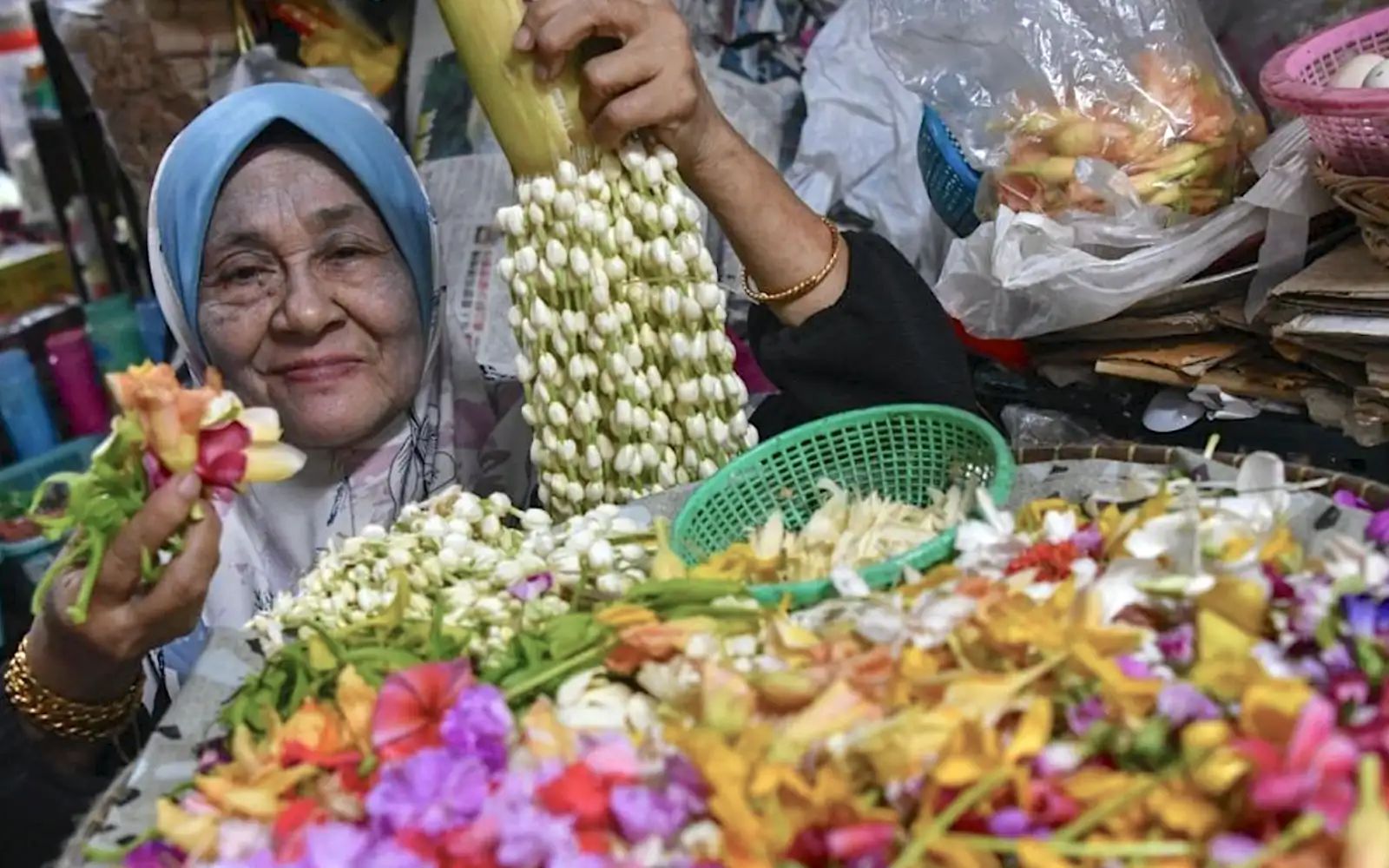
Many of these blooms are destined not for vases, but for flower baths.
While modern wellness trends continue to evolve, the age-old tradition of “mandi bunga” remains very much alive in Kelantan, where vendors say demand for traditional flowers and herbs has only continued to grow over the years.
For 67-year-old Azizah Mohd Nor, better known as Kak Zah, the business is more than just a livelihood – it is a family legacy she has carried on for more than four decades.
The trade began with her late mother, who once sold flowers door-to-door to various communities including Chinese and Siamese families for traditional rituals and ceremonies.
“She eventually started trading at Pasar Siti Khadijah before passing the business down to me,” Kak Zah told Bernama.
Today, flowers such as kenanga, cempaka, melur, kesidang, tanjung, roses, and bunga Cina remain among the most-sought varieties because of their natural fragrance and suitability for flower baths.
According to Kak Zah, perceptions around mandi bunga have evolved. “Previously, flowers were mainly used for customs and rituals, but nowadays more people buy them for healthcare, beauty and body rejuvenation.”
Most of her flowers are sourced from nearby villages and sold in ready-mixed bundles, making it easier for customers to use for bathing.
Another vendor, Mazura Mat Jusoh, has been in the business for nearly 20 years and told Bernama demand tends to surge during school holidays and festive periods.
The 55-year-old said she is considering opening another branch in Pasir Puteh to cater to customers from neighbouring Terengganu.
For regular customer Wan Suzilawati Wan Yusof, mandi bunga isn’t simply about tradition. “It’s part of self-care for me,” said the 52-year-old, who spends more than RM100 monthly on flowers.
“Flower baths make the body feel fresh and help enhance natural radiance.”