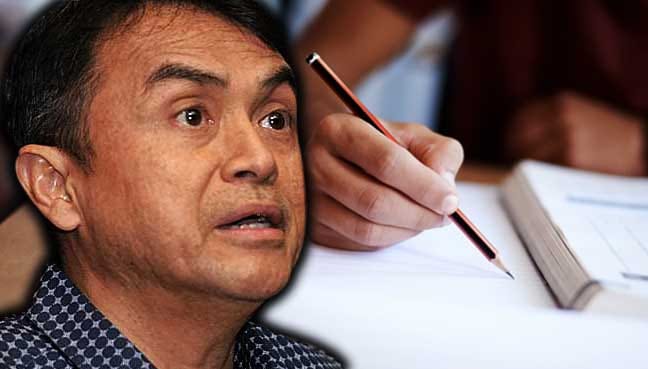
He said their children’s emotional intelligence as well as their ability to communicate and think critically were more important.
However, these were skills that required good parenting.
“Parents sometimes have this notion that spending money on their children’s education fulfils their parental obligation, often at the expense of guiding and spending time with their children,” he told FMT.
“Often we hear of parents boasting about how much they spend on educating their children. So, money becomes a short cut for good parentage.
“But what does this really mean? That their children will get degrees? Often the children are devoid of the emotional intelligence and the ability to communicate and think.”
Recently, New Straits Times reported on the findings of an HSBC commissioned independent consumer research study into global education trends.
The fourth report in the series “The Value of Education” was published in June and represented the views of 8,481 parents in 15 countries and territories — Australia, Canada, China, Egypt, France, Hong Kong, India, Indonesia, Malaysia, Mexico, Singapore, Taiwan, United Arab Emirates, the United Kingdom and the United States.
It said Malaysian parents were spending an average of USD25,479 (RM107,920) on each child’s education, from primary school up to university undergraduate level.
The report quoted HSBC Malaysia retail banking and wealth management country head Lim Eng Seong who said sacrifices and going the extra mile were key drivers for parents to ensure the best interests of their child in today’s highly competitive global job market.
“Many parents are willing to pay good money to ensure that their child has the best education, both in terms of academic and lifestyle, something which they couldn’t experience in their student days,” he said.
Razak, however, said it was necessary to re-evaluate the concept of knowledge and education.
“There is no guaranteed correlation between spending money on education with that of being successful in life or at work. Often, employers now lament the standard of graduates, including those from abroad.
“There is almost a near obsession of parents to emphasise education without necessarily really thinking about the well-being of their children.”
Razak also lamented what he referred to as society’s false sense of achievement.
“What is achievement in life? A good salary and a good job? Have societies become prisoners of expectations even though there are concerns where society as a whole is heading?
“We have seen cases where parents are so thrifty in their own lives in order to save money for the children’s education. Yet some children, having graduated abroad, refuse to return and instead settle abroad leaving their parents all alone and some of them don’t even provide for their ageing parents.
“Parents despair but are probably too embarrassed to tell others about their plight.
“Maybe it’s time that parents re-think about investing in educating their children in monetary terms.
“Instead, they should invest in time and physical interaction — equipping our young with the emotional intelligence and the meaning of life, which are far more useful than a mere degree which today is commonplace.”