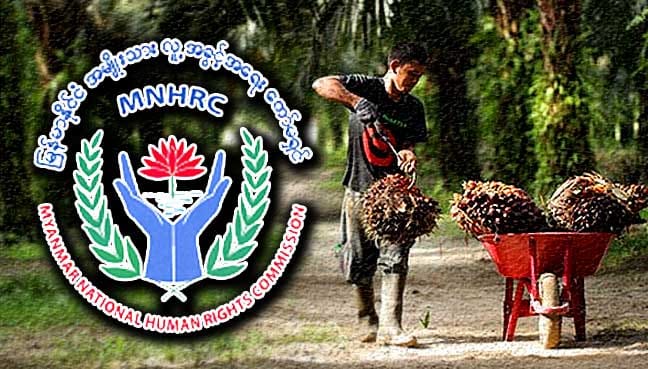
A team from the Myanmar National Human Rights Commission (MNHRC) that visited the area found 13 villages, home to about 4,480 people, had been adversely affected by the activities of the Myanmar Stark Prestige Plantation Company (MSPP), the Myanmar Times reported today.
It was noted that the MSPP had cleared over 2,400 ha of land, including betel nut and cashew orchards, destroying crops which many villagers had depended on for their livelihoods, the report said.
MNHRC spokesperson U Yu Lwin Aung was quoted as saying that four of the villages belonged to indigenous ethnic Karen tribes.
“Families who have lost their agriculture land have fallen into high levels of debt or been forced to work as day labourers for low wages (in the plantation),” he said.
“Even if the company paid for the land, it is not legal if the owners disagree,” he added.
U Yu was quoted as saying that local residents had claimed to have been pressured to sell their land.
“There are too many human rights violations in this land dispute,” he said.
According to Myanmar Times, MSPP, which is 95% owned by a Malaysian firm, was in 2011 granted a permit by the Myanmar Investment Commission to establish an US$36.75 million (RM151.34 million) oil palm project in Tanintharyi that would span 15,400 ha.