By Liew Chin Tong
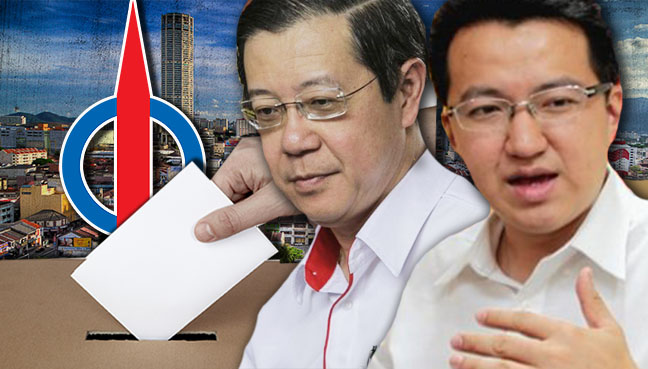
To dissolve the Penang State Assembly and to seek a new mandate from the people of Penang is probably the most difficult decision that the DAP Central Executive Committee has ever made.
This move will provide a platform for people’s power to prevail against the dark forces and the first step to re-write the political history of our beloved nation.
After hours of deliberation, the DAP CEC unanimously resolved to dissolve the Penang State Assembly, upon consultation with our coalition partners in Pakatan Harapan.
According to our original plan, after consultation with our coalition partners, DAP Secretary-General and Penang Chief Minister Lim Guan Eng would explain to the people of Penang and all concerned Malaysians the difficult decision we made.
It was unfortunate that the plan was prematurely leaked to the media.
But since it is now known, it is time for us to tell the public our considerations and rationale.
1. To seek a fresh mandate
Malaysia is nominally a federation but effectively more centralised than most other federations. In other federations, such as Australia and India, federal and state elections are usually separately held to avoid state issues being submerged by federal concerns.
In Malaysia, apart from Sarawak and Sabah and barring very exceptional situations, like the 1978 Kelantan state election, federal and state elections are generally held concurrently.
For Barisan Nasional, concurrent elections help the ruling coalition to swap candidates between state and federal seats and also to minimise the political impact of regularly held separate state elections.
Previously, Opposition parties avoided separate state elections to avoid Barisan Nasional (BN) from focusing the Federal Government’s largesse onto a single state.
But things are changing. From high-placed sources, we are told that after the Sarawak State Election in May, Sabah and Johor BN are mulling separate state elections in late 2016 and early 2017 to avoid being adversely affected by Najib’s scandals and poor image.
Separate elections are not typical in Malaysia, but it is still the best and an honourable way of returning to the people for a fresh mandate in a time of crisis.
2. Is Guan Eng’s case a personal matter?
Many opine that no separate election is needed for Penang as long as Chief Minister Lim Guan Eng steps aside until he is cleared of his “personal legal problem”. But is Guan Eng’s case a personal matter?
Since Tasik Gelugor MP Shahabudin Yahya abused his parliamentary immunity to accuse Guan Eng of corrupt practices on March 17, the mainstream media and black operations have gone into overdrive to paint an image of Guan Eng being corrupt.
The then-alleged case of Taman Manggis had disappeared altogether by the time Guan Eng was charged on June 30. Guan Eng has denied any wrongdoing.
Only when one looks at the case of Guan Eng in the political choices of Prime Minister Najib Razak that it starts to make sense.
Najib won the 2013 General Election with only 47% of votes and is now tainted with the 1Malaysia Development Berhad and political donation scandals.
The only way Najib can win in the next election is not to be an inspired choice in a free and fair election but to win it by default through eliminating his opponents and splitting the Opposition:
First, putting Anwar Ibrahim behind bars eliminated the only common leader of the Opposition and deprived the Opposition of its candidate of alternative prime minister.
Secondly, since early 2014, Umno has courted and coopted the conservatives in PAS through provision of financial inducement for Kelantan’s development and hudud legislation.
PAS split officially in June 2015 and the current leadership treats other Opposition parties as enemies while treating Umno as a friend. The current leadership seems to be prepared to be the spoiler in the general election by contesting in three-cornered fights.
Thirdly, with regard to Guan Eng, the political objectives are to destroy the credibility of Guan Eng, to deny him the chance to stand in the next general election and possibly to jail him.
According to our opponents’ calculations, DAP will lose support with Guan Eng’s credibility destroyed and without Guan Eng standing as a candidate in the next general election, DAP and Pakatan Harapan may even lose power in Penang.
3. A just cause
The mainsteam media’s line is that the state election is called to keep Guan Eng in his position. But it is actually not the case.
Our assessment is that Guan Eng is likely to be convicted before the next general election so that he is not allowed to contest as a candidate, and he could possibly be jailed after that.
To dissolve the state assembly now to seek a fresh mandate, while Guan Eng can still contest, means that he is returning the mandate to the people for them to judge his performance as chief minister as well as to ensure that DAP and Pakatan Harapan have the mandate for the next five years, regardless of whether Guan Eng is freed or not.
The following are some of the objectives of the 2016 Penang state election:
Firstly, to keep Penang as a base for DAP and Pakatan Harapan to mount a challenge to win federal power in the next general election.
Secondly, if Pakatan continues to be given the mandate by the people of Penang, future conspirators who want to “chop off” popular Opposition political leaders like Anwar Ibrahim and Guan Eng would have to think twice.
Thirdly, with Najib involved in the largest ever financial controversy in Malaysia’s history, and one that is global in scale, yet not charged locally while Guan Eng faces selective prosecution, the Penang state election is an opportunity for the voters to express their disgust.
In short, the 2016 Penang state election is a just cause for the people of Penang and Malaysia to fight back against Najib and BN.
Liew Chin Tong is DAP national political education director and MP for Kluang.
With a firm belief in freedom of expression and without prejudice, FMT tries its best to share reliable content from third parties. Such articles are strictly the writer’s personal opinion. FMT does not necessarily endorse the views or opinions given by any third party content provider.