If road transport operators are confounded by the variety of licensed and unlicensed vehicles used for tourist transport, it must be utterly confusing for the local public and foreign visitors.
Vans used for passenger transport may be licensed under excursion bus, limousine taxi, executive taxi, “hire & drive” or de-controlled vehicle, apart from those under private registration using e-hailing apps to pick up fare-paying passengers.
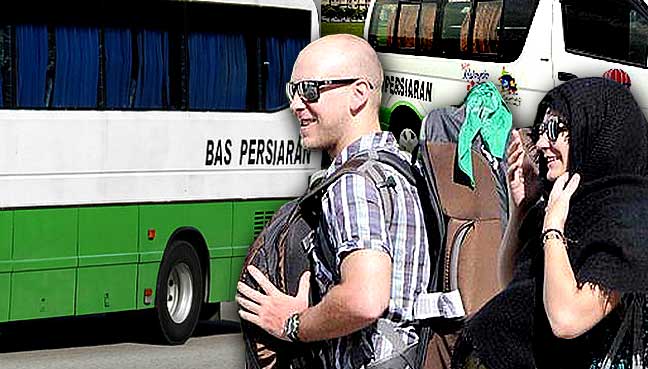
Such overlaps probably started after the tourism ministry took over the licensing of excursion buses in the mid-1980s from the Commercial Vehicle Licensing Board (CVLB). These buses and vans licensed under Bas Persiaran were available for charters by other tour companies and the public.
Before the functions of CVLB was taken over by the Land Public Transport Commission (SPAD), it began issuing a new class of bus permits known as Bas Catar (charter), which was unnecessary as stage bus companies nationwide maintained a pool of buses, which the public could also charter for special occasions.
Some tour bus companies applied for these permits in order to circumvent the ruling that a licensed tourist guide must be on board a Bas Persiaran with passengers. But many of these charter buses are operated by small operators. They are more like oversized taxis, cheaply built, poorly maintained and pose a danger on our roads.
Mercifully, SPAD decided a few years ago not to issue any new charter bus permits and those expiring will not be renewed.
In 2003, the tourism ministry decided to allow vehicles licensed under “hire & drive” to be used for chauffeur-drive, as tour companies had difficulties in obtaining or renewing their limousine taxi permits with CVLB.
Ironically, tour and car rental companies were the first to provide limousine services in the 1960s, before and after limousine taxi permits were introduced. Later, hotels mushroomed until more limousine taxis were based at major hotels.
In later years, CVLB started to associate limousines only with hotels and stipulated that applicants must secure contracts with hotels before applying for limousine taxi permits, which were issued on condition that they can only pick up guests from hotels where they are based.
But tour operators use limousine taxis as tour cars and pick up customers from wherever they are. It could be from any hotel, airport, office or city. Hence, the tourism ministry circumvented CVLB’s ruling by allowing “hire & drive” vehicles to be used for chauffeur-driven services.
However, in August 2014, SPAD issued a notice that this was no longer allowed, casting a pall over this practice. It came about as some individuals were renting these cars to pick up passengers through ride-hailing apps. Many “hire & drive” cars were seized by SPAD in 2015 in a clampdown on the Uber Black service, particularly.
Amendments to existing laws will be tabled at the next Parliament sitting to allow private vehicles to pick up fare-paying passengers through e-hailing apps.
If so, hire and drive vehicles should be allowed to do the same if bookings are made through websites and drivers assigned using social media such as WhatsApp, as these services are arranged electronically.
Foreign visitors
But an office secretary trying to book transport for a small group of foreign visitors may tear her hair out as the rates would differ not just between companies but also the type of licensing for the van.
Would a van licensed under Bas Persiaran be cheaper? But then, it is painted like all tour buses, with an all-round green strip at the bottom of the vehicle. Would an additional tourist guide be required as tour bus companies have been fined RM18,000 for not having one on board?
In recent years, vans and MPVs are also licensed under Teksi Mewah, as can be seen by their private vehicle registration, but the number plates are white with black letters, just like normal taxis.
Would it be better to specify for a van licensed under “hire & drive”, as they look just like any other private van, but would it be against the law?
If not, what about de-controlled window vans that are allowed to carry both passengers and cargo, and these licenses are automatically issued by the Road Transport Department upon registration, and they undergo routine inspections at Puspakom?
Or would it be ideal to deal directly with an executive taxi driver, who may be driving a van or MPV licensed as an executive taxi and fares are charged according to the meter, whereas all others are at fixed rates?
Or should the secretary take the risk with amateurs using e-hailing services to pick up passengers? If the driver is good, can he be booked for the next trip or day without going through the e-hailing app?
With at least half a dozen options to start with, even the most knowledgeable expert would be stumped.
YS Chan is an FMT reader.
With a firm belief in freedom of expression and without prejudice, FMT tries its best to share reliable content from third parties. Such articles are strictly the writer’s (or organisation’s) personal opinion. FMT does not necessarily endorse the views or opinions given by any third party content provider.