Honda now projects consolidated net profit will decline 16% to ¥555 billion (US$4.86 billion) for the current fiscal year ending March, reversing a previous forecast of a gain. This comes as the global chip shortage triggered production cuts in automobiles.
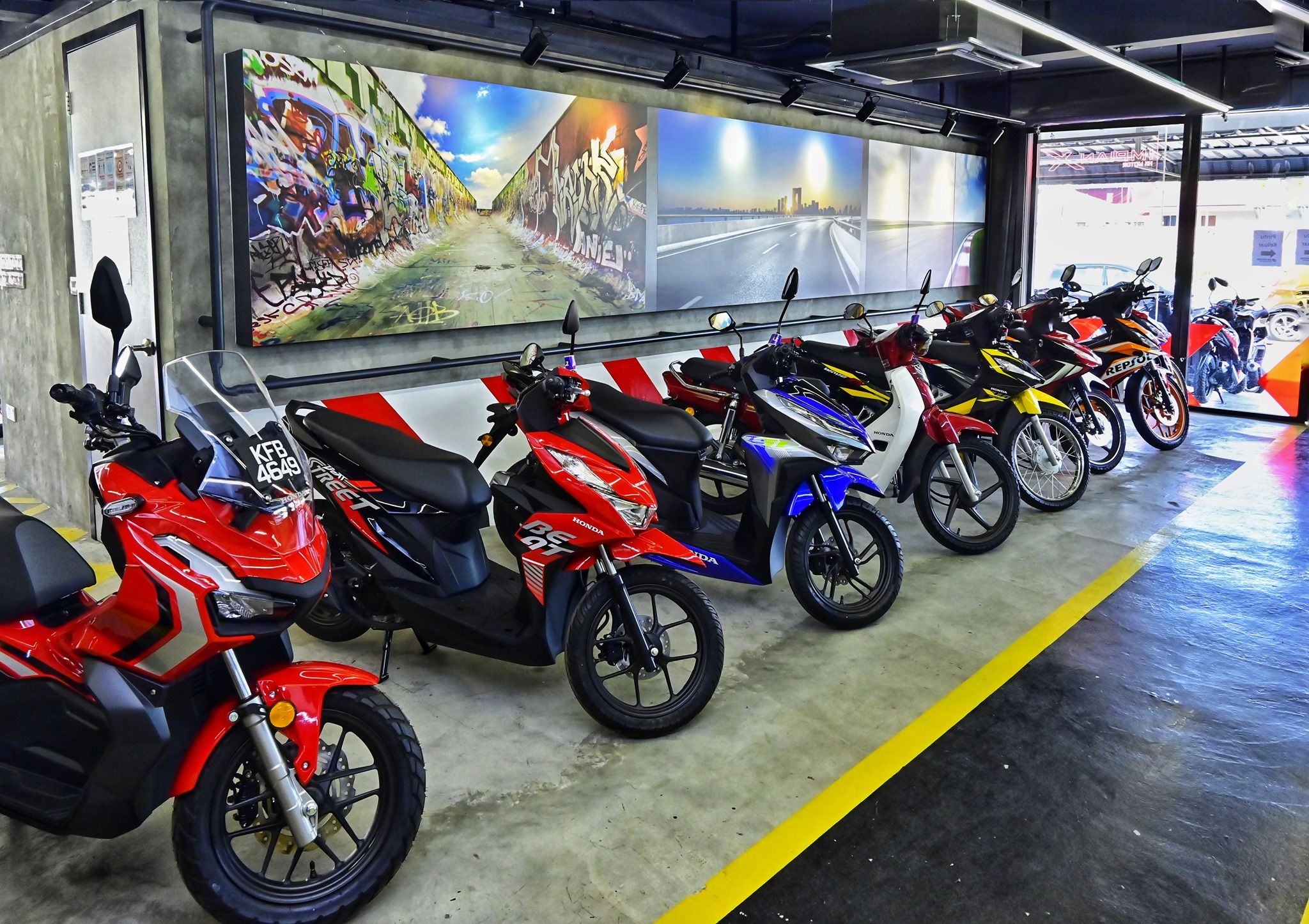
However, motorcycles have found a new life, especially in developing markets. Two-wheelers earned ¥148.1 billion in segment operating profit for the first half through September, double from a year earlier.
Small motorbikes, Honda’s bread and butter, do not generally use semiconductors and are mostly immune to supply shortages. This fiscal year’s sales of all motorcycles are expected to jump 16% to 17.5 million units.
Honda, the longtime leader in motorcycles, commanded a 34% share in global sales last year. Motorcycles account for 15% of consolidated sales in the first half, well below 63% for four-wheelers. But in terms of operating profit, motorcycles contribute 34% to the 27% of automobiles.
The superior profitability of motorcycles over cars has been true since fiscal 2018. The segment is now the second-most profitable behind the financial services division.
Motorcycles sported an operating margin of 14.5% during the first half of this fiscal year. It was the second-highest showing since the 16.2% recorded during the April-September period of 2018, according to comparable data dating back to fiscal 1999.
Honda’s moneymaking prowess is apparent when compared to rivals. Honda turned in a consolidated profit margin of 12.6% in fiscal 2020, which towers over Yamaha Motor’s 2%, Suzuki Motor’s 1.2% and Kawasaki Heavy Industries’ 3.5%.
Honda’s margin exceeds that of the closest rival, India’s Hero MotoCorp, which reported a 9.9% rate. In terms of per-unit earnings, Honda is a clear winner at ¥21,880, compared with Suzuki’s ¥1,680 and Hero’s ¥7,410.
Honda is strong in scooters and its iconic Super Cub motorcycle. Such small-engine models made up 90% of the 15.13 million motorcycles sold globally in the previous fiscal year. Honda’s most competitive markets are in Southeast Asia and India.
Products bound for emerging markets are all developed in Japan. The blueprints are then sent to locations in India, Thailand and Indonesia so that they can be modified to match local needs.
India is the recipient of large cylinder capacity scooters that can fit four people. The offering successfully tapped into demand among families.
In Thailand starting in 2018, Honda opened motorcycle dealerships integrating cafes that have become a draw among young buyers. Through these strategies, Honda has captured local demand and maintained its product appeal.
“The demands for motorcycles differ by a specific country’s income level, work commute and recreational needs,” said Nobuhide Nagata, Honda’s chief of planning for motorcycles. “Because Honda has the No 1 share and a multitude of dealerships, it’s easy to collect consumer views.”
The high profitability of motorcycles draws significantly from the streamlining of development and production. Honda has actively developed shared components for motorcycles sold in Southeast Asia since 2012. Now 90% of the scooters are equipped with the same type of engine, and 50% share the same frame.
In 2019, Honda integrated motorcycle development functions to its headquarters from multiple domestic subsidiaries. Japanese manufacturing capacity was consolidated to the Kumamoto Prefecture factory in 2008.
The return on assets ratio, which indicates how well equipment is paying back on capital investments, stood at 14.8% in fiscal 2020, or 100 basis points higher than a decade earlier.
Honda spends ¥92 billion combined in capital spending and research and development for motorcycles, which is just a tenth of the total invested in automobiles. Those costs equate to 5% of sales, well below the 20-year peak of 12% in fiscal 2008.
There are some causes for concern for Honda motorcycles, however. Although the company enjoys a high global share, Indian rivals are coming out with affordable models priced at around 80,000 rupees (US$1,075). Those motorbikes are being sold in both India and African countries.
Hero’s share has climbed 3 percentage points over 10 years to 13%. Indian peer Bajaj Auto grew its share 2 points to 8%.
Honda’s response to the electrification shift is also an issue. The automaker pledged to stop selling new gasoline-powered autos in 2040, fielding an entirely electric fleet by that date.
But Honda stops short of elaborating the same ambition for motorcycles. The company will “strive to realise carbon neutrality for all products” by 2050, according to a news release. Honda only offers four electric motorcycle models, including those sold to home delivery businesses.
Meanwhile, Yamaha will make 90% of its motorcycles all electric by 2050. Kawasaki said in October it will electrify nearly its entire lineup by 2035. US and Asian startups are developing electric motorbikes too, underscoring the risk of inaction on the part of Honda.
“Small motorcycles will eventually face increasing pressure from electrification,” said Seiji Sugiura at the Tokai Tokyo Research Institute. “How (Honda) will allocate investment to motorcycles while restoring its four-wheel automotive business will pose a challenge.”
Honda has pursued new strategies since Toshihiro Mibe stepped in as president in April, including the electrification of passenger vehicles and the entry into the rocket business. Each of those ventures will require massive investment.
An EV model normally eats up about ¥50 billion in development funds, or double that of gasoline vehicles, which enjoy an existing development infrastructure.
A small rocket takes tens of billions of yen to develop as well, and mass production will take another ¥10 billion to ¥20 billion.