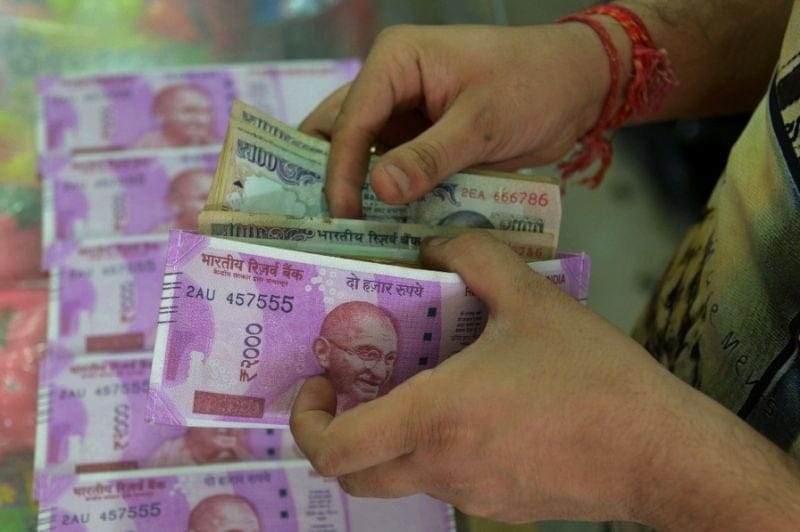
Indian growth, estimated at 6.8% in fiscal 2022, is projected to weaken to 6.1% in fiscal 2023 before returning to 6.8% in fiscal 2024. The so-called Asean-5 — Indonesia, Malaysia, the Philippines, Singapore and Thailand — are seen logging 4.3% growth in 2023, compared with an estimated 5.2% in 2022.
China, reopening after three years of zero-Covid restrictions, is projected to bounce back to 5.2% growth in 2023. It grew an estimated 3% in 2022 — the first year in more than four decades that the country trailed the global average.
China and India will together account for half of global growth this year, said Pierre-Olivier Gourinchas, economic counsellor and director of research at the IMF, in a blog post accompanying the new report.
“China’s sudden reopening paves the way for a rapid rebound in activity,” Gourinchas wrote. “And global financial conditions have improved as inflation pressures started to abate. This, and a weakening of the US dollar from its November high, provided some modest relief to emerging and developing countries.”
Russia’s war in Ukraine and interest rate hikes to counter global inflation — which is projected to decline from 8.8% in 2022 to 6.6% in 2023, then 4.3% in 2024 — remain the biggest drags on world economic growth.
Emerging markets, particularly in Asia, are expected to far outpace the world’s advanced economies. Emerging and developing Asia is projected to grow 5.3% in 2023, compared to just 1.2% for advanced economies.
“The decline in growth in 2023 from 2022 is driven by advanced economies; in emerging market and developing economies, growth is estimated to have bottomed out in 2022,” the IMF report said.
Japan’s growth is projected to accelerate from the estimated 1.4% of 2022 to 1.8% in 2023 — but then decline to just 0.9% in 2024 as the effects of prior economic stimulus dissipate.
The US’s growth is forecast to slow from the 2% estimated for 2022 to 1.4% in 2023 and 1% in 2024.
The report is less pessimistic than the IMF’s October update, with overall growth projections for this year improved in almost every part of the world. And while the balance of risks facing the global economy are still tilted to the downside, the most dire threats, like exacerbated inflation or economic fallout from the war in Ukraine, are less volatile than before.
Perhaps the most unpredictable downside risk will be China’s containment of Covid-19 as the country reopens. This and the real estate market’s vulnerability threaten to stall its economic recovery, with possible spill overs to the broader global economy.
To address these risks, the report’s policy priorities include recommendations to focus vaccination efforts in China on vulnerable populations as well as government action to resolve the property crisis to minimise threats to the country’s financial stability.