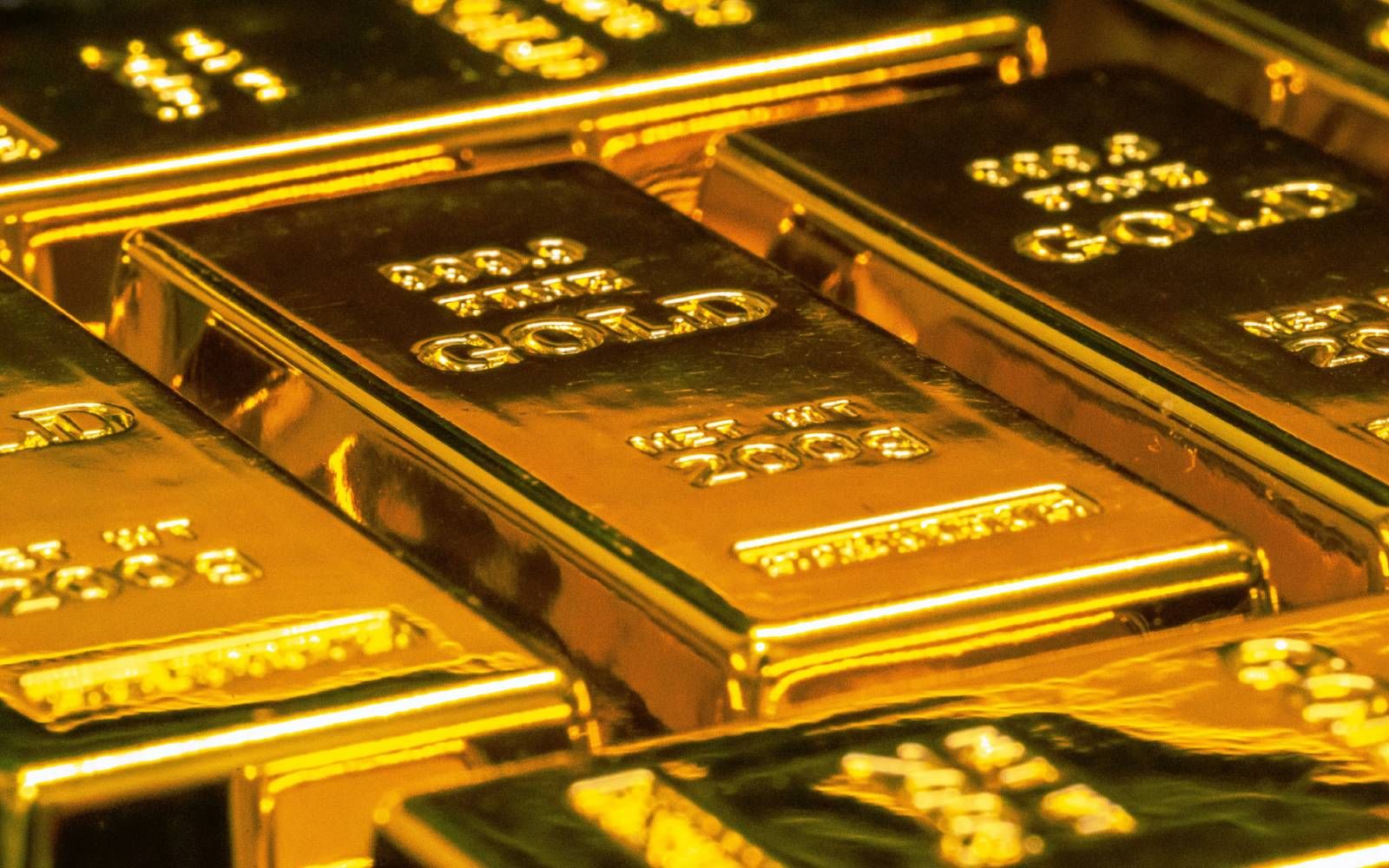
Bullion rose as much as 1.2% to US$4,796 an ounce, clawing back losses over the previous two sessions. Even as the US began a naval blockade of the Strait of Hormuz, president Donald Trump said Iranian officials had approached his administration with the desire “to work a deal.”
Separately, Iranian President Masoud Pezeshkian said Tehran was prepared to continue peace talks within the framework of international law.
Oil declined and was below US$100 a barrel, while equities rallied. A gauge of the dollar fell for the 7th session, the longest losing streak in two years, supporting gold that’s priced in the US currency.
The retreat in energy prices relieved some of the inflationary pressure that has weighed on bullion since the war began more than six weeks ago, which has led traders to bet that central banks will hold interest rates steady for longer, or even hike them — a headwind for non-yielding commodities.
Still, concerns of further energy-supply shocks and economic pain linger, especially as the US blockade of of vessels heading for or leaving Iran’s Persian Gulf ports or coastal areas ratchets up pressure on Tehran. With tensions high, US money markets are still pricing in a less-than-one-fifth chance that the Federal Reserve will cut interest rates by December.
“Gold is still trading as a function of interest-rate expectations, rather than a geopolitical hedge, so it is benefiting alongside equities on hopes of de-escalation overnight,” said Justin Lin, an investment strategist at Global X ETFs Australia. While inflationary concerns weigh on gold in the near term, higher-for-longer oil prices may eventually also lead to slower growth, which is “historically positive” for gold, he added.
Despite a moderate recovery in recent weeks, bullion has still fallen around 10% since the start of the conflict in late February. A liquidity squeeze in the earlier days of fighting saw investors offloading their gold holdings to cover losses elsewhere.
Spot gold was 0.7% higher at US$4,773.26 an ounce as of 3.27 pm. Silver rose 2.5% to US$77.51 an ounce. Platinum and palladium advanced. The Bloomberg Dollar Spot Index, a gauge of the greenback, fell 0.2%.