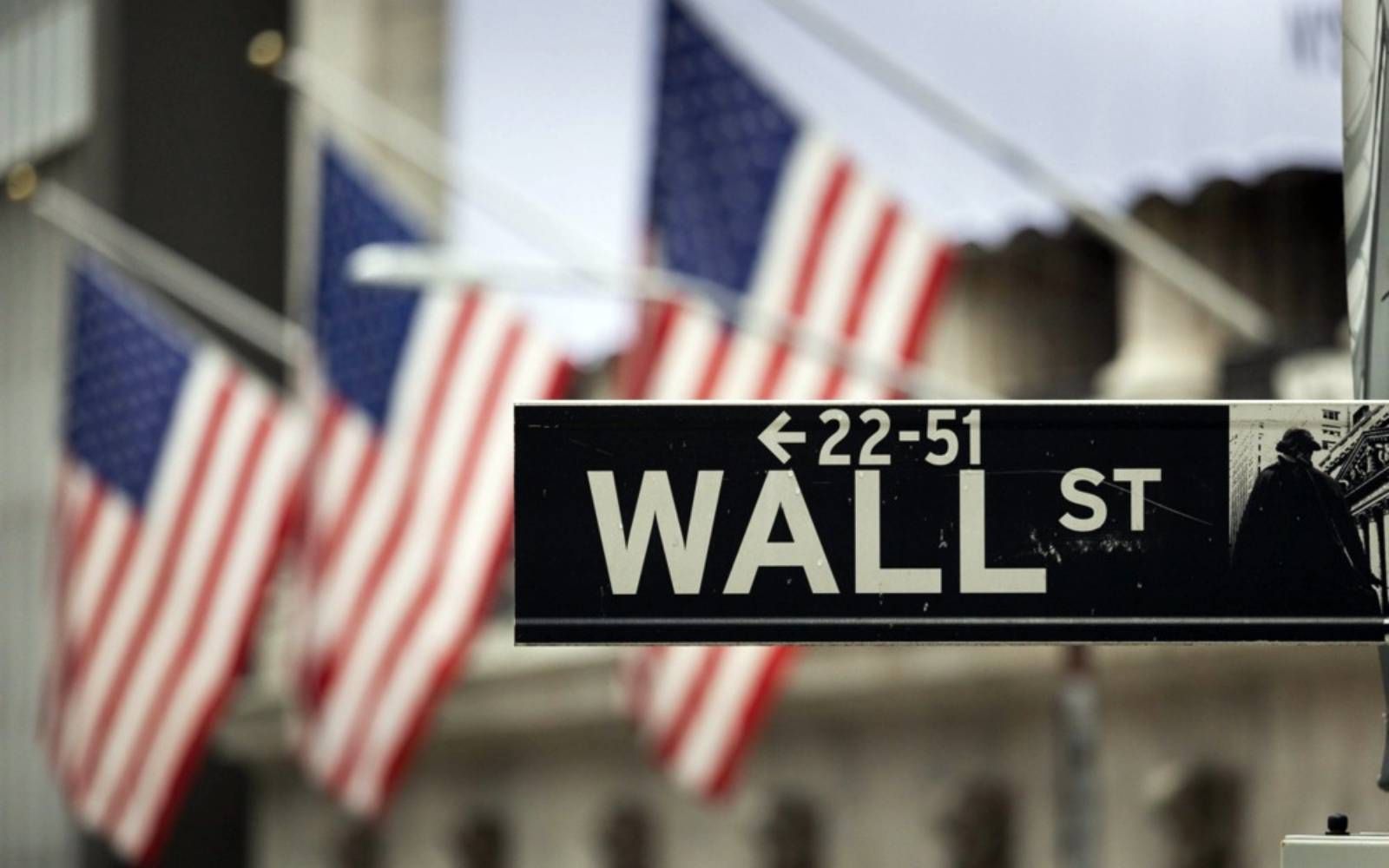
All three major US stock indexes lost ground, and the Nasdaq closed the book on a 13-day winning streak, its longest since January 1992.
The equity-market losses were shallow, held in check by hopes that a deal will eventually be reached, and ongoing optimism over solid first-quarter corporate earnings, and other markets, such as the dollar and US Treasuries, were also subdued.
“We’re not seeing a lot of selling pressure develop because the action that the market saw last week highlighted the importance of staying invested,” said Robert Pavlik, senior portfolio manager at Dakota Wealth in Fairfield, Connecticut. “The opportunity potentially missed by being out of the market is probably keeping a lid on the losses today.”
“Everybody knows that the war could change on a dime,” Pavlik added.
The uneasy ceasefire between the United States and Iran frayed after the US announced it had seized an Iranian cargo ship, prompting vows of retaliation from Iran, which over the weekend said it would not participate in a second round of negotiations.
A senior Iranian official later told Reuters that the country is considering sending representatives to talks that are expected to take place in Islamabad.
Those fears reignited a rally in crude oil prices with traffic through the Strait of Hormuz still largely halted. US crude rose 6.9% to settle at US$89.61 per barrel, while Brent settled at US$95.48 per barrel, up 5.6%.
The Dow Jones Industrial Average fell 4.74 points to 49,442.69, the S&P 500 fell 16.89 points, or 0.2%, to 7,109.17 and the Nasdaq Composite fell 64.09 points, or 0.3%, to 24,404.39.
MSCI’s gauge of stocks across the globe fell 2.37 points to 1,072.39. The pan-European STOXX 600 and Europe’s broad FTSEurofirst 300 index each fell 0.8%.
An index of emerging market stocks rose 5.64 points, or 0.4%, to 1,602.77. MSCI’s broadest index of Asia-Pacific shares outside Japan closed higher by 0.6%, while Japan’s Nikkei rose 348.99 points, or 0.6%, to 58,824.89.
US benchmark Treasury yields edged higher in subdued trading. The yield on benchmark U.S. 10-year notes rose 1.4 basis points to 4.258% from 4.244% on Friday.
The 30-year bond Uyield rose 0.3 basis points to 4.8877% while the 2-year note yield, which typically moves in step with interest rate expectations for the Federal Reserve, rose 2.5 basis points to 3.725%.
The dollar reversed earlier gains on optimism that the ceasefire will hold, despite renewed tensions. The dollar index, which measures the greenback against a basket of currencies including the yen and the euro, fell 0.4% to 98.07, with the euro up 0.2% at US$1.1785. Against the Japanese yen, the dollar strengthened 0.1% to 158.83.
Bitcoin gained 2% to US$76,169.97. Ethereum rose 2.2% to US$2,332.09.
Spot gold fell 0.3% to US$4,815.29 an ounce. US gold futures fell 1% to US$4,807.20 an ounce.