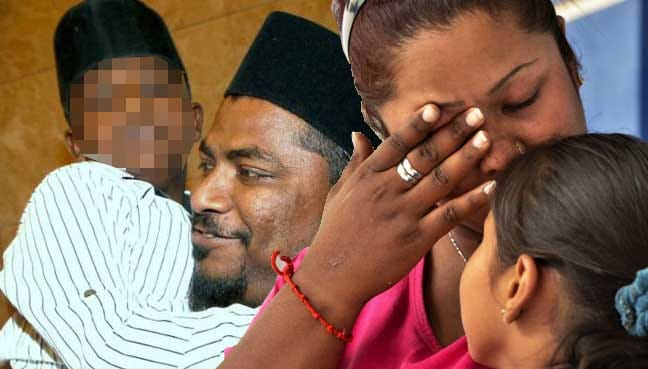
I call it In-Justice, pun intended! I am sorry. The Federal Court was fundamentally flawed in their five-man (no woman) judgment in the case of S Deepa v Izwan Abdullah. I am not a lawyer. Neither am I a constitutional expert; but, I do understand common day rules of human courtesy. I do notice poor culture of conduct premised upon logic and reason, especially when the dignity of one side of equal relationship is clearly denied. I therefore am also evolving a pet ‘Theory R’ which postulates further on 7 Rs; two of which are “responsibility” and “right versus wrong.”
“Dignity in the workplace” was my doctoral study towards arguing my thesis, and then achieving my PhD. This article extends the same logic, learning, and evidence from my study into the realm of “dignity of human beings within the Malaysian lived place”.
For the purpose of my research I had to create or evolve a different but new definition of “dignity”. The concept of dignity, while well understood in the academic fields of philosophy and religion, is not fully appreciated in places and spaces of work life. The singular question that my professors challenged me with was: How would you recognise dignity in its presence, or even in its absence anywhere, whether in the workplace or in any lived places or spaces?
Dignity defined
From my research and reading, I called the literature review in any serious study within any field of knowledge, I came up with a practical definition of dignity which had three simple but commonly understood dimensions. This was then translated into a measurement, for a temperature reading (the conduct of data gathering) of dignity, or through its absence or presence, in work places and spaces.
My three measures were then operationalised as: the right not to be objectified, true freedom to make choices, and the possibility of meaning and significance at the location of practice. It defined the individual’s capacity of capability to live out or experience such definitions in their work places and spaces.
Allow me now to apply these three dimensions of a culture of positive dignity into the public spaces of Malaysian life as a direct consequence of the most recent Federal Court decision. This particular case caught my attention from a dignity perspective especially because the woman and mother of the two children; S Deepa was quoted by the Sun newspaper as saying:
“It is not fair. I am not satisfied,” said Deepa, who lost her composure and was on the verge of breaking down. On the other hand, Izwan (the former husband and father) agreed with the decision to grant custody of one child to each parent.”
The facts are that the father had “stolen the two children” and disobeyed a High Court decision in favour of the mother. This conclusion reminds me of the Old Testament story of King Solomon and his wisdom in the fight between two mothers for the custody of one child and how he resolved the case, using wisdom and not simply human knowledge and peaceable solutions, but seeking the truth of the matter. My question therefore to all five Judges of our Federal Court is: What will GOD ALMIGHTY say about your decision?
Application of my findings
- The right not to be objectified
Both individuals were married through a Hindu wedding vide a marriage ceremony conducted by Civil Law approved assistant registrars with requisite legal authority. Both human beings had their human right to marry and have carried through with having children and they had two of them.
In the case of the woman, and wife, she lost both children when the father absconded from the family, converted to become a Muslim, which is a human right, but did it in a Syariah Court. The Assistant Registrars there failed to warn him that the Syariah Court had no jurisdiction over the children; as they are historical Hindus and one parent cannot unilaterally decide any change.
Obviously, one-eyed administrative justice prevailed, as they recognised his human right but ignored his parental responsibility in the still valid Hindu marriage. The children’s’ human rights were objectified, and their human dignity denied. Right alone cannot overlook responsibilities, assumed vide another role-hats (another R), we all choose to wear. The woman’s equal right to equal justice in a marriage was also defined.
- True freedom to make choices
Both parents and both children have some basic human rights enshrined and preserved by both international and national laws. They accord every human being some basic right to life, liberty and property. Liberty includes the right to be included and involved in issues or concerns of an eternal nature, as already defined by any creative marriage process. Both parents and children have equal rights in this case. Sadly, while the Federal Court recognised the right of the father, and children, and accorded the true freedom to make choices in their judgment, it was an abject failure in the case of the woman and mother. Others have argued that case quite openly; about seven reports of abuse not investigated by the police and no action taken against the father.
- Meaning and significance at location of practice
The marriage was the location of practice of the family life. In that family life, presumably the children and parents found meaning and significance in the different roles they assumed; whether as parents, or as children. Unfortunately, the parents were not responsible and allowed their marriage to be destroyed; which has not allowed the children to appreciate their full meaning and significance of life, as children. The Federal Court further aggravated the situation by making this half-baked decision. What do I mean?
By giving a ear and full legitimacy to the “irresponsible father, and maybe husband,” who converted from Hinduism to Islam without questioning and challenging his past actions and then holding both him and the Syariah Administration system responsible for these injustices, the Federal Court was flawed in their judgment.
Their judgment was flawed on at least three counts based upon my pet theory. They were not responsible to the principle of the Federal Constitution as the supreme law of this nation-state. They were wrong, not right, in giving face and voice to the father and ignoring the role of the responsible mother and woman. Finally they did not assume their role as Federal Court Judges sworn to uphold the Federal Constitution.
KJ John is an FMT columnist
With a firm belief in freedom of expression and without prejudice, FMT tries its best to share reliable content from third parties. Such articles are strictly the writer’s personal opinion. FMT does not necessarily endorse the views or opinions given by any third party content provider.