Calling the blockade a violation of the ceasefire between the two countries, Iran’s supreme leader Mojtaba Khamenei said Iran’s navy was ready to inflict “new bitter defeats” on its enemies.
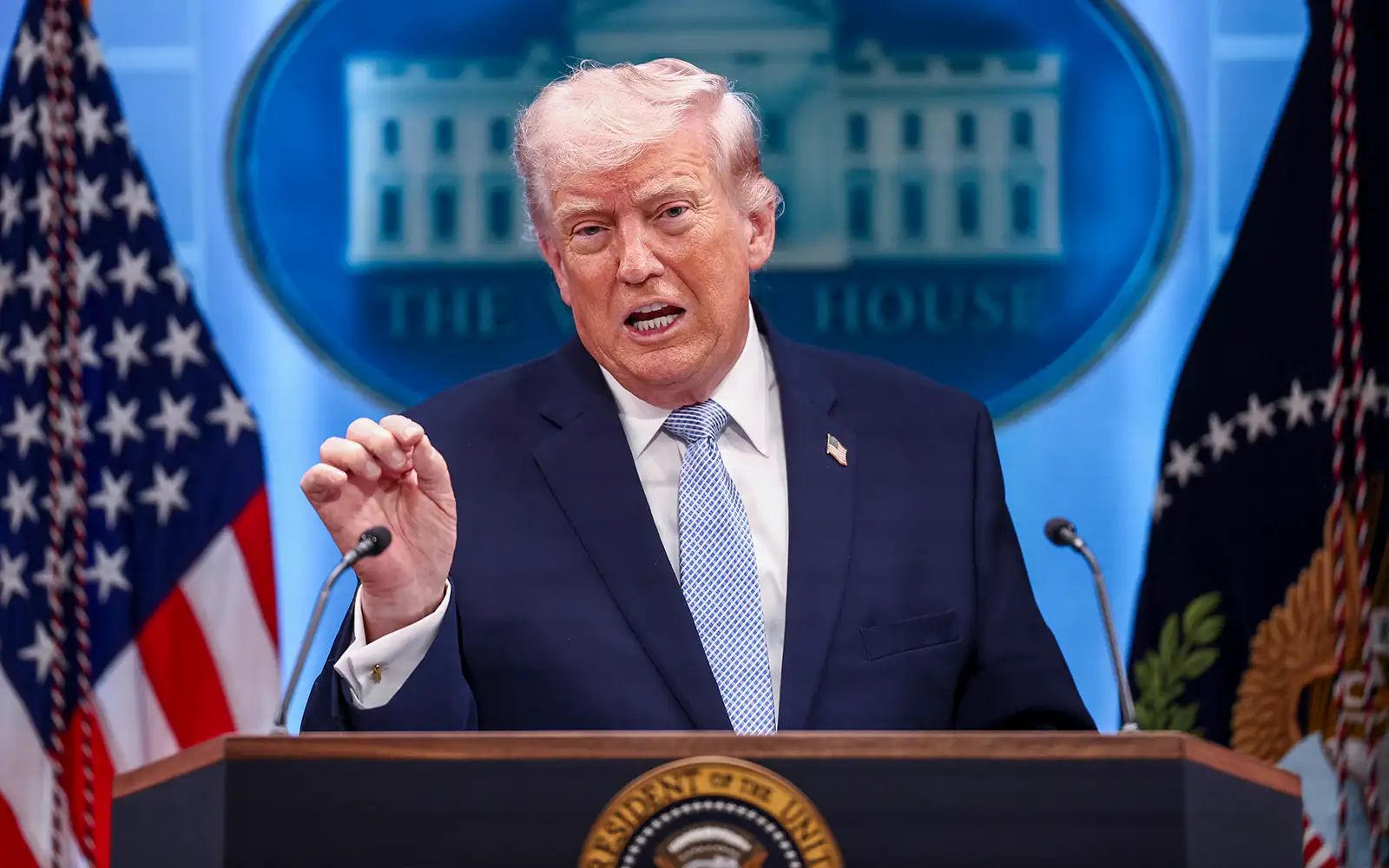
However, at a press conference in Washington, Trump said the US was having “very good conversations” with Iran but that Tehran wanted to close the strait again.
Iran could not blackmail the US, he said. Trump said the US is taking a tough stand, and there would be “some information by the end of the day” on Iran, but he did not take any direct questions about the conflict before the press conference ended.
Several vessels have reported coming under fire while trying to transit the waterway today. In Mumbai, an Indian government source said India summoned Iran’s ambassador after an Indian-flagged vessel carrying crude oil was attacked while trying to cross the strait.
A tanker reported that two Iranian gunboats had opened fire off the coast of Oman, while a cruise ship located three nautical miles east of Oman has reported seeing “a splash in close proximity” and a container ship was hit “by an unknown projectile which caused damage to some of the containers”.
Tehran’s renewed tough messaging injected fresh uncertainty around the Iran conflict, raising the risk that oil and gas shipments through the strait could remain disrupted just as Washington weighs whether to extend the fragile ceasefire.
Iran said it was determined to enforce monitoring and control over transit through the Strait of Hormuz until the end of the war “and the establishment of lasting peace in the region”.
The statement says this will be done by collecting full information from vessels passing through, issuing transit certificates, and requiring payment of service fees for “security, safety, and environmental protection services”.