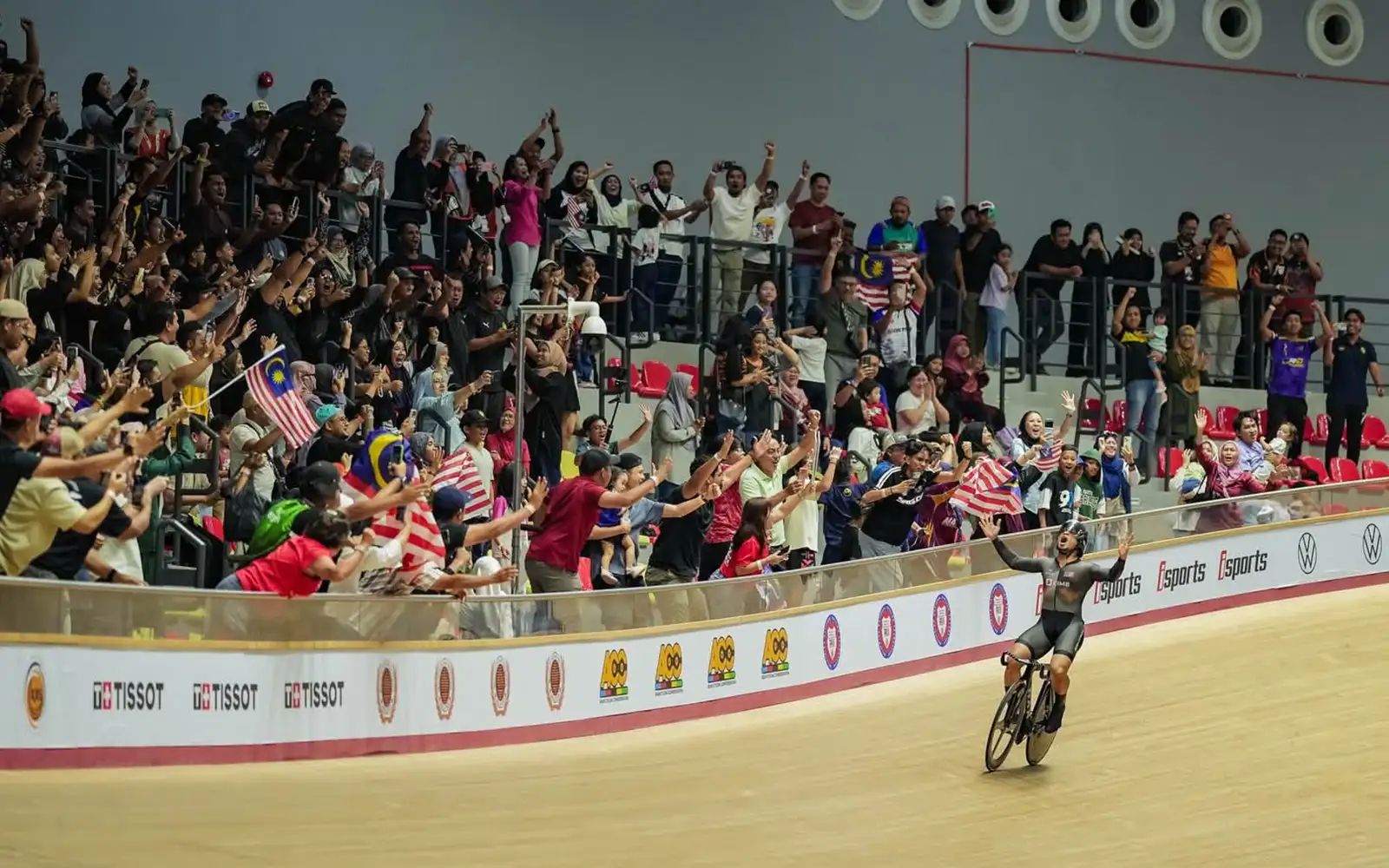
It swept through the National Velodrome in Nilai as the final lap tightened and the tension sharpened. Three thousand voices, building, sensing what was coming.
Then came the move.
Dutchman Harrie Lavreysen, the reigning world champion, surged to close the gap. Behind him, tracking every pedal stroke, was Azizulhasni Awang.
Patient. Measured. Waiting.
Fifth behind the derny. One spot behind the best in the world.
In the final metres of the keirin at the UCI Track World Cup, he chose his line.
He slipped through a narrowing gap, surged between Lavreysen and Trinidad and Tobago’s Nicholas Paul, and powered to the line.
Victory.
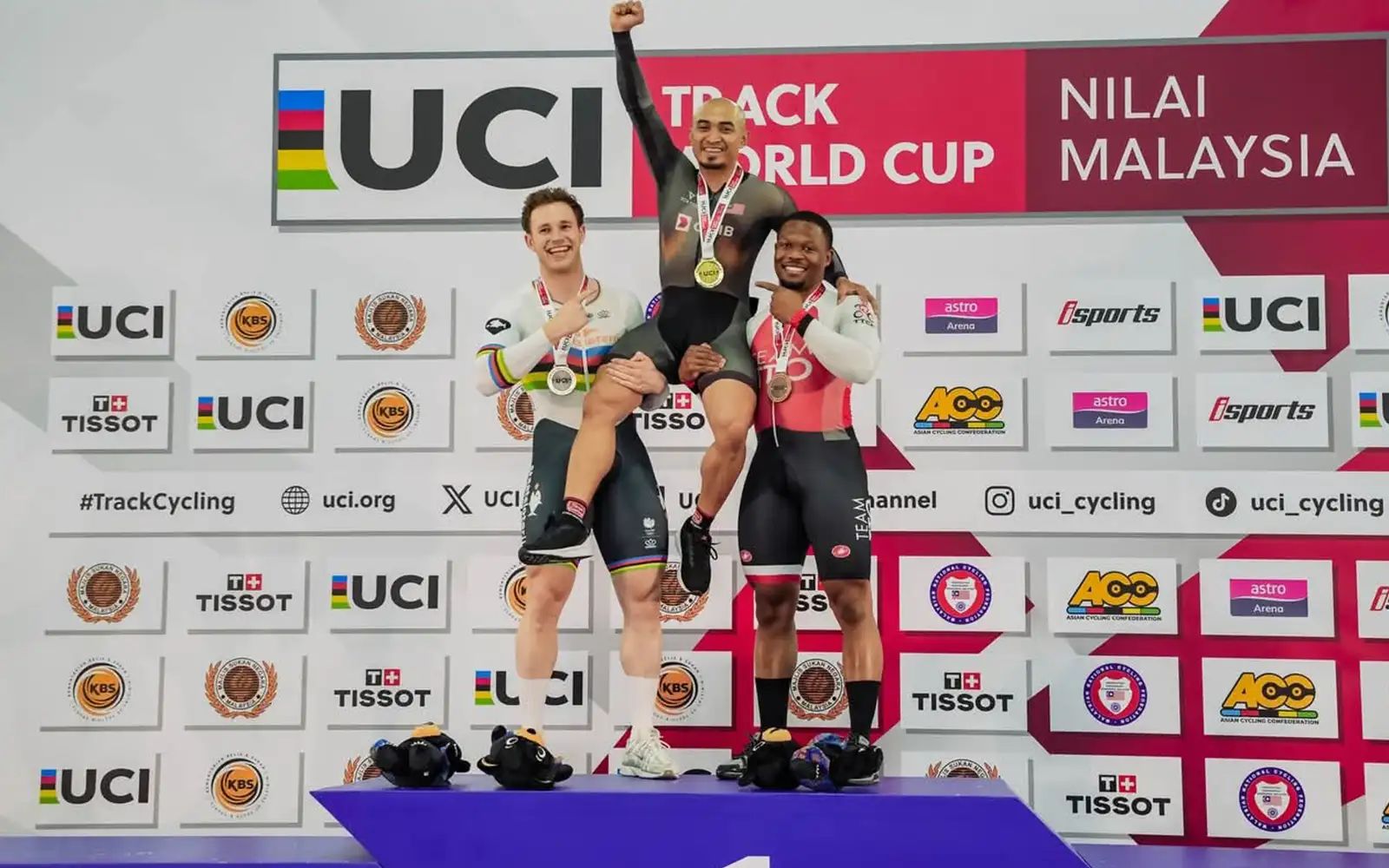
The velodrome erupted. Azizulhasni, 38, lifted his arms, then rolled into his trademark mini-wheelie — a flash of joy, a mark of defiance.
This was not just a win. It felt like a standing ovation.
He made it look instinctive. It was anything but.
Azizulhasni had already been tested earlier on Saturday. Boxed in during the second round, he was forced to sprint sooner than planned.
The effort drained him. The heat took more. Every decision after that had to be exact, from hydration to recovery.
By the final, nothing could be left to chance.
Racing at home carries a different weight. Expectations grow louder. Pressure sits closer. Azizulhasni knew it — and said as much.
He leaned on nearly two decades at the highest level to stay calm. He broke the race down step by step.
When the opening came in the final 80 metres, he did not hesitate.
That is the difference. Not just speed, but clarity.
He did not chase the race. He read it. Then he owned it.
Built on pain, rebuilt on belief
To understand this victory, you have to look beyond Nilai.

Back to Manchester, 2011. A crash. A 20cm wooden splinter driven through his calf.
The image was brutal. The pain was real. Most would have stopped.
He did not.
Forward to 2022. Open heart surgery to correct a congenital condition. Again, the question returned. Could he come back? Should he?
He answered the only way he knows how.
By coming back.
This is proof that greatness was never handed to him. He has had to rebuild himself more than once.
He was once pierced by wood. He was later opened up for heart surgery. Yet he still finds a way to surge past the finish line first.
A national portrait of a man who keeps coming back stronger.
This is not just a cyclist. This is a country’s enduring symbol of grit.
More than a medal, more than a night
This victory carries weight beyond Nilai.
It is his second keirin gold in this season’s UCI Track World Cup series, after his win in Perth.
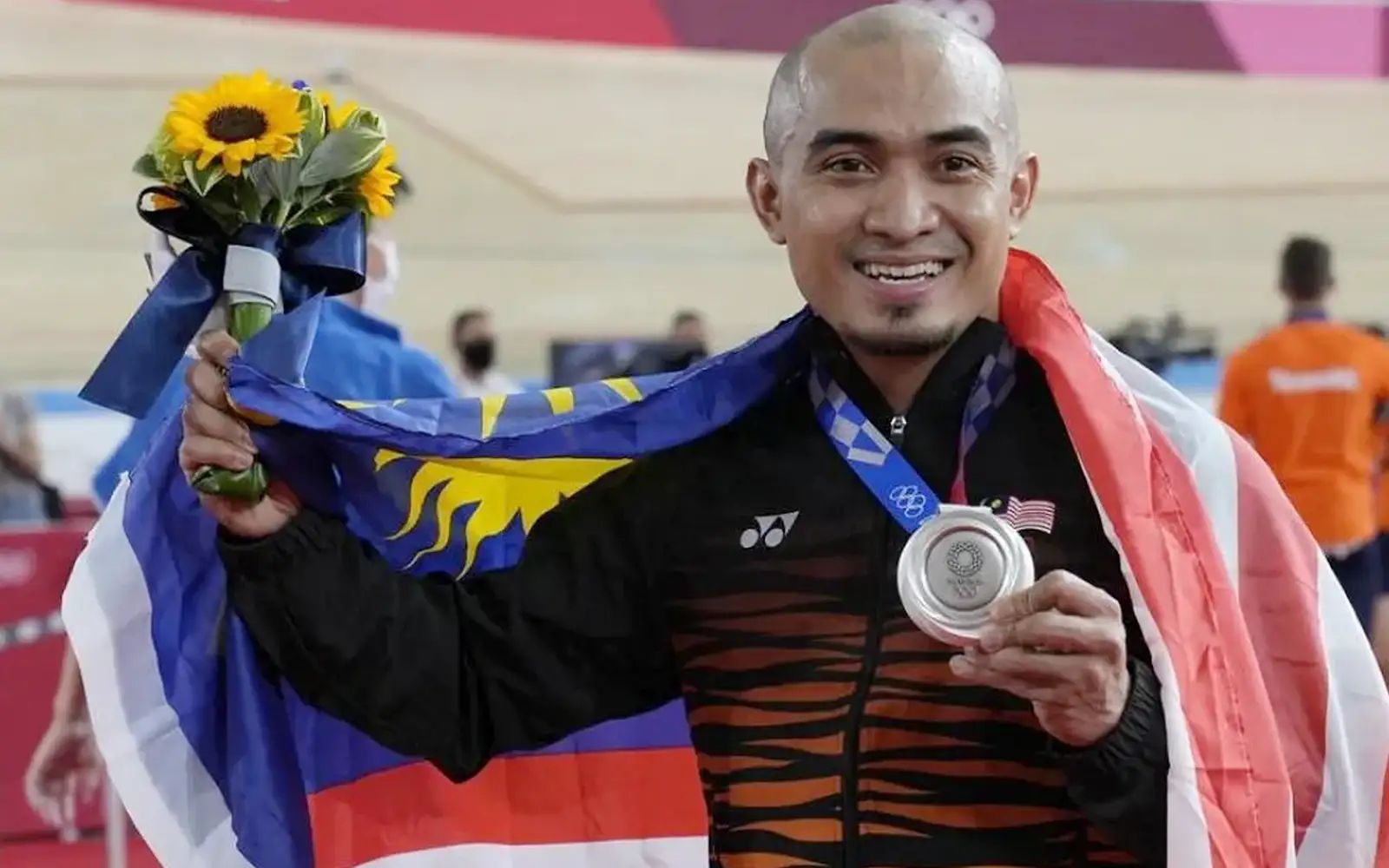
It lifts him to the top of the standings, strengthens his path to the World Championships in Shanghai, and reaffirms his place among the world’s elite.
Known as the “Pocket Rocketman” for his small frame and explosive power, Azizulhasni has spent a career defying the limits others placed on him.
The World Cup is a proving ground, a series where riders collect points and build towards qualification. The World Championships is the summit, where the rainbow jersey awaits.
Azizulhasni has worn it before, in 2017. An Olympic medallist twice over, he has long carried Malaysia’s hopes on the sport’s biggest stage.
On this evening, he looked ready to chase it again.
But numbers tell only part of the story.
What mattered more was what followed. His family in the stands. His children watching, his mother present.
A lifetime of sacrifice, distilled into a single moment.
He did not just win for himself. He carried a nation with him.
There is a reason moments like this linger. They speak to something deeper than sport.
Azizulhasni did not arrive here on talent alone. He endured pain. He faced doubt. He rebuilt his body and sharpened his mind, again and again.
And still, he finds a way.
In Nilai, he did what he has always done best. He waited. He endured. He chose his moment. Then he rode through it.
For himself. For his family. For Malaysia.
And as the cheers echoed long after he crossed the line, one truth stood above all: Malaysia was not just watching a champion. It was standing for one.