Istanbul has some great museums such as Topkapi Palace museum, Hagia Sophia museum, Basilica Cistern and Kariye museum.
One of the lesser known museums is the Ottoman Bank museum. This museum may not have broad appeal but numismatics will find it fascinating.
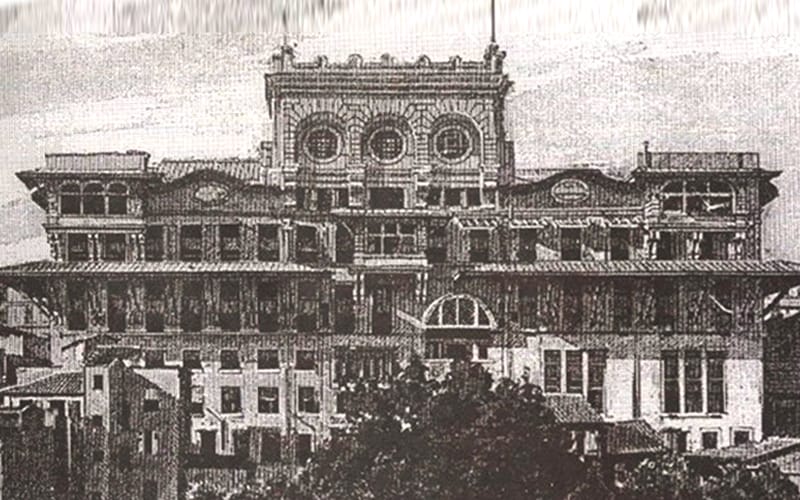
It is located on Bankalar Caddesi (Bank Street) in the Karakoy district of the city, in a grand building constructed in 1890 which served as the head office of the Ottoman Bank until 1999.
The building is now the home of SALT, an independent not-for-profit cultural institution founded by Garanti Bank, which took over the remaining operations of the Ottoman Bank in 2001.
The Ottoman Bank museum is in the basement of this building, in and around the bank’s former vaults and strong rooms.
A brief history of the Ottoman Bank
The Crimean War (in which the Ottoman empire fought on the side of the British and French against the Russians) helped persuade the Ottomans of the military and economic importance of railways. Construction of a railway network became a priority but required finance from abroad.
British capitalists were keen to be involved in the railway construction projects, but found it difficult to cooperate with the government in the absence of a state bank and an effective monetary system in the Ottoman empire.
To address this issue, Sultan Abdulmecid issued a Reform Edict in 1856 stating that:
Institutions such as banks will be established in order to correct the coinage system and to give credit to its financial affairs.

Two British entrepreneurs, Stephen Sleigh and Peter Pasquali, had been planning to establish a British Bank of the Levant but they turned their attention to Turkey instead.
They were instrumental in getting the Ottoman Bank off the ground. After obtaining a Royal Charter from Queen Victoria, the Ottoman Bank opened for business on June 13, 1856 with a capital of £500,000.
The Ottoman Bank was a private British commercial bank with modest resources and only had a handful of branches rather than fulfill the role of a state bank which is what the Ottomans really wanted.
The Ottoman empire saw the importance of establishing a state bank for its financial stability. A number of foreign and local groups were vying for such a concession but all were rejected in favour of the Ottoman Bank.

However the Ottoman government was unwilling to hand over all the powers of a state bank to an institution which was wholly in British hands and they insisted that its capital base be opened up to French investors.
On February 4, 1863 the bank was elevated to the status of state bank and renamed Imperial Ottoman Bank with an expanded capital provided by British and French shareholders.
With its new status, the bank took on more merchant banking activities such as financing railways and public works, including Beirut Port and the Beirut-Damascus railway line.
The bank moved its head office to this building in 1892. In 1896 the building was attacked by a group of armed Armenians who threatened to blow up the bank.

The then governor, Sir Edgar Vincent, escaped through a skylight and alerted the authorities. The attackers eventually gave up their weapons in return for safe passage to France on Sir Edgar’s private yacht.
When the Ottomans entered WWI on the side of the Germans, the Imperial Ottoman Bank was seen as being on the enemy’s side.
It’s British and French management were forced to leave and the bank’s operations were crippled for the duration of the war.
After the allied victory, things were never really the same again although the bank was allowed to continue acting as a state bank until 1931 when the Central Bank was established.
The name changed back to the Ottoman Bank in 1924 and from 1933 onward it reverted to being purely a commercial bank.
The bank sold most of its overseas operations in 1969 to National & Grindlays Bank. In 1996 the Ottoman Bank was sold to the Dogus Group and it is now part of Garanti Bank.
Visitors get to go inside some of the strong rooms which still have their original vault doors, safe cabinets and old ledger books.
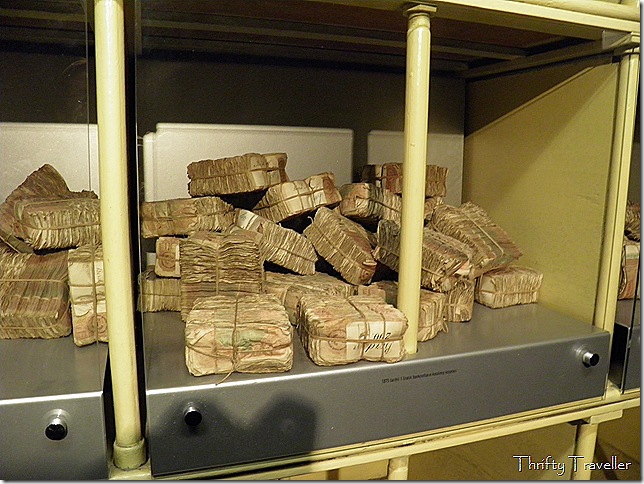
The safes were made by Chatwood’s of London, according to the inscription on the lock mechanism.

One safe contains a considerable number of rather soiled-looking banknotes which are folded into quarters. The Ottoman Bank was a banknote issuer.
In another strong room some old staff records have been put on display, including some full length photographs.
Also on display are some correspondence with customers such as the beautifully handwritten letter above in copperplate style, a skill which now appears to be as dead as the Ottoman Empire.
Entrance to the museum is free.
This article first appeared in ThriftyTtraveller.