
But one in 15 pneumonia cases still prove fatal, mostly due to late detection and treatment. Because of this, some physicians call it a silent killer.
In fact, pneumonia accounted for 12.2% of deaths in Malaysia in 2020, according to the Department of Statistics.
In conjunction with World Pneumonia Day tomorrow, FMT Lifestyle caught up with respiratory and lung specialist Dr Nurul Yaqeen Mohammad Esa to talk about this lung infection.
Nurul Yaqeen explained: “When we get pneumonia, it alters the healthy lung tissue, affecting the exchange of oxygen and carbon dioxide. When we experience a lack of oxygen, which leads to a lack of energy supply to our other organs, it can cause death.”
The most common of pneumonia’s symptoms are coughing, breathing difficulties, chest discomfort and fever. The more serious cases will lead to loss of appetite and weight.
How does one differentiate a pneumonia cough from a common cough? Nurul Yaqeen said one would have to consider the duration and characteristics of the cough. “We’ll also check if there’s any associated fever, chest pain or shortness of breath.”
Your physician can conclude whether or not it’s pneumonia after correlating the clinical symptoms with blood investigation results and X-ray findings. A high white blood cell count and white patches seen in the chest x-ray would indicate pneumonia.
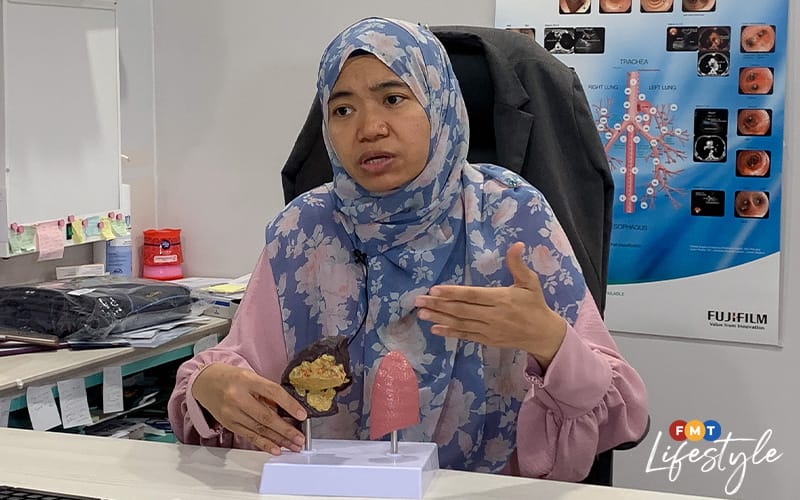
When one has been coughing for more than two weeks and is suffering from underlying health conditions like diabetes, heart problems or chronic kidney disease, one should quickly go for a check-up.
“Even if there’s no serious illness but the cough isn’t settling after five to seven days, we’ll advise getting checked,” Nurul Yaqeen said.
“A normal cough due to flu will usually recover by itself within two to three days. If it doesn’t, there might be a bacterial infection, and this will require antibiotics.”
One can get pneumonia from viral, bacterial or fungal causes or environmental triggers like dust and feathers.
Antibiotics are prescribed to treat germ-induced cases. If environmental triggers are suspected, then steroids might be included.
“We’ll also hydrate patients with IV drips so they will be properly nourished. This will speed up recovery. If the oxygen level is less than 95%, we’ll put them on oxygen support too.”
One of the misconceptions Nurul Yaqeen has come across is the belief that pneumonia is caused by bathing in the middle of the night.
“There’s no direct correlation between the two,” she said. “But if the patient has sensitive lungs or is asthmatic, exposure to cold temperatures can cause a narrowing of the airways, leading to breathlessness and probably triggering an infection.”
That being said, she would still advise patients with pneumonia or lung infection against night baths or showers since the cold would worsen the cough.

She also spoke of a folk belief about severe coughing being brought on by black magic.
“There was this twenty-something girl who started coughing up blood after her engagement was broken. Her family took her to a bomoh and she didn’t get better even after two or three months.
“By the time she came to the hospital, it was too late. Both her lungs were already badly affected. In the end, she died due to severe lung infection.”
Nurul Yaqeen said it was important to educate society about pneumonia in order to ensure early detection and treatment so that deaths could be prevented.
After you recover from pneumonia, the best way to prevent its return is vaccination.
“Once you get infected,” Nurul Yaqeen said, “the risk of getting a future infection is higher than if you’ve never had it. This is because the virus has already identified you as a good host.
“I also advise my patients who like to travel and mingle with people to get vaccinated. It’s a post-pandemic transition, and most people would have got Covid. After recovering, their risk of contracting pneumonia increases since their lungs are more fragile and susceptible to infection.”
Head to Dr Nurul Yaqeen’s website for more information on pneumonia.