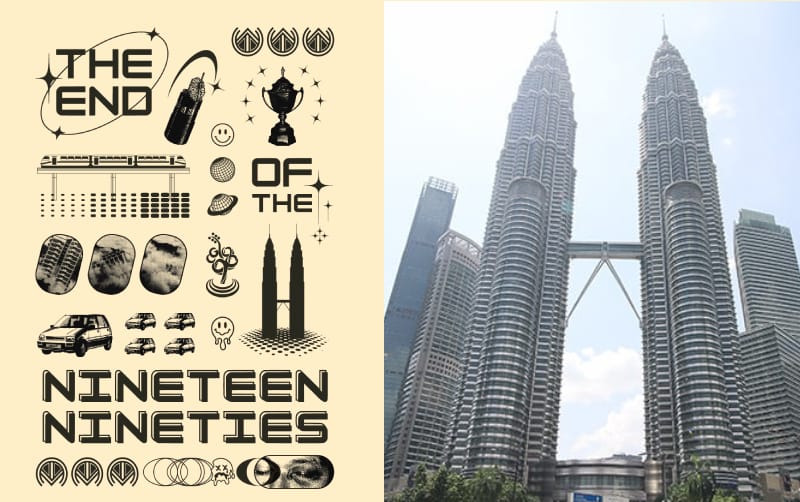
Hafiz Noor Shams writes about all this and more in his book “The End of the Nineteen Nineties”. In this recent release by Matahari Books, the 41-year-old looks at this chapter of his youth through rose-tinted glasses, offering a witty and engaging work that is part autobiography, part commentary.
The US-trained economist belongs to the generation of Malaysians who sang “Wawasan 2020” in school assemblies. Perhaps this is why Hafiz calls the 1990s the one – and it appears only – decade when there was a strong sense of Malaysian-ness.
Scholars of Malaysian history may disagree, recalling just a few years earlier the use of the Internal Security Act to incapacitate opposition leaders through Ops Lalang, and the sacking of Supreme Court judges in 1988.
Indeed, this book offers a view of the events at the end of that decade that shaped the present-day political, societal and economic landscape; a time of much hope and visions of unity, fraught with political upheaval and uncertainty.
The author was on the fringes of many of the occurrences of this time – as a son, brother, student and bystander. In one chapter, a teenage Hafiz recalls the tears and fears of his loved ones during the 1997 Asian financial crisis.
Pertinently, these critical points in Malaysia’s recent history left an indelible impression on the young man as he transitioned from life in Malaysia to studying overseas and back again.
“The End of the Nineteen Nineties” thus reveals how the 90s – in Hafiz’s view the best decade to be Malaysian – shaped his trajectory as an economically and politically minded individual.
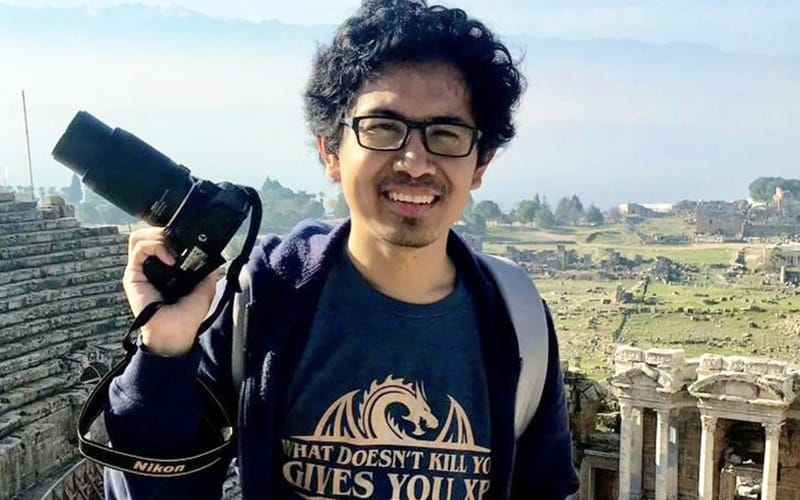
His first rally was not Reformasi but one against the US invasion of Iraq, during his time as a fresh undergraduate in Ann Arbor, Michigan. Later on, back in Malaysia, he joined Bersih rallies and campaigned for Pakatan Rakyat leaders.
“After years of growing up in Malaysia, always oblivious to authority, the urge to go down to the streets was too great to resist. I was in that rebellious phase of my youth,” writes Hafiz.
Quoting Rehman Rashid’s “A Malaysian Journey”, he touches on his apparent privileges as a Malay Muslim – Hafiz had, after all, studied at institutions like the Malay College Kuala Kangsar and the University of Michigan.
He has considered migration and half-heartedly attempts to trace his ancestry, namedropping some local personalities while doing so.
“Family history becomes sketchier the further back I go. I could claim lineage from Afghanistan and Yasmin Ahmad might be right. Kadir Jasin might be right that I am not actually a Malay” – the journalist having apparently joked that his skin was too fair and his command of English too good.
Ultimately, Hafiz weaves personal, national and global events in an attempt to contextualise the tension that exists within Malaysian society, for instance by touching on the collapse of the Bangsa Malaysia ideal.
The twists and turns of his narrative are entertaining, although at times it feels like he’s perhaps too fixated with our former prime minister.
In one chapter he writes: “Chatter filled the room, but it quickly turned silent as Mahathir Mohamad entered. Everybody stood up. The nonagenarian smiled and shook everyone’s hands, including mine. As the meeting progressed, I found myself staring at him from the back, and thinking this man was both the hero and the villain of Malaysia.”
All in all, Hafiz’s observations of Malaysian life from the 1990s to 2018, interspersed with personal reflections and political memory, make “The End of the Nineteen Nineties” worthy of a spot on one’s bookshelf.
Learn more about ‘The End of the Nineteen Nineties’ here.