
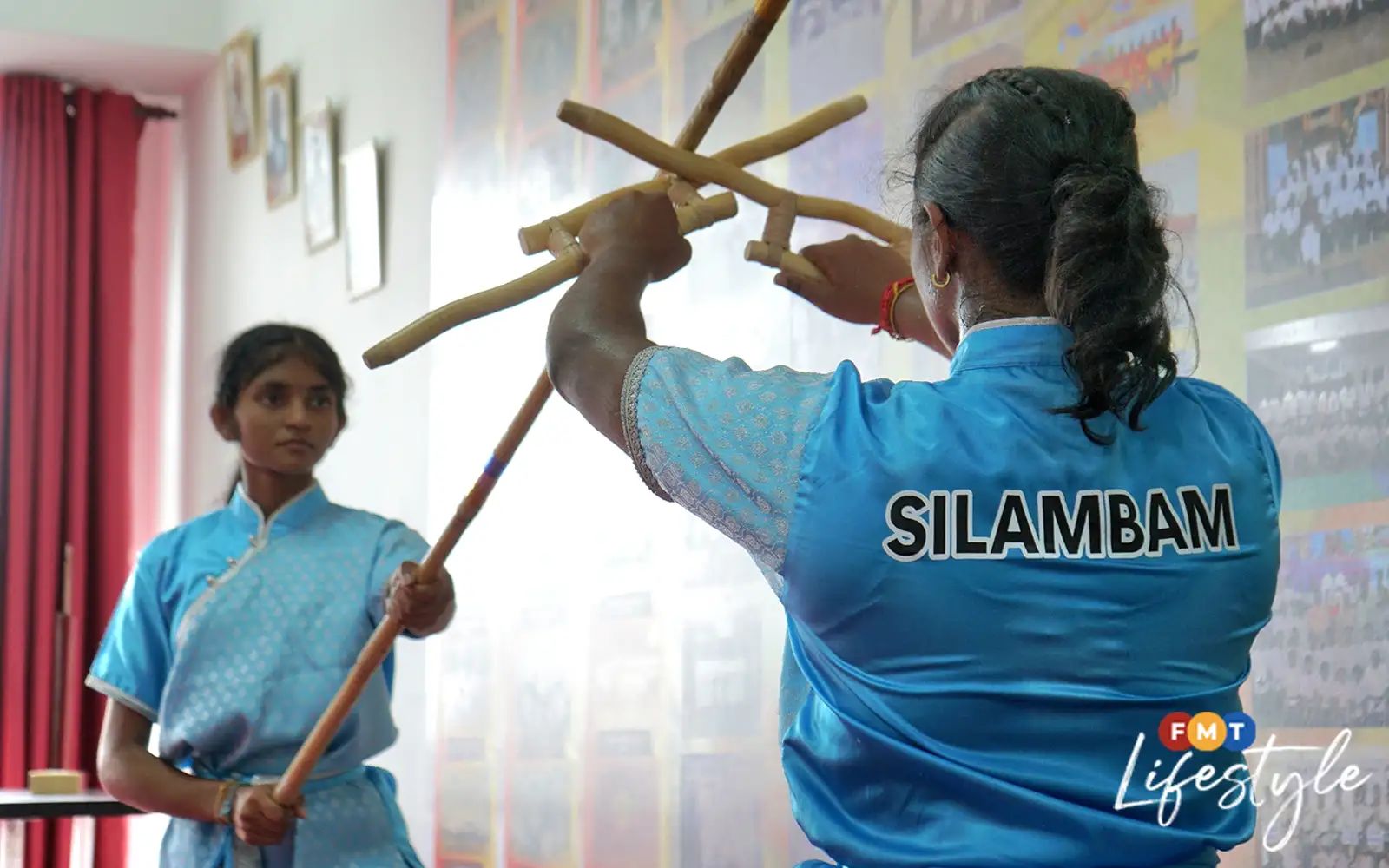
As its wielder spun the staff mid-air with remarkable skill and energy, it was easy to see why silambam, one of the oldest martial arts in the world, has captured the hearts of young practitioners in Malaysia.
“If we learn silambam, when we go outside, we can protect ourselves and defend ourselves,” said Kavithira Baskaran. For the 16-year-old, what excites her about this millennia-old martial art is the usage of weapons. Kavithira herself wields a pair of swords with dexterity.
Her fellow silambam team member Dharnisha Balaguru, also 16, agreed.
“As a girl, I have to feel safe, and I learnt martial arts to protect myself outside. I chose silambam because it’s such a sacred martial art,” Dharnisha, whose grandparents are silambam practitioners, shared. “And the sticks are so interesting. They don’t have that in other martial arts.”
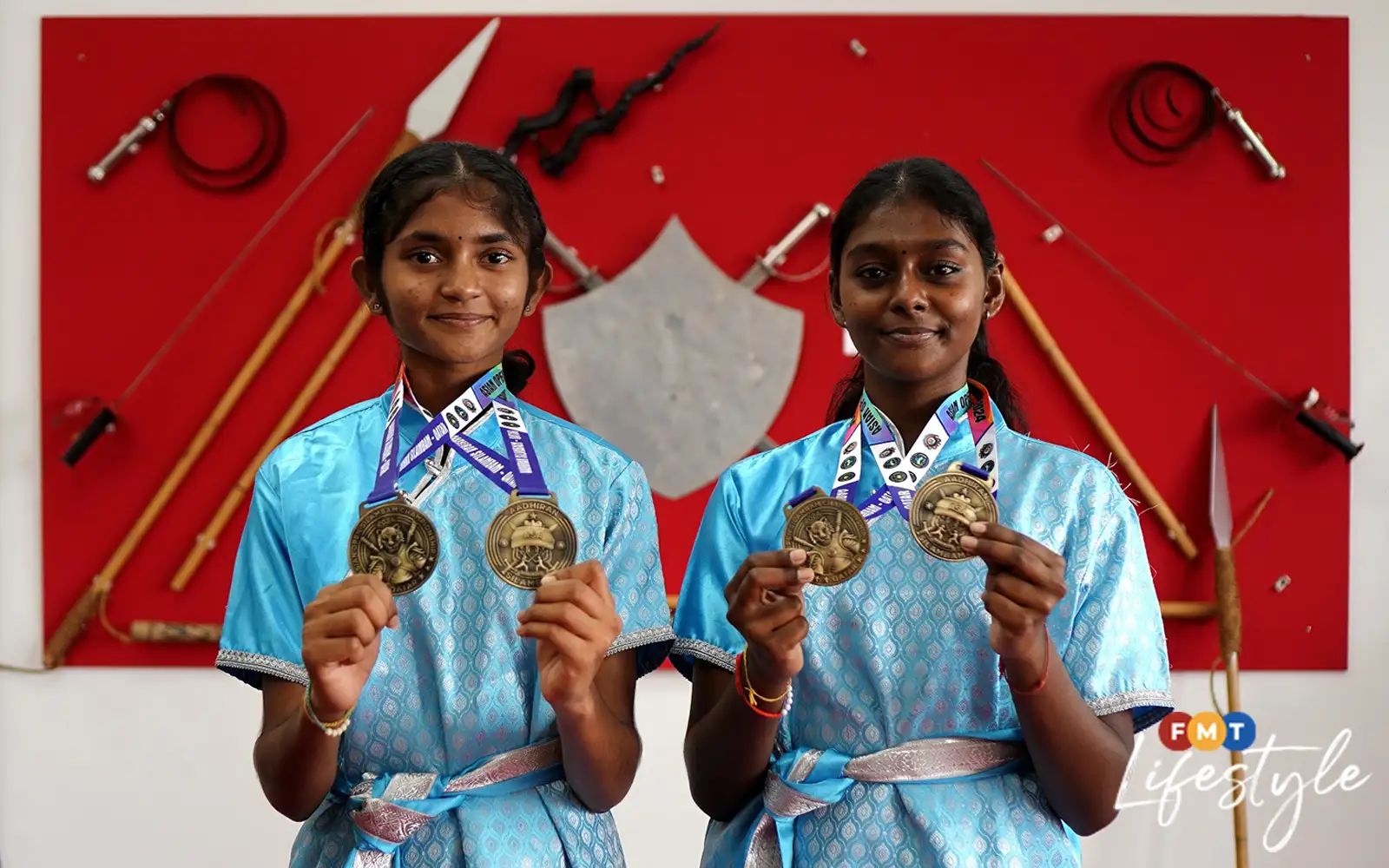
These Penangites were part of the Malaysian team who recently brought home 12 gold medals at the Asia Open Silambam Championship in Qatar. They emerged as overall champions, beating teams from Qatar, Oman, the UAE, Saudi Arabia, and India – the birthplace of this ancient martial art.

Kavithira, Dharnisha, and their team members admitted they were pleasantly shocked when they emerged as victors in the championship.
“The competitors looked so intimidating. I was a little scared before competing with them. When we won, we couldn’t believe it. We were so proud that we took 12 golds and saved the name of our country,” said Dharnisha, who picked up silambam when she was just 10.
Suraess Muthusamy, 42, Malaysia Silambam Association president said: “The victory was really unexpected. Usually India, being the strongest team, would’ve been tough to beat. But this time, we beat them in all the categories. The athletes were elated.”
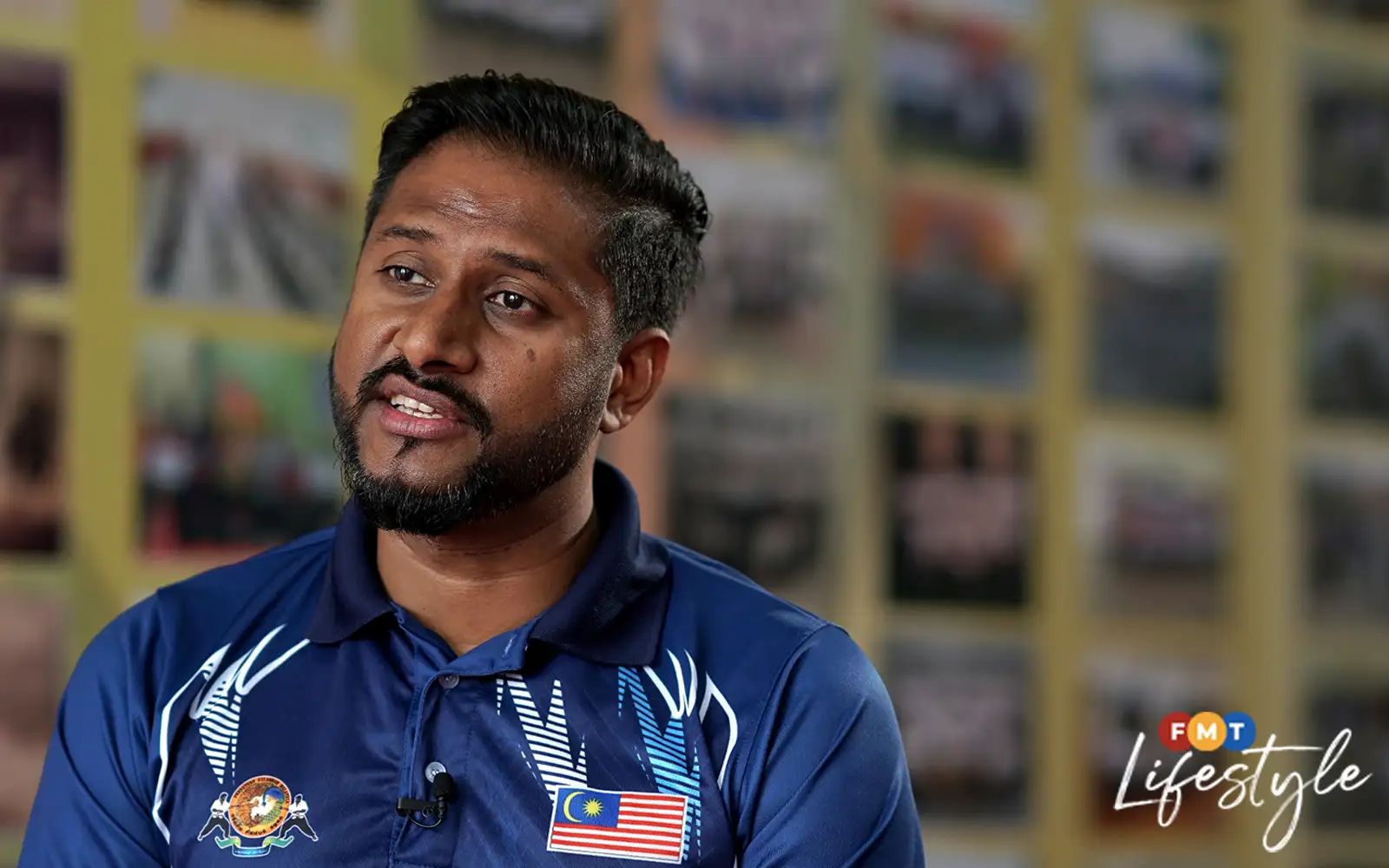
The medical doctor, passionate about silambam since he was 13, shared that the martial art, which originated in South India more than 2,000 years ago, has been practised in Malaysia for over a century.
However, it was once relegated to the shadows, practised secretly in the jungles of Malaya as it wasn’t recognised by the British.
Later, after the Japanese occupation, it became popular in estates. Two masters from India – Master Karapanan in Selangor and Mr Naina Mohamad in Penang – were instrumental in spreading its popularity.
That changed with the enactment of the Martial Arts Societies Act in 1976, which led to the establishment of the Malaysian Silambam Association.
From just 2,000 practitioners in the 1990s, the number has grown to an astonishing 20,000. Suraess credits this exponential growth to silambam’s inclusion in the Sukma Games since 2008.
Indeed, with the national team’s recent triumph in Qatar, he hopes even more young Malaysians will take up the sport, especially with the government’s decision to recognise martial arts as a sport.
“The association would like to take this opportunity to really market ourselves and get more students learning silambam. We also need to have more classes. We appointed more coaches through our courses last year,” Suraess mentioned.
In fact, silambam’s appeal extends beyond the Indian community. “In Sukma last year, we saw Sabah and Sarawak teams made up of completely non-Indians,” Suraees noted.
The association is planning an international tournament in Penang this May, aiming to attract teams from 12 countries, double the number that participated in Qatar last year. Kavithira and Dharnisha are already gearing up for the competition.
“We already took the gold medals and are in the highest place. We need to maintain the rank and go further,” said Kavithira. “I feel like I didn’t fulfil my achievement. I want to do better in the next competition,” Dharnisha added.
With its rich history, unique techniques, and transformative potential, silambam is much more than a martial art – it’s a cultural treasure and a force for positive change.
And thanks to passionate advocates like Suraess, its future in Malaysia looks brighter than ever.
Find out more about the Malaysia Silambam Association here or follow them on Instagram.