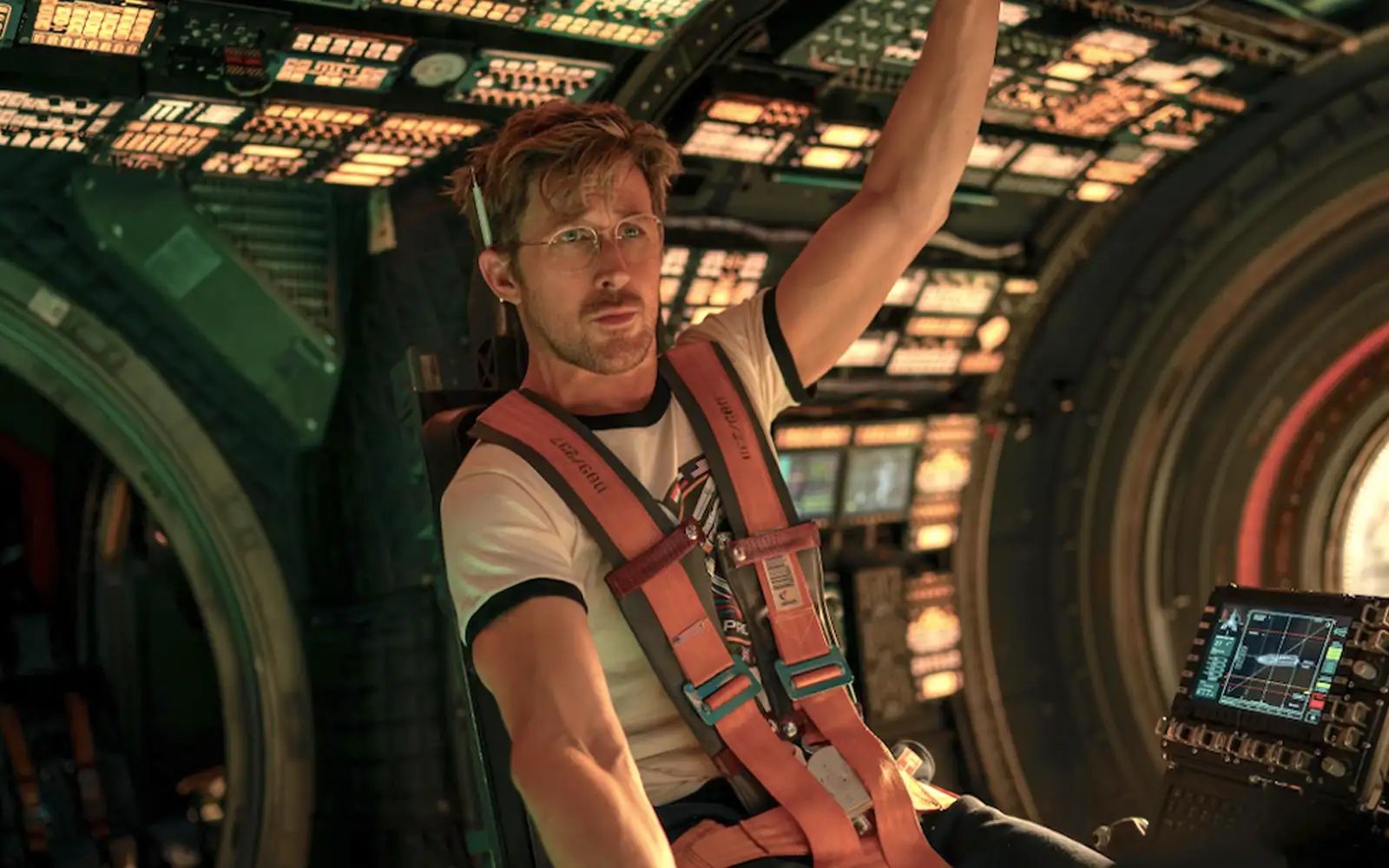
Based on the bestselling novel by Andy Weir and starring Ryan Gosling, this sci-fi-comedy adventure is, as of press time, dominating the international box office.
The story follows Ryland Grace, a schoolteacher turned reluctant astronaut who wakes up alone on a spacecraft, tasked with saving Earth.
In space, he meets Rocky, an alien dealing with the same crisis that holds our planet in peril – and they need to figure out how to work together to save their respective homes.
“Project Hail Mary” is thrilling and emotional – but how much of it is actually based on reality?
1. Tau Ceti, Rocky’s world, and Astrophage: are they real?
In the film, the star Tau Ceti is the focal point of Grace’s mission. In real life, it is an actual star located about 12 light years away from Earth!
Rocky, meanwhile, comes from a planet orbiting 40 Eridani A, another star system that was identified by real-life scientists.
Rocky’s home planet, nicknamed “Erid”, wasn’t entirely made up when Weir wrote his book. In 2018, astronomers believed they had discovered a “super-Earth” orbiting 40 Eridani A, and Weir based Erid on this discovery.
However, by 2024, Nasa confirmed that the supposed planet was actually a false positive. So while the star system itself is very real, Rocky’s home planet, thus far, does not exist.
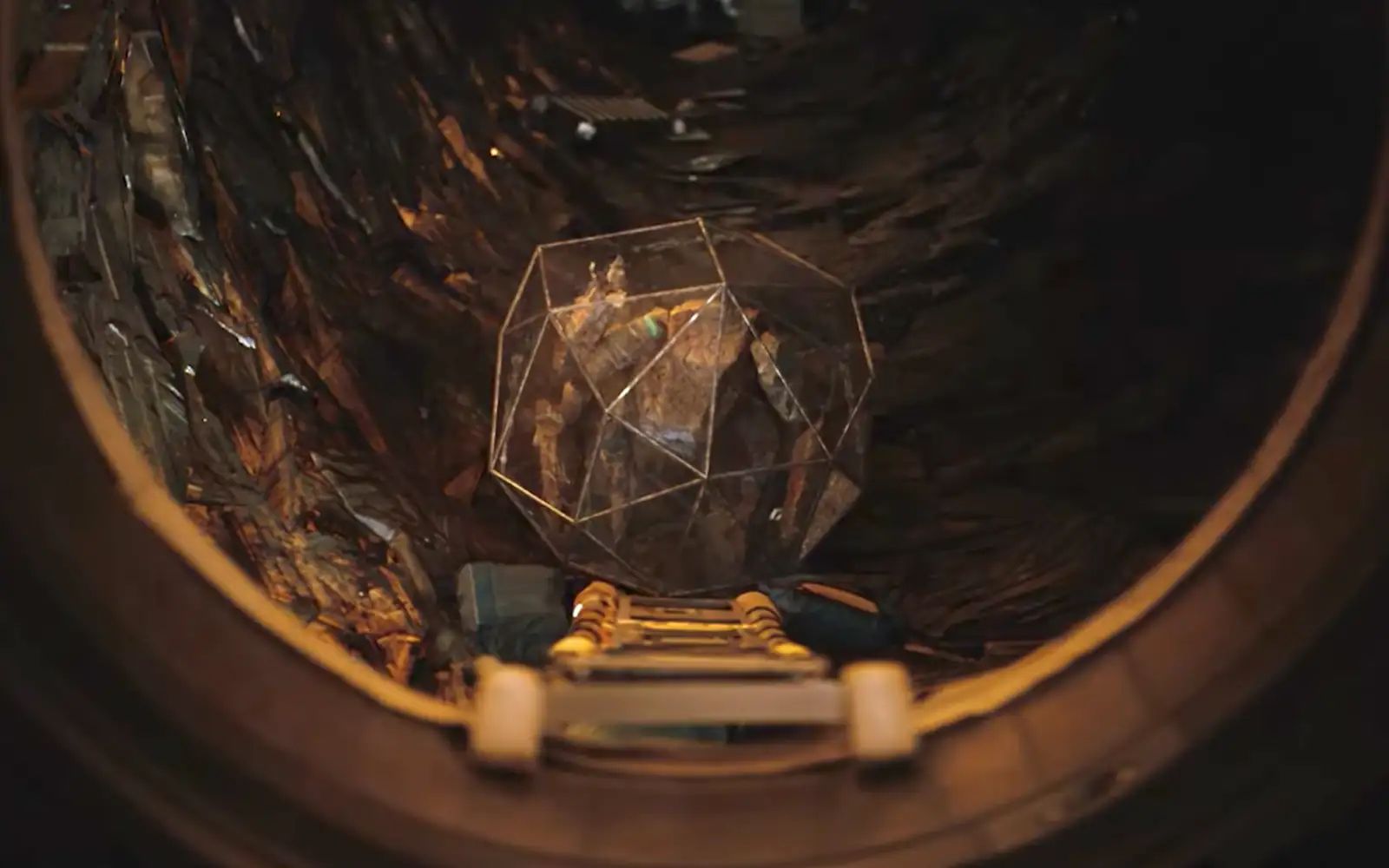
Then there’s Astrophage, the micro-organism driving the entire plot, which consumes energy from stars, causing the sun to dim. These microbes also double as a powerful fuel source for spacecraft.
They are, thankfully, entirely fictional.
2. Are we close to finding life in outer space?
Audiences everywhere have fallen in love with Rocky, the multi-limbed, rock-like alien. But would he exist in our reality?
In 2024, Nasa’s Perseverance rover studied a rock sample on Mars nicknamed “Cheyava Falls”. It showed evidence of past water, organic molecules, and chemical reactions.
The following year, scientists confirmed these as potential biosignatures – meaning they could indicate past life. But they aren’t definitive proof.
So while “Project Hail Mary” imagines life on a much larger and more dramatic scale, the real-world version is far more cautious: we are still looking for even the simplest forms of life.
3. Is long-duration space travel possible?
The Hail Mary mission is a one-way journey across interstellar space. Grace is never meant to return – a dramatic but necessary sacrifice in the story.
In reality? Tau Ceti is about 12 light years away. With today’s technology, it would take at least tens of thousands of years to get there.
So no, we’re not sending anyone on that mission anytime soon.

However, astronauts in real life have already spent over a year in space. The current record stands at 437 days, held by cosmonaut Valeri Polyakov, while Nasa’s Frank Rubio clocked in 371 days aboard the International Space Station.
As an aside, the astronauts aboard the Artemis II are slated to spend about 10 days in space.
4. Can we really talk to aliens?
One of the most fascinating parts of the film is how Grace communicates with Rocky – through tuneful alien expressions that get decoded into language on Grace’s laptop.
Believe it or not, this is rooted in real science. The method Grace uses mirrors how scientists analyse complex signals like sound waves and radio frequencies – similar to tools already used in engineering and astrophysics.
Projects today are even using AI to decode animal communication, like whale and dolphin sounds.
The catch? Speed.
In the film, Grace and Rocky become fluent in weeks. In reality, decoding an entirely alien language – complete with grammar and abstract concepts – would likely take years, if not decades.
5. Can humans and aliens really be BFFs?
At its core, “Project Hail Mary” is about friendship. Grace’s bond with Rocky might seem unlikely, but psychology says otherwise.
In extreme isolation, humans are wired to seek companionship. This often leads to anthropomorphism – projecting human traits onto non-human things.
This is sometimes referred to as the “Wilson effect”, popularised by the volleyball companion to Tom Hanks’s character in “Cast Away”.
Studies on astronauts and confined crews also show that small groups develop intense loyalty to one another – sometimes even prioritising each other over mission objectives.
So Grace risking everything to save Rocky? Dramatic, but psychologically feasible. And even if you don’t agree, “Project Hail Mary” proves that an actor like Ryan Gosling can have tremendous onscreen chemistry with a rock.
If you hurry, you can still catch ‘Project Hail Mary’ in selected cinemas.