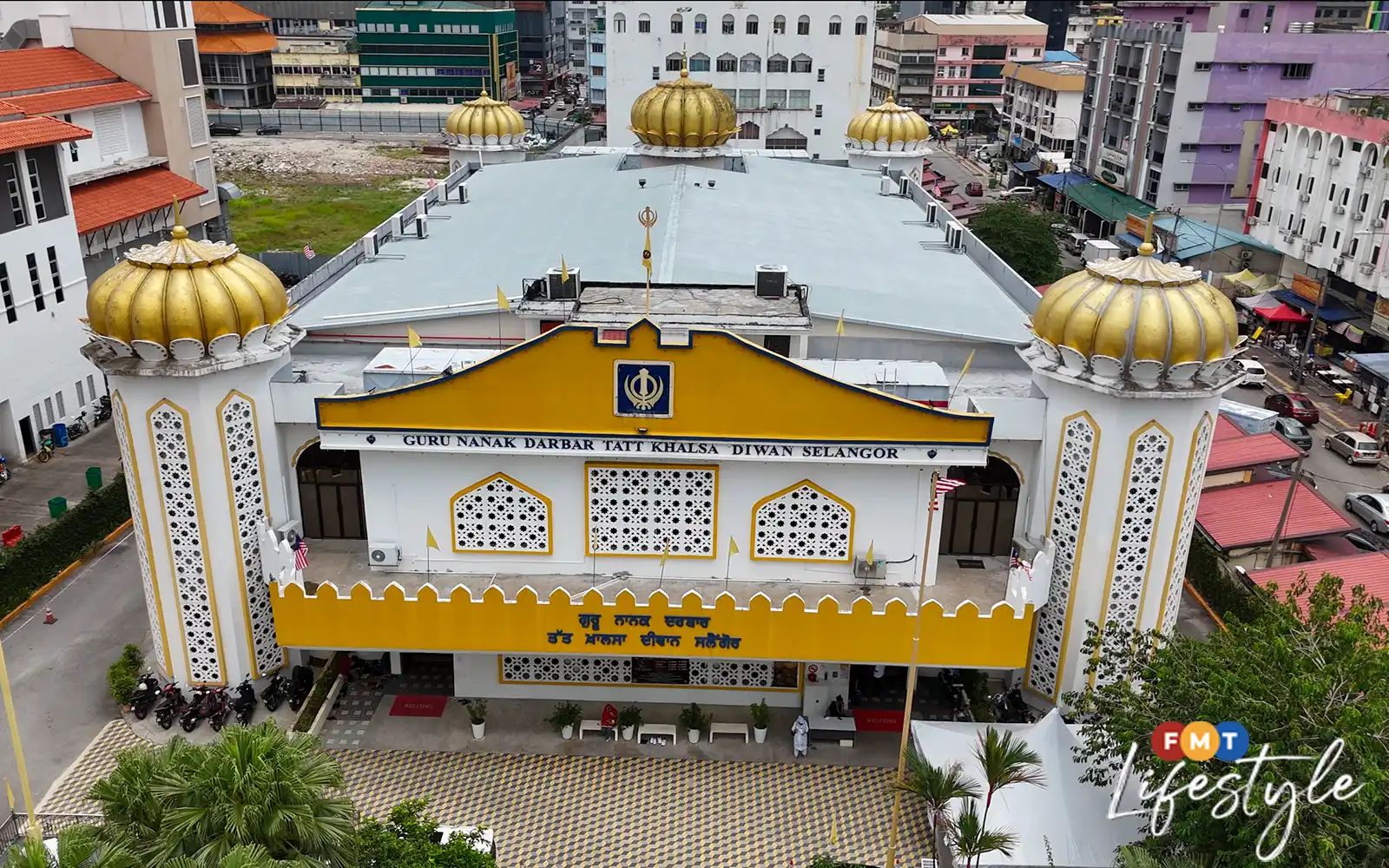
This festival is celebrated in full spirit at the Guru Nanak Darbar Tatt Khalsa Diwan, the largest Sikh temple in Southeast Asia.
Located in Chow Kit, this gurdwara was established in 1918. Its origins can be traced back to the then General Hospital Kuala Lumpur, when a vacant ward there was converted into a temporary prayer hall. Known as a darbar sahib, this served the community for about a year.
Then under the leadership of Sardar Kala Singh Kheda, the congregation rented a building along Pahang Road. In 1924, the British government granted them their current permanent site.
The earlier building was a striking structure. Its architecture, inspired by the Golden Temple in Amritsar, India, featured a prominent red-and-white exterior.
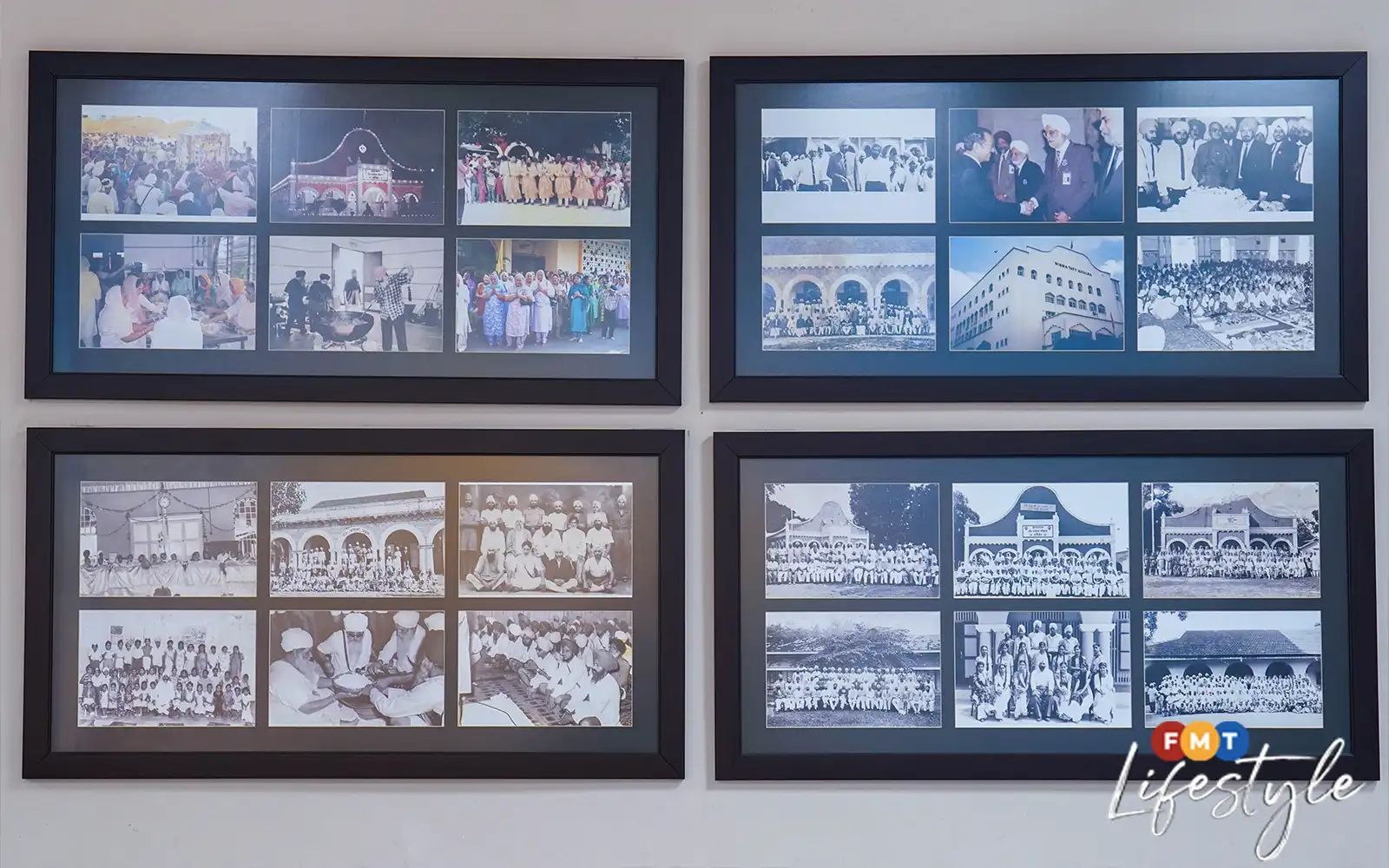
The gurdwara also played an important role in promoting Punjabi education, having hosted the first Sikh education conference in 1937.
In 2002, a new building was erected – the one that stands today – with a prayer hall that accommodates around 1,500 people, as well as a basement car park. Construction cost RM7 million, largely funded through bank loans taken by the gurdwara’s management.
Today, it serves as a one-stop religious, social, and cultural centre for Sikhs across Malaysia.
FMT Lifestyle joined the pre-Vaisakhi celebrations at the gurdwara a few weeks ago, where thousands gathered over the weekend.
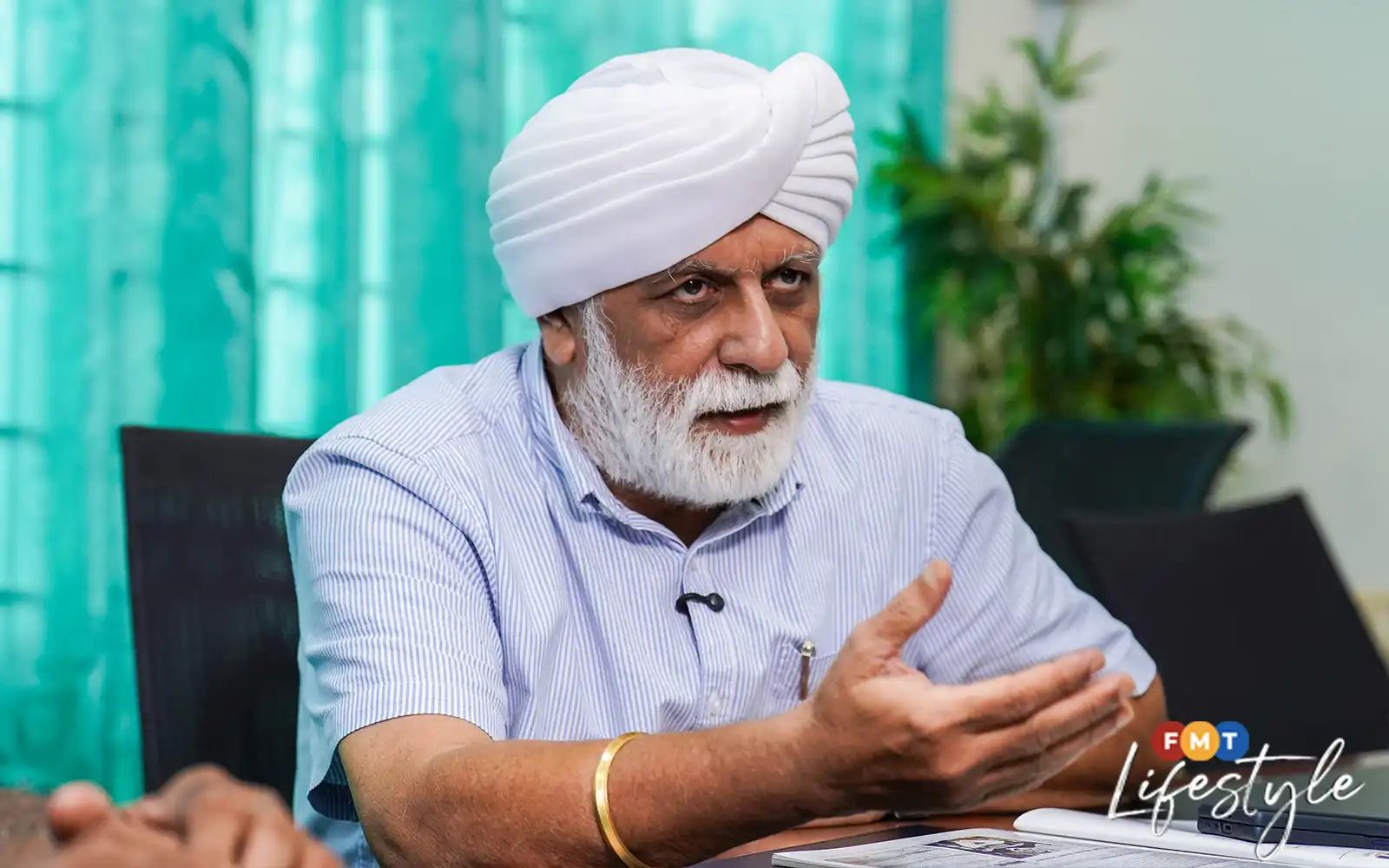
Lawyer Rejinder Singh Dhaliwal, vice president of Tatt Khalsa Diwan, explained the significance of the festival.
“There is a misnomer that Vaisakhi is our New Year. Actually, it is not. Vaisakhi is the birth of the Khalsa,” he shared.
The Khalsa is the community of initiated Sikhs, created by Guru Gobind Singh in 1699, to eliminate caste distinctions and unite all Sikhs into a brotherhood.
Men adopted the name “Singh”, meaning lion, while women took the name “Kaur”, meaning princess.
Traditionally, Khalsa Sikhs wear five symbols of their identity, known as the “5 Ks”: Kesh – uncut hair, Kanga – a wooden comb, Kara – a steel bracelet, Kachera – cotton undergarments, and Kirpan – a ceremonial sword.
“Of course, not everyone practices all of this in the modern world, but that doesn’t make anyone any less of a Sikh,” Rejinder said.
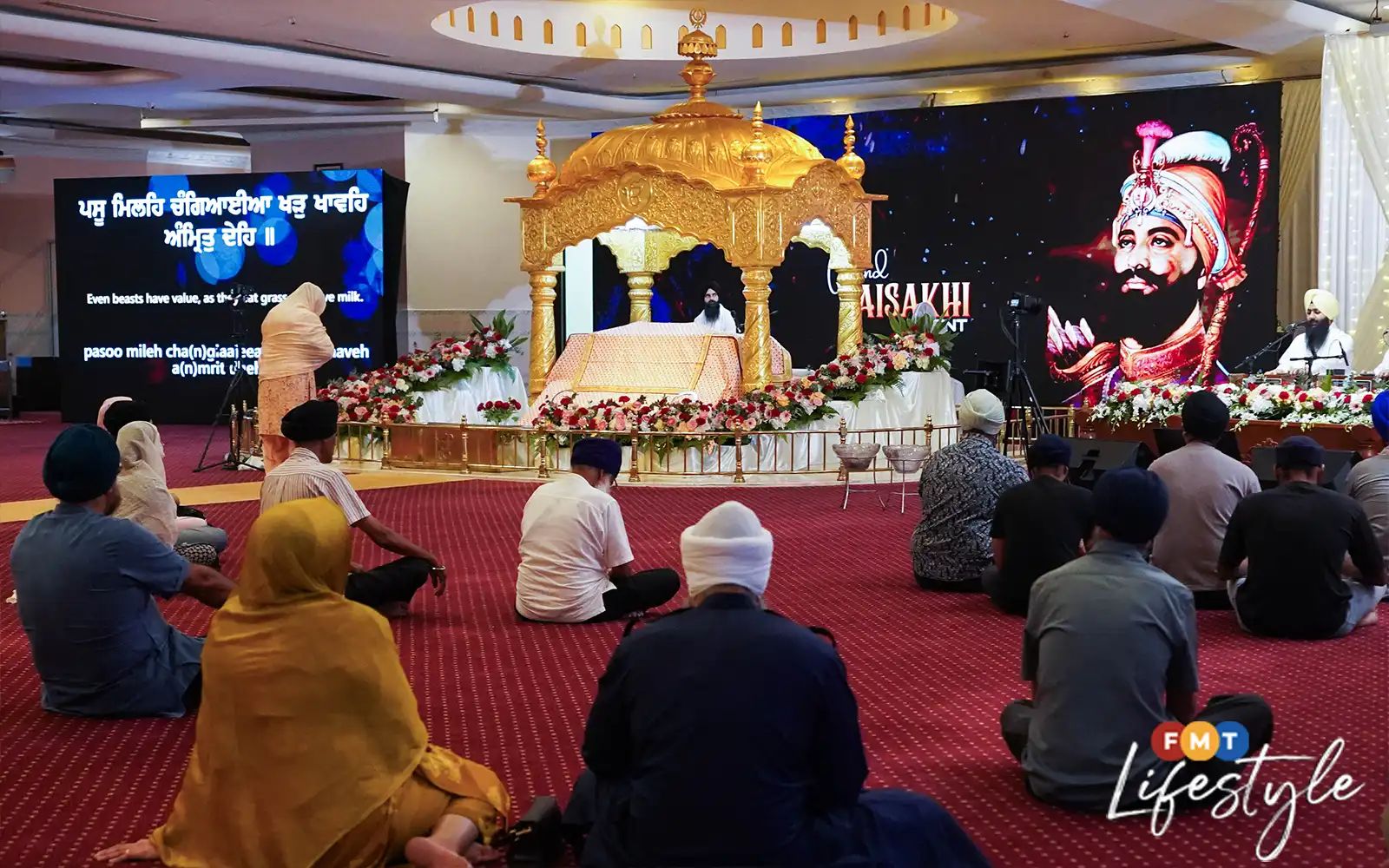
Vaisakhi is considered the most significant day of the year for Sikhs worldwide.
At this prominent gurdwara, festivities begin early, with continuous prayers known as “Akhand Path” running for 48 hours and culminating on Vaisakhi.
The singing of hymns, or “Kirtan”, is another integral part of the celebrations.
“We also have the raising of our flag (Nishan Sahib). We change the flag twice a year: once on Vaisakhi and once on Guru Nanak’s birthday in November,” said Rejinder.
Despite being a minority in Malaysia, the Sikh community remains significant, continuing to uphold their values of equality and selfless service.
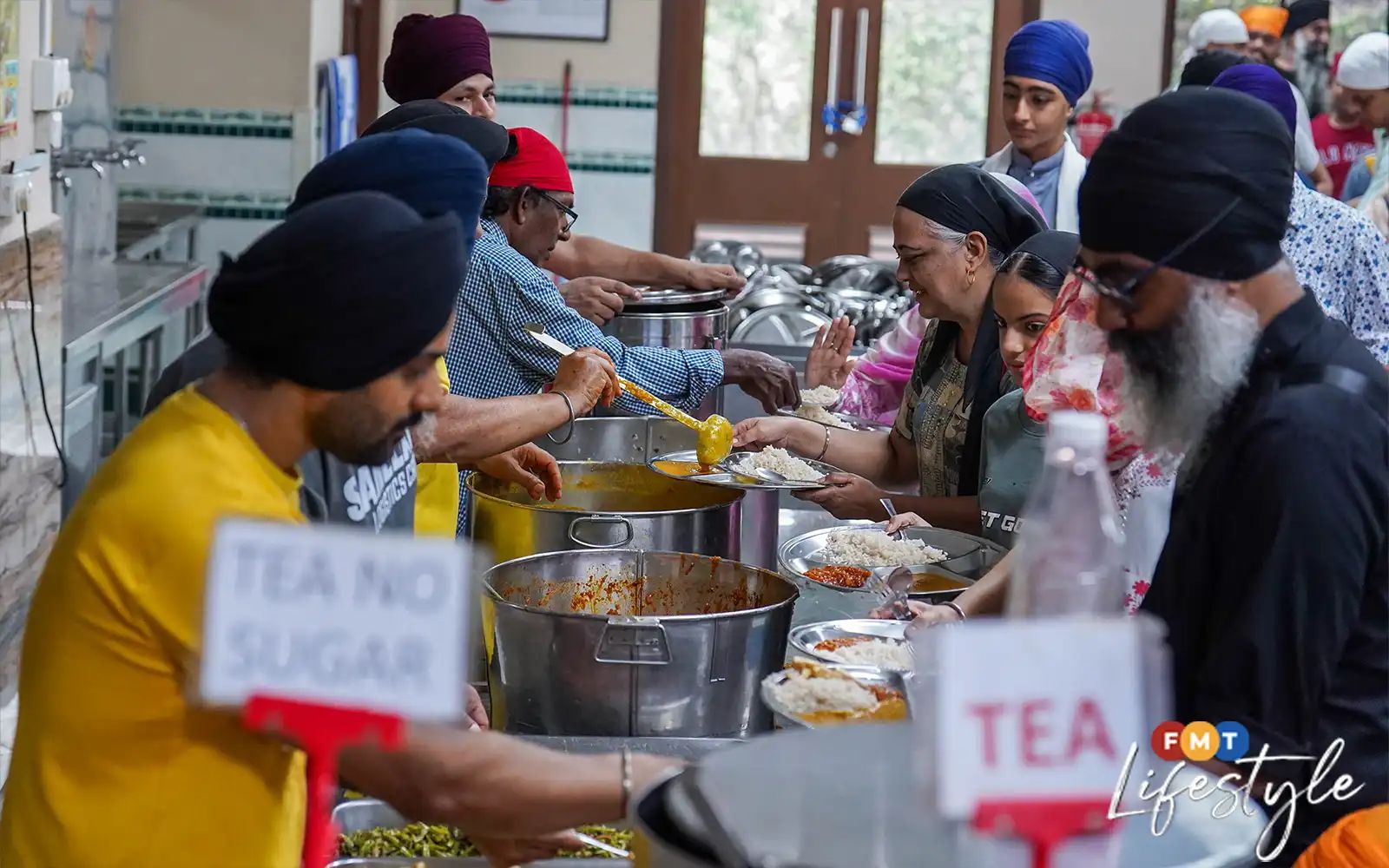
Like every gurdwara, Tatt Khalsa Diwan serves free food daily to everyone, regardless of race or religion.
“It’s a requirement of the religion. We call it langar, and it’s purely vegetarian food. We serve three meals each day and often afternoon tea as well,” he said.
While the everyday meal usually consists of chapati, vegetables, and dhal, Vaisakhi brings a grander spread, including local delicacies like nasi lemak.
The temple has its own kitchen, where volunteers come together to prepare, cook, wash, and serve. Meals are also frequently donated by members of the community.
The festivities on April 4 were also attended by Giani Kuldeep Singh Gargaj from India, acting head of Sikhism’s highest authority.
He reminded everyone of the vital role the Sikh community plays in the country.
“During the Covid-19 pandemic, the gurdwaras in Malaysia did a commendable job, opening their doors and serving the people here even during such harsh times.”
He added: “Vaisakhi reminds us to come together and unite as one society. As we pray for the well-being of everyone in Malaysia, we also hope that our vibrant Sikh community continues to thrive in high spirits across the country.”