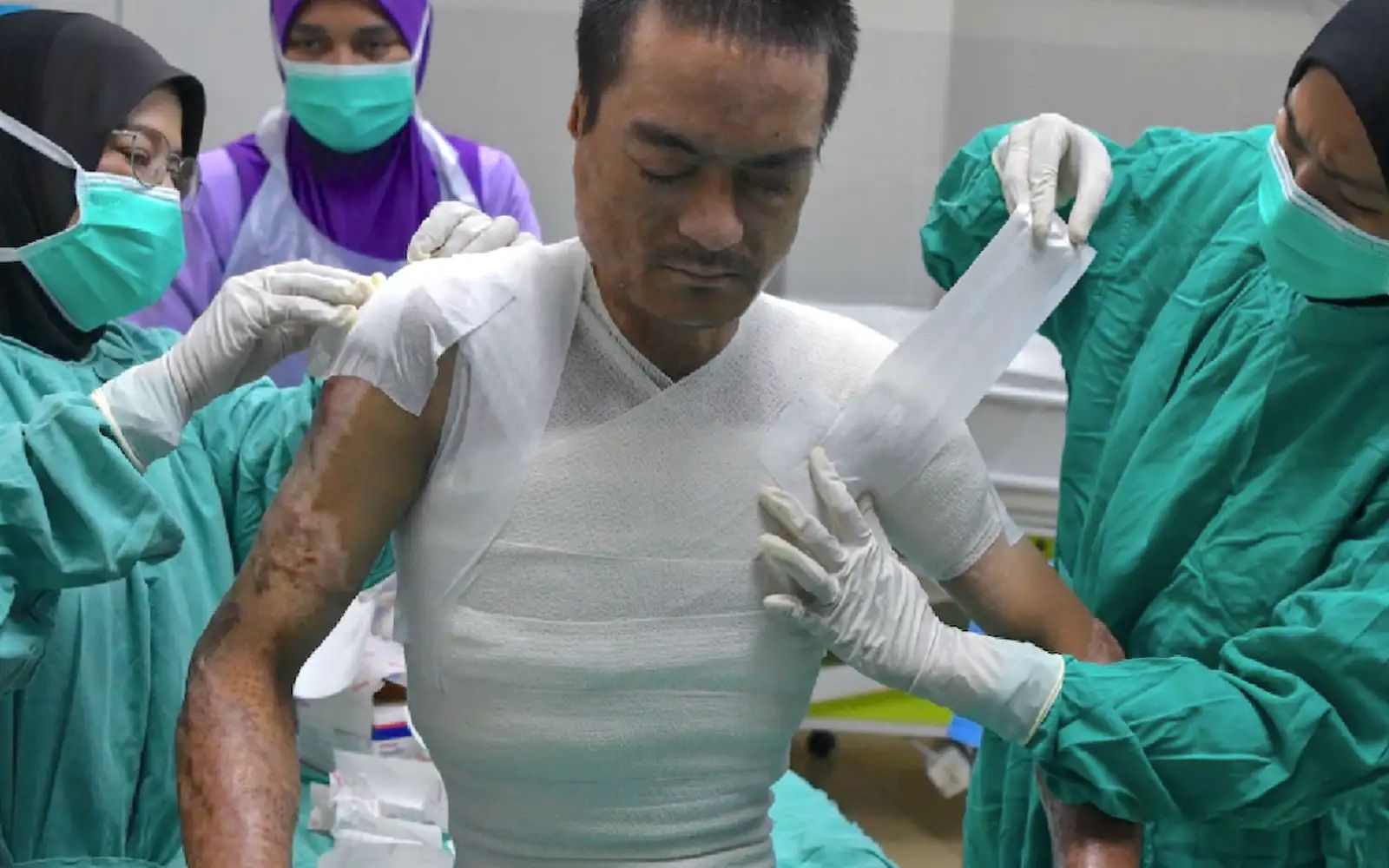
Mere moments before, Ahmad Nasri Anwar had stepped outside to tend to his motorcycle. Within minutes, his life would change forever.
“I had just finished cleaning the engine and burnt some rubbish nearby,” the 31-year-old recalled. “Suddenly, the fire caught my leg. Within seconds, it spread and engulfed my body.”
Panic took over. In searing pain, Nasri did the only thing he could think of: he threw himself to the ground and rolled on the sand, desperately trying to put out the flames.
That instinctive act likely saved his life, even as those agonising few seconds blurred into darkness.
“When I opened my eyes, I was already in the ICU,” Nasri, a former electrical and air-conditioning technician, said.
The fire had left burns on 45% of his body – his arms, chest, abdomen, back, face and right leg. The injuries were so severe that he was placed in a medically induced coma for 24 days.
“When I was ‘asleep’, I didn’t feel anything. But when I woke up, the pain was indescribable,” he recalled. “There was a point when I felt I couldn’t go on.”
To add to the horror, his wife, Nik Nurul Fatihah Nik A Rasid, had witnessed the whole thing.
There may have been petrol residue on his clothes, Nasri later said – enough to ignite instantly when the nearby fire flared.
From the ICU, he was transferred to the burn unit at Hospital Universiti Sains Malaysia in Kubang Kerian, where his real battle began.
For nearly nine months, Nasri lived in what doctors describe as a carefully controlled environment – a positive-pressure room designed to keep infection out, as burn patients lose the skin’s natural protective barrier.
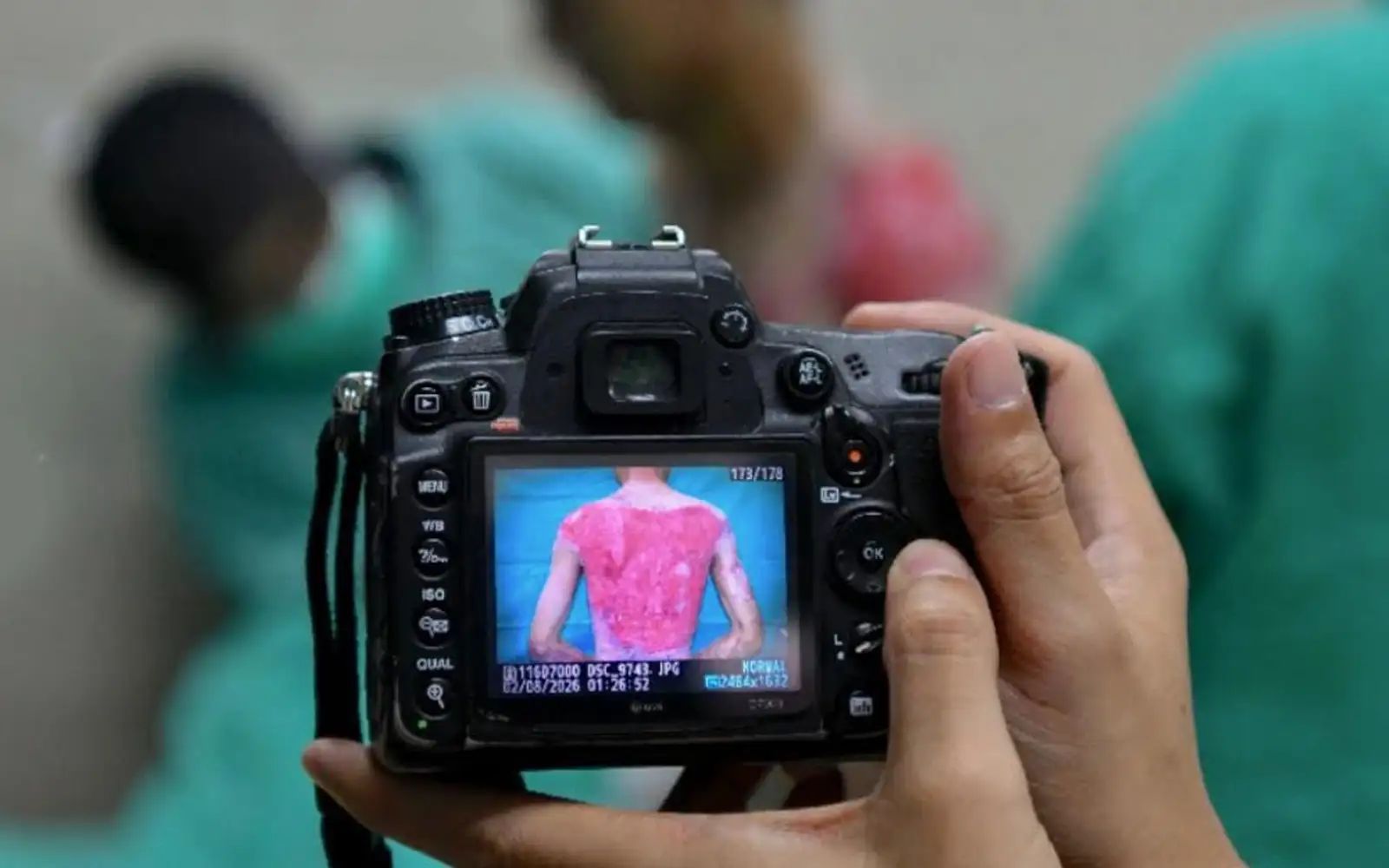
Each day brought new challenges. There were repeated wound-cleaning sessions, procedures that he says tested both body and spirit.
“During wound cleaning, the pain is something only God understands, even with painkillers,” he shared.
He also underwent multiple skin grafts, where healthy skin is used to cover damaged areas. Some of those grafts became infected, complicating his recovery and, at times, shaking his resolve.
“The pain made me reluctant to continue treatment. But the doctors warned me that things could get worse if I stopped.”
What kept him going were the people waiting for him outside the ward. Nasri’s two young sons, now four and five, became his anchor through the long months of recovery.
“They gave me strength,” he said.
Burn specialists say recovery is rarely just physical: patients often require months, even years, of rehabilitation, including physiotherapy, occupational therapy and psychological support.
Some continue to relive the trauma, recalling the sounds of the fire or the instant everything changed.
Nasri was discharged this past February, but the journey is far from over. He now wears a pressure garment for up to 23 hours a day to manage scarring, and continues with follow-up treatment.
Nearly two years on, he speaks with quiet gratitude.
“I almost gave up before, but now I’m truly grateful to still be alive,” he said. “These scars remind me of the hardest moment in my life.”