
Months later, she was rushed to hospital with heavy bleeding – only to discover she was experiencing a molar pregnancy, a rare condition that can quickly turn life-threatening.
By then, her uterus had enlarged significantly and the bleeding could not be controlled. Doctors had to perform a hysterectomy to save her life.
Though uncommon, molar pregnancy can lead to serious complications if not detected early. In Malaysia, it occurs in about 2.6 per 1,000 births, higher than rates reported in countries such as the United Kingdom.
The risk also increases with maternal age.
What is molar pregnancy?
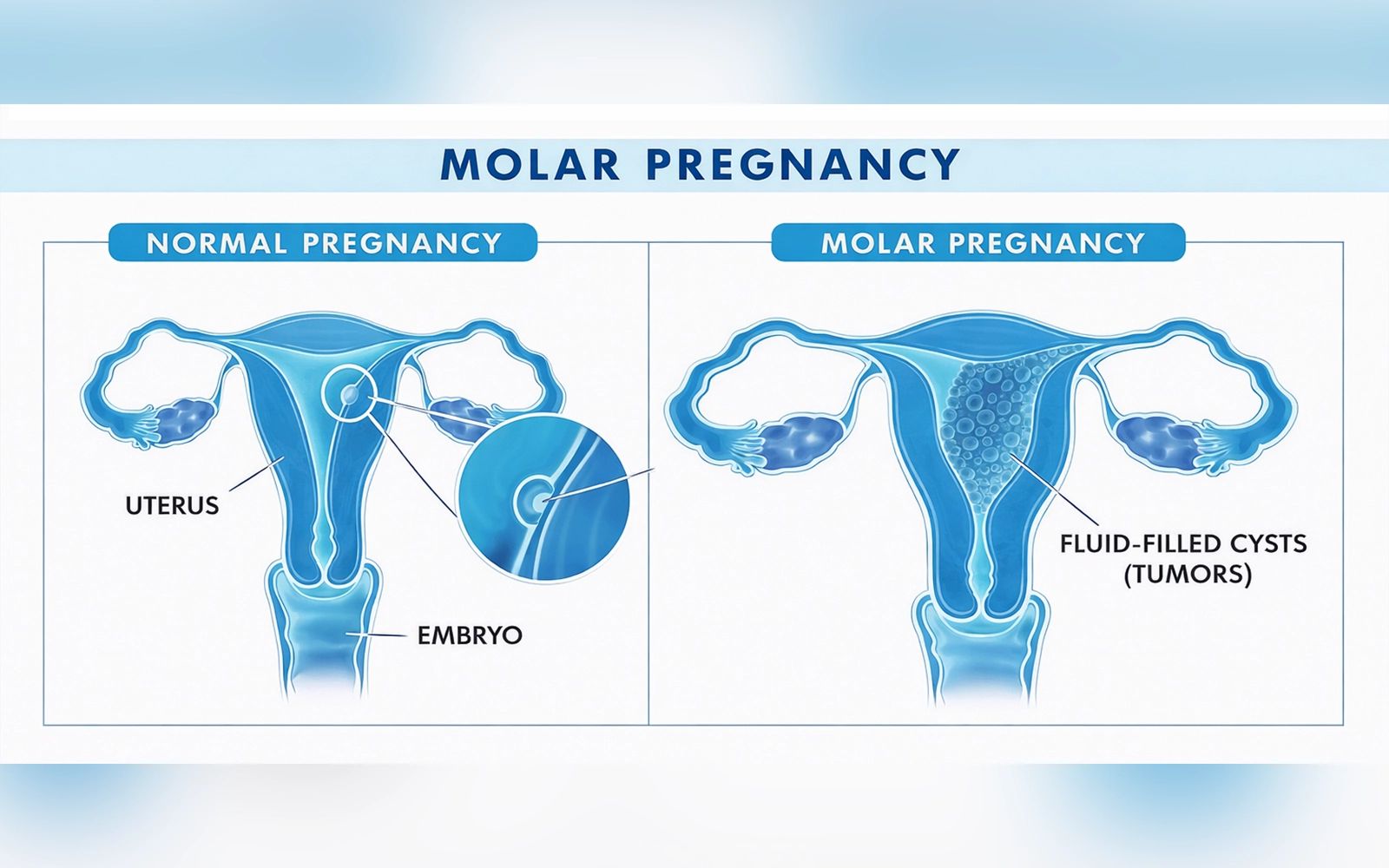
Consultant obstetrician and gynaecologist Dr Mastura Mat Yusof explained that a molar pregnancy occurs when placental cells grow abnormally due to genetic or chromosomal imbalance during fertilisation.
There are two types – complete and partial. A complete “mole” forms when an empty ovum is fertilised, resulting in no foetal development and a higher risk of complications.
A partial mole occurs when two sperms fertilise a single ovum, producing an abnormal, non-viable embryo. While the risks are lower, complications can still arise.

One of the main concerns is progression to gestational trophoblastic neoplasia (GTN), a group of cancers that can develop when abnormal pregnancy tissue continues to grow.
“GTN can become more aggressive and result, for instance, in choriocarcinoma, which may spread to organs like the lungs or brain,” Mastura said. Detected early, however, it can usually be cured with chemotherapy.
She also clarified that molar pregnancies are not caused by diet or daily habits; rather, they occurs randomly due to genetic abnormalities.
Common symptoms include abnormal vaginal bleeding, severe nausea and vomiting due to high hormone levels, and a uterus that grows faster than expected.
In some cases, elevated beta-hCG hormone levels may also affect the thyroid, causing symptoms of hyperthyroidism. Early screening and follow-up are, therefore, crucial.
According to Mastura, the risk rises with age due to declining egg quality, and is higher among women who have previously experienced a molar pregnancy.
Treatment typically involves uterine evacuation to remove abnormal tissue.
Unlike a miscarriage, molar tissue tends to bleed more easily, increasing the risk of heavy bleeding, especially when treatment is delayed.
“A hysterectomy is not standard treatment and is only performed in life-threatening situations, particularly for women who no longer plan to have children or are in high-risk groups,” Mastura added.
After the procedure, patients must undergo regular monitoring of beta-hCG levels to ensure no remaining tissue develops into GTN.
For complete mole cases, hormone levels are checked weekly until they return to normal, then monthly for up to six months. During this time, patients are advised not to become pregnant as it may interfere with monitoring.
If hormone levels rise again or fail to decline, patients are referred for further evaluation.
Mastura stressed that awareness of molar pregnancy remains low, and urged women with a positive pregnancy test to undergo early scans to confirm normal development.