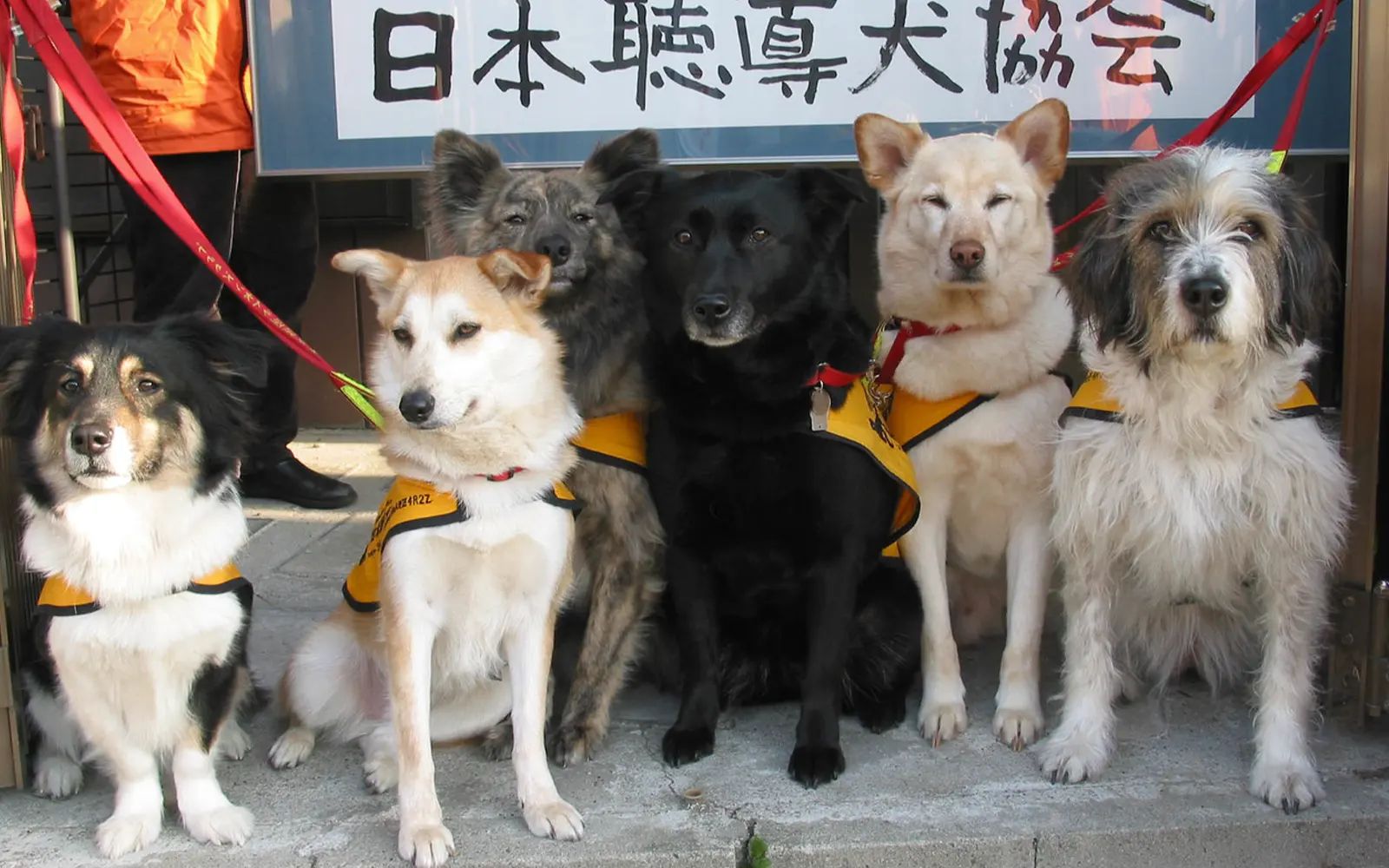
These are hearing dogs, specially trained to recognise everyday sounds and alert their owners by tapping them with a paw before guiding them to the source. Quiet, attentive and intuitive, they offer a kind of support that goes beyond simple assistance.
Yet despite their impact, they remain rare. Across Japan, only about 50 hearing dogs are currently in service, compared with hundreds of guide dogs.
The gap reflects not just limited availability but also a lack of awareness about what these animals can do. For Mieko Tsurumura, 64, that difference became clear the day she met Grace.
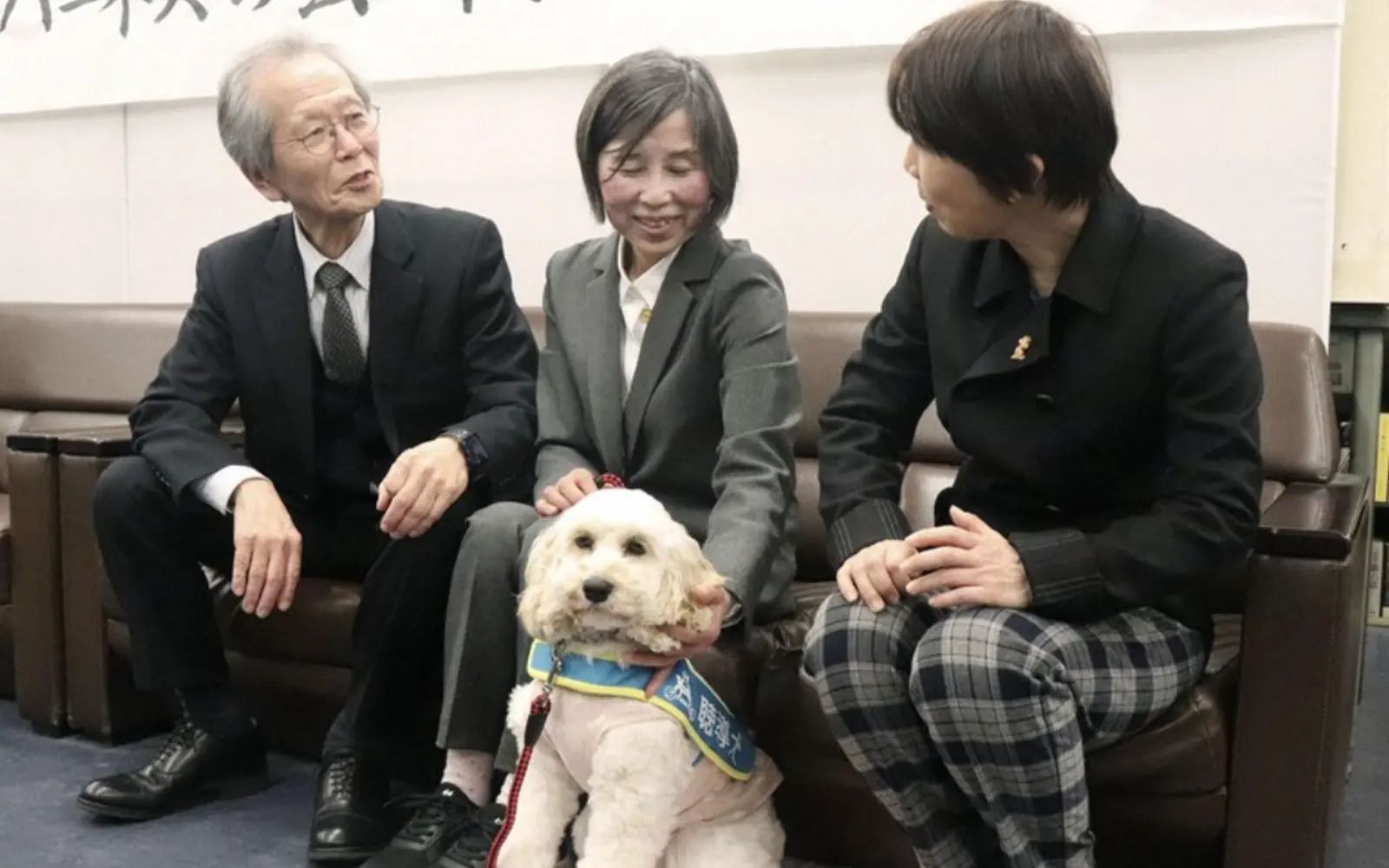
In late March, the Kure resident welcomed the two-year-old hearing dog into her home – the first of her kind in Hiroshima Prefecture. It marked the start of a new chapter for someone who has lived with hearing loss for decades.
“I want to cherish each day as we move forward together,” she said.
Tsurumura began losing her hearing suddenly in her 20s. Today, she is completely deaf in her right ear and has only limited hearing in her left, even with a hearing aid.
Before Grace arrived, every day required constant vigilance. Waiting for a delivery meant keeping her eyes fixed on the door monitor. Walking outside demanded heightened awareness, as she could not hear approaching bicycles or warning bells.
She recalls nearly colliding with a cyclist she never heard coming.
“Since Grace came, I can live with peace of mind,” Tsurumura added.
That peace is not just about safety. For many with hearing impairments – often described as an “invisible disability” – a hearing dog also signals their condition to others, making it easier to receive understanding and support in public spaces.
Still, the path to wider acceptance remains uneven. Under Japanese law, assistance dogs are allowed in public facilities, transport and shops. In reality, however, refusals still happen.
As hearing dogs are often smaller, they are sometimes mistaken for pets. Even with Grace wearing a cape that identifies her role, Tsurumura has been stopped by shop staff who told her that bringing pets in “would cause issues”.
Advocates say this points to a broader problem. Tomoko Hashizume of the Japan Service Dog Resource Centre noted that limited funding and lack of information continue to hold back the inclusivity of hearing dogs.
Their shorter history in the country and smaller training networks compared to guide dogs have also slowed progress. According to Japan’s health, labour and welfare ministry, there were 52 hearing dogs in service as of last October, compared with 768 guide dogs.
For those who do have these helpful hounds, the impact is immediate and deeply personal. “They are an important option for the social participation of people with hearing impairments,” Hashizume noted.
She hopes greater awareness will bring about positive change, stressing: “The lack of recognition is a barrier.”
For now, Tsurumura and Grace are learning to navigate the world together, one day at a time. And all it takes is a gentle tap to make Tsurumura feel a little more secure.