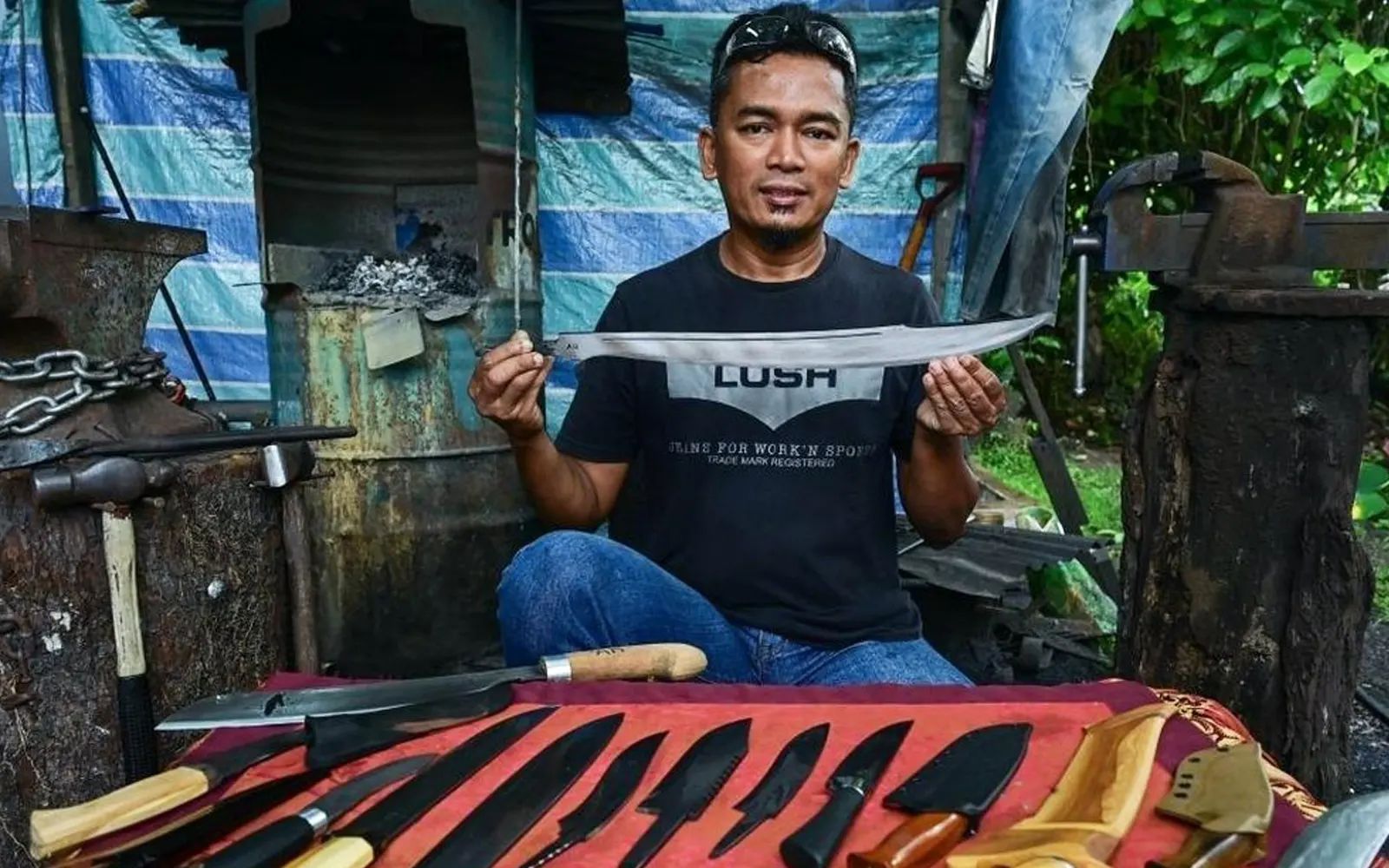
Inside a modest workshop in Kemaman, sparks fly as Abdul Rahim Abd Razak carefully shapes glowing steel into traditional Malay knives and machetes – continuing a craft passed down through his grandfather and father before him.
For the 48-year-old artisan, blade-making is more than a livelihood. “This craftsmanship flows in my blood,” he told Bernama. “I became interested in it as a teenager, and that passion has stayed with me until today.”
Abdul Rahim inherited the craft from his late grandfather, Salleh Mohd, and father, Abdul Razak, both once widely known in Kemaman for their handmade blades.
By the age of 15, he was already helping in the workshop, cutting metal and observing the rhythm and patience required to shape each piece by hand.
A few years later, his father began teaching him the finer skills of the trade – forging iron, hammering blades, grinding edges and sharpening them to precision. He eventually began pursuing the craft full-time at 20, and built the workshop where he works today.
The tradition has also continued through his brothers, Abdul Halim and Abdul Aziz, who run their own workshops in the same village. Together, the three siblings regularly exchange ideas and techniques to improve the quality of their blades and preserve the family’s reputation.
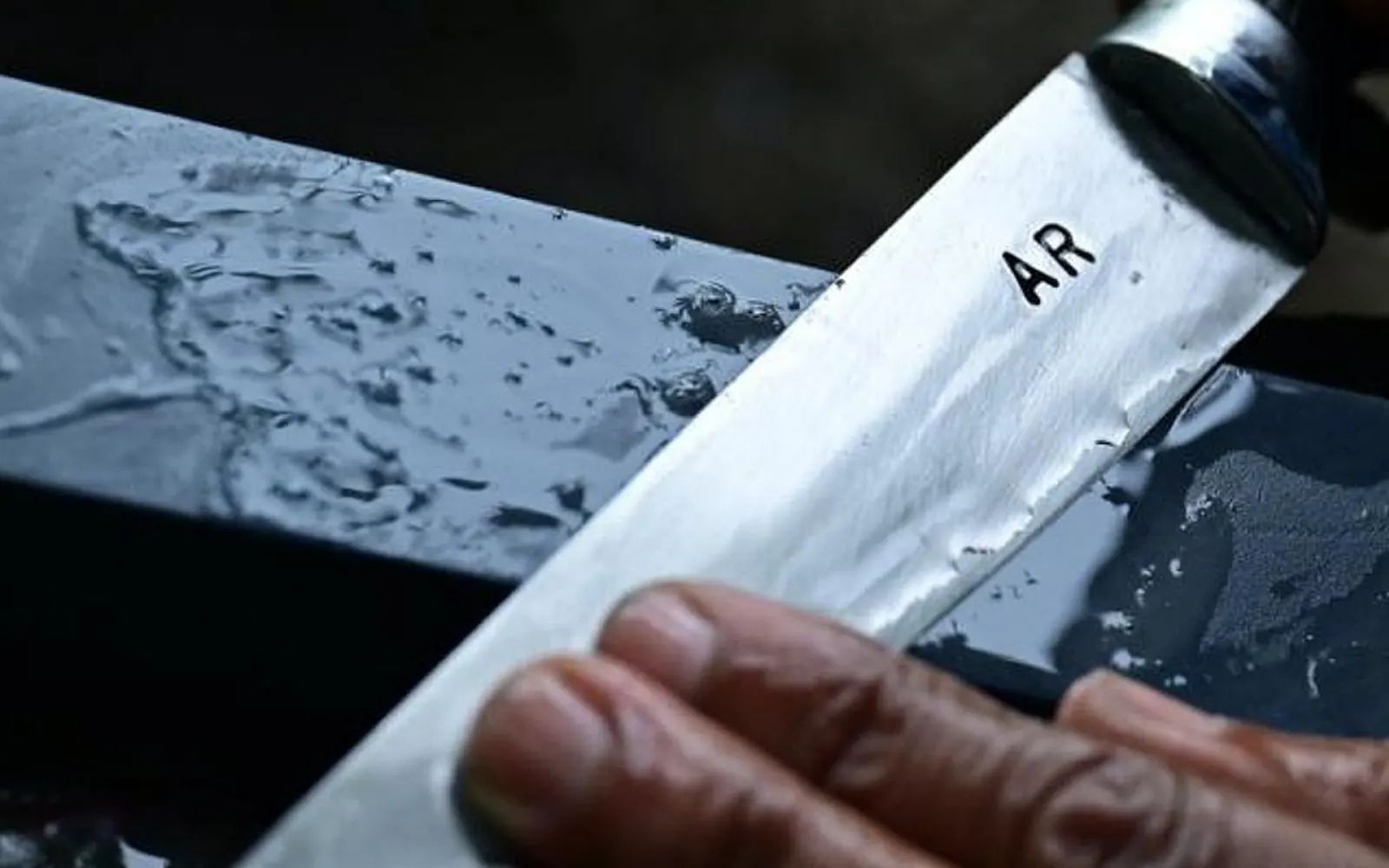
Demand for his handcrafted knives and machetes typically surges ahead of Hari Raya Aidiladha, when the tools are widely used for slaughtering sacrificial animals, skinning meat and cutting bones.
This year alone, he received orders for more than 200 blades ahead of the festive season.
Among the most sought-after designs are dauh buluh, kakap, jakar, sembong, sepat, siakap, aldin and bullnose knives – each favoured for different uses and blade characteristics.
Depending on the design and level of detail involved, Abdul Rahim can complete around two knives a day, while a machete may take an entire day to finish.
His knives, measuring between 12.7cm and 30.5cm without handles or sheaths, are sold for between RM100 and RM400 each. Larger machetes fetch between RM700 and RM900.
Beyond crafting new blades, he also spends much of the festive season repairing and sharpening old ones. “Recently, I received around 300 dull, bent and damaged knives and machetes for repair and sharpening,” he said.
Abdul Rahim’s work has found admirers far beyond Terengganu, with customers from across the country as well as Thailand and Indonesia seeking out his handmade blades.