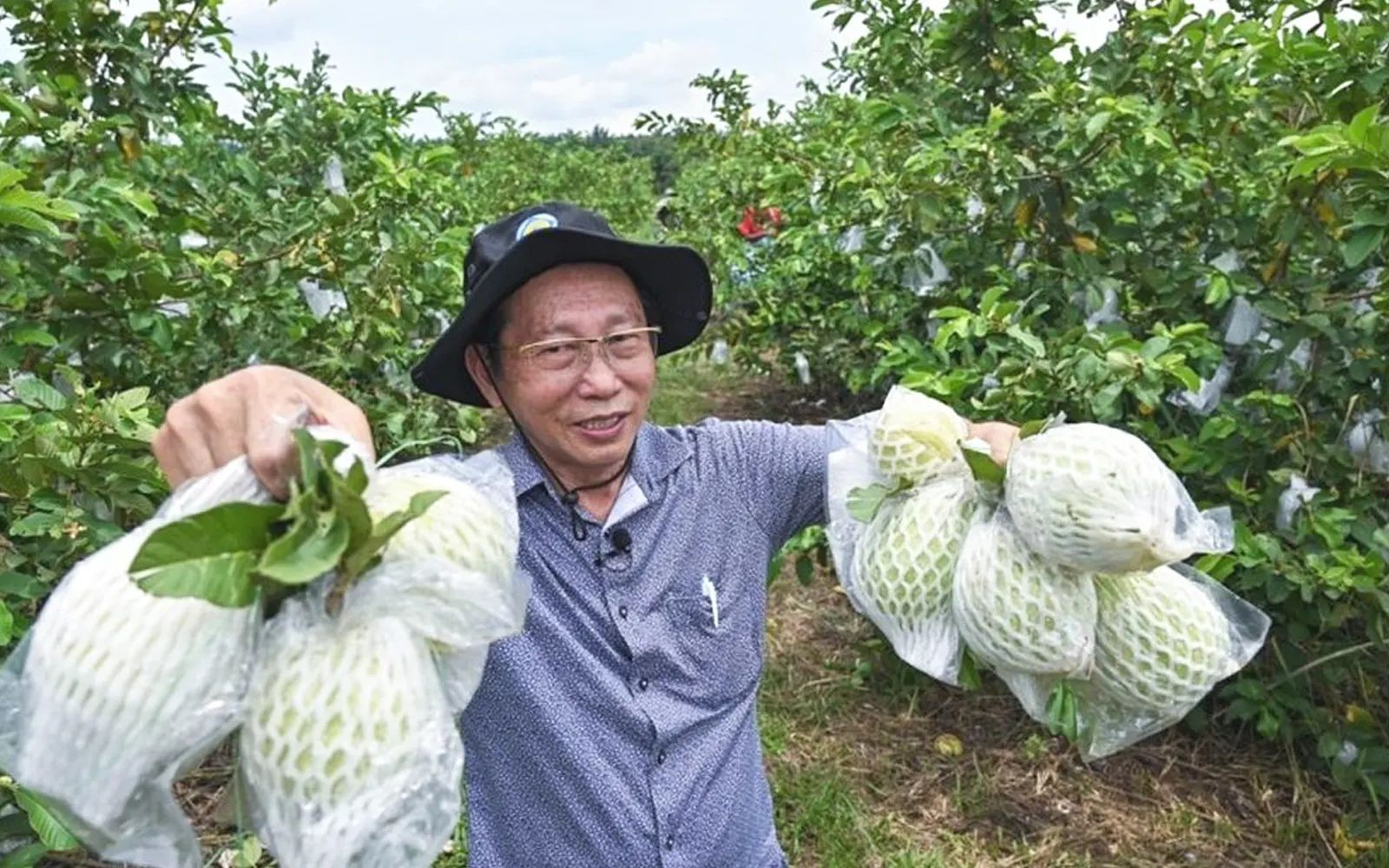
Today, surrounded by rows of crisp premium guavas on his sprawling farm in Tapah, the 64-year-old speaks with the quiet confidence of someone who has weathered enough storms to finally appreciate success.
“In contracting, whether you make money or not, you still have to carry on because of agreements and commitments,” he told Bernama. “I thought agriculture might offer a better chance to reduce debt risks and create faster cash flow.”
Unfortunately, his early pandan coconut project was wiped out by rhinoceros beetles, resulting in losses of nearly RM60,000. An attempt to cultivate 10,000 papaya trees also failed after the soil proved unsuitable.
Rather than giving up, Lee kept searching for something that would work. That turning point came in 2019 after he met a Taiwanese acquaintance who introduced him to the Pearl guava – a variety prized for its crisp texture, fewer seeds and naturally sweet flavour.
Lee was immediately intrigued. “Compared with local guavas, the taste and texture are much better,” he noted.
He now operates his farm with three business partners on more than 40 ha of leased land in Perak. From a single guava variety, they have since expanded into several premium cultivars, including Lohan, Ruby Pink and Watermelon Pink guavas.
The farm has around 5,000 guava trees alongside 350,000 pineapple plants. Rows of carefully wrapped fruits hang neatly beneath the trees, while modern farming systems quietly monitor temperature, humidity and pH levels to improve crop quality and productivity.
Lee credits much of the farm’s growth to support from agencies such as the Malaysian Pineapple Industry Board and the state agricultural development corporation, which provided financing and training.
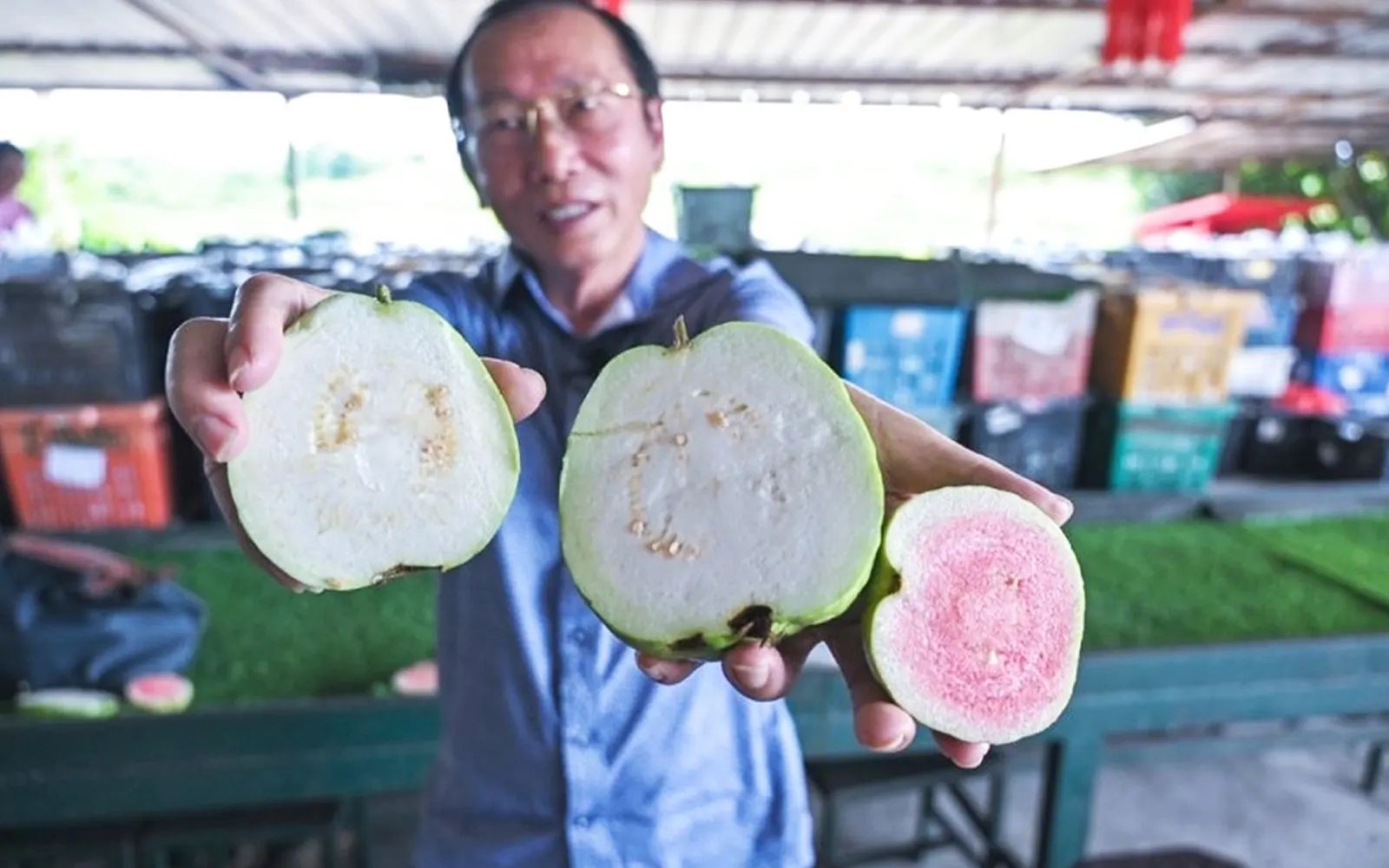
Demand for their produce has grown steadily, particularly among premium supermarkets, wholesalers and five-star hotels in Kuala Lumpur. Using a “farm-to-market” approach, the business produces between eight and 10 tonnes of fruit weekly, with ambitions to eventually reach 15 tonnes per harvest.
“With strong demand and stable yields, we’re optimistic about growing further,” Lee said.
For him, part of the appeal lies in the guava itself. Beyond its crunchy sweetness, he believes many consumers are unaware of the fruit’s potential health benefits, including aiding digestion, supporting immunity, and helping regulate blood sugar levels.
Still, farming comes with its own challenges. Rising material costs, crop diseases and unavoidable fruit defects continue to test profitability. Lee estimates that around one tonne of fruit each week cannot be sold fresh due to cosmetic imperfections.
Rather than letting the fruit go to waste, Lee sees potential in producing downstream products such as guava juice and powdered health supplements.
For someone who once struggled under the pressures of contracting work, the slower rhythms of farming seem to have brought not just income but perspective. And in Tapah, among rows of guava trees and pineapple, a second career has borne fruit.