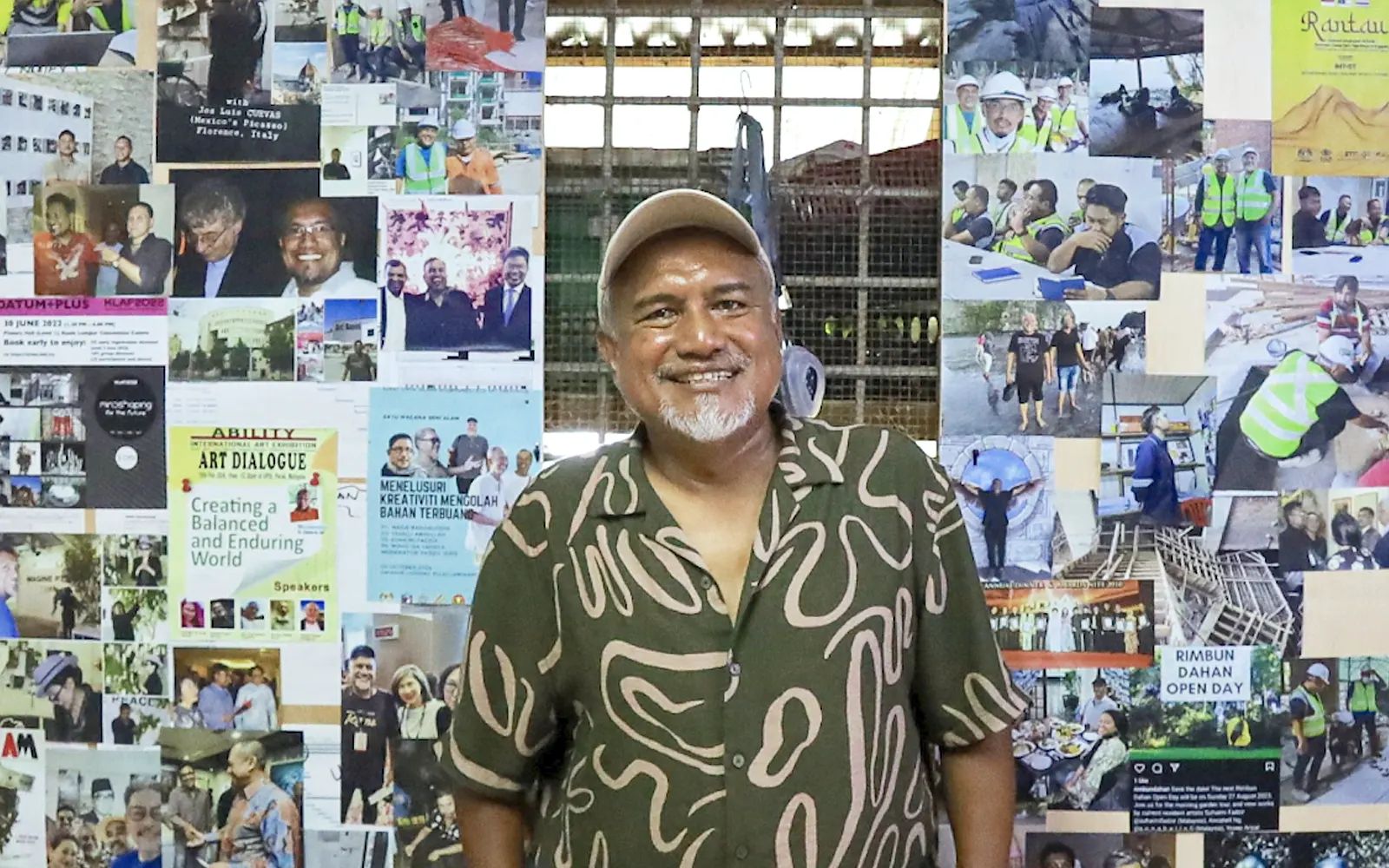
“It looked like it was sitting in the middle of a jungle,” Suhaimi recalled. “I cleaned it up little by little, and eventually the space filled with paintings, sculptures, and all sorts of experiments.”
Today, the once-forgotten semi-detached house stands as Studio Puyu, a creative space filled with Suhaimi’s artwork, including experimental installations pieced together from discarded objects and salvaged materials.
The 60-year-old from Gerik, Perak, has a background in architecture and a long career in art dating back to the 1980s. A renovation project at a resort brought him to Langkawi, where he soon realised he needed a dedicated space where he could paint and create more freely.
That search eventually led him to the abandoned house, which he rented for about RM500 a month.
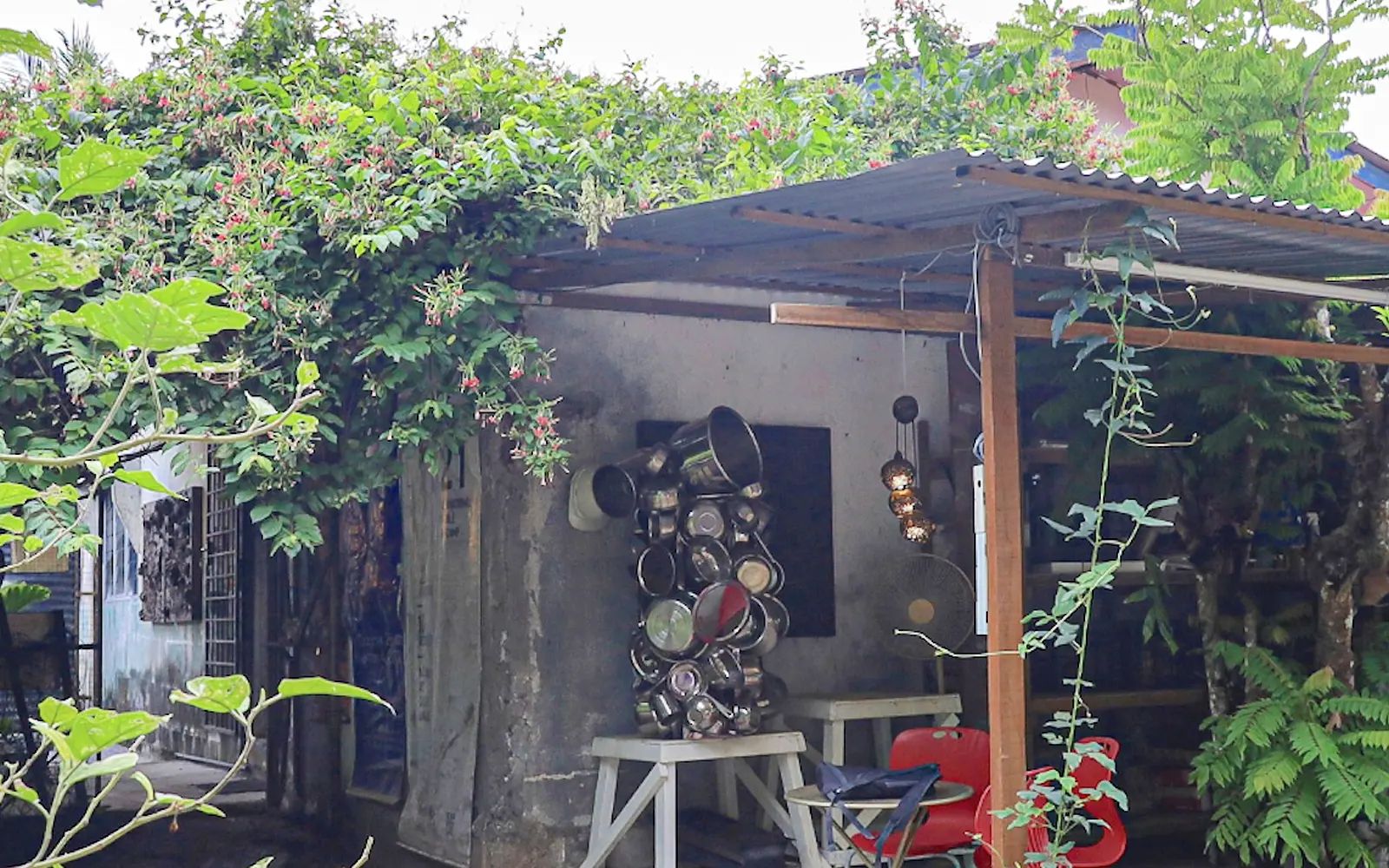
Unlike commercial galleries, Studio Puyu still feels unmistakably like a traditional village home. Visitors are welcome, by appointment, to experience the space more intimately and observe how Suhaimi transforms ordinary discarded objects into artworks layered with texture and meaning.
Items like coconut shells, tree branches and worn-out cloth all find new life inside the studio.
“To most people, these objects may seem meaningless, but artists see value in them. When collected and arranged in certain ways, they can eventually become part of an artwork,” he said.
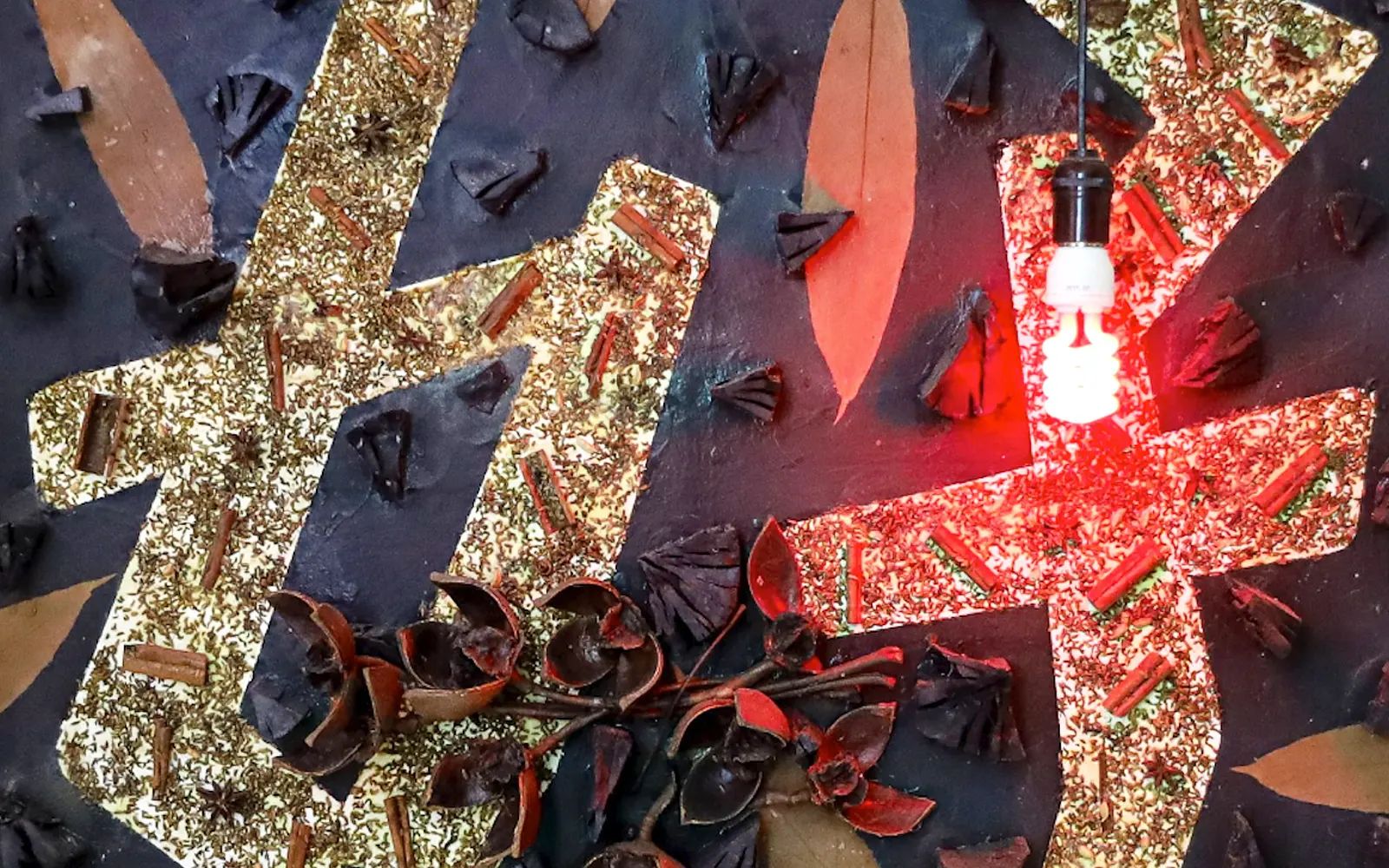
Suhaimi describes his artistic approach as “archipainting” – a fusion of architecture and painting that blends two- and three-dimensional elements into layered works with raised textures and structures.
Suhaimi also maintains studios in Bukit Antarabangsa and St Louis in the United States, but the father of three says Langkawi remains his preferred creative base. The island’s slower pace and quiet atmosphere allow ideas to come more naturally.
“Langkawi feels empty in a good way,” he said. “When creating art, the environment here is calmer and there are fewer distractions, so it becomes easier to think and experiment.”
And while the local art market may be smaller compared to Kuala Lumpur’s, he remains optimistic about continuing to create from his quiet corner of the island, relishing the freedom to experiment, reflect, and give forgotten objects a second life.