
Yet look at the world today – technology has been advancing at unprecedented speeds, and who knows what the future has in store.
Wide-eyed optimists might hope for a technologically advanced Malaysia, where the outlook is bright and the country is in a better place. But for local author Martin Vengadesan, the Malaysia of the future is one of bleak prospects and even bleaker conditions.
In his new book “Malaya 2057”, he lays out a hypothetical Malaysia where dystopia is the order of the day.
“By 2057, the country would have experienced 100 years since Merdeka. If I were alive in 2057, I would be quite the old man – 84, to be precise,” he tells FMT.
Martin says there are threats today that could impact the course of world history but are constantly ignored.
He fears disease and climate disasters will impact Malaysia’s future the most, as well as totalitarian politics and the restriction of free thought.
A country divided
So what could Malaysia be like if these issues are not addressed? “One clue is in the title: it’s ‘Malaya 2057’, not ‘Malaysia 2057′,” he says.
“In my book, some of the states go their separate ways because of environmental reasons, not political ones.” The world he envisions has undergone physical changes and “it would be more practical for these states to be on their own”.
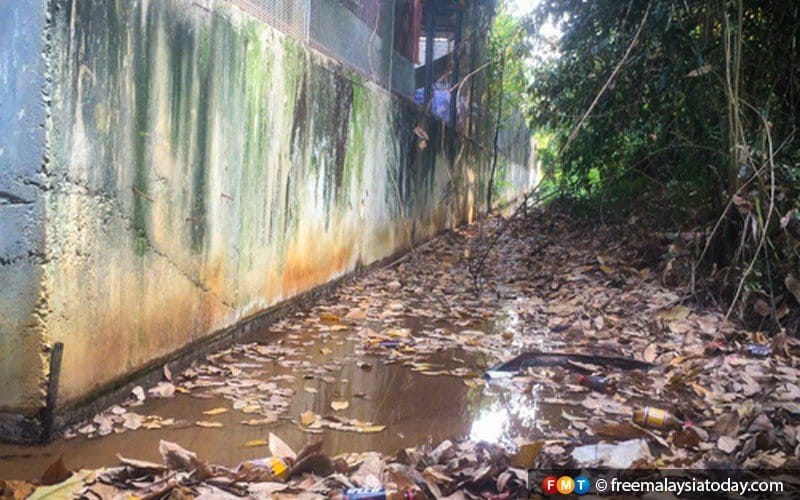
While this might sound terrible, Malaysians of the future would at least be safer than their Singaporean counterparts, with the city-state fully submerged due to rising sea levels. Still, he imagines much of Malaysia’s coastline would not be the same as what it is today.
In present-day Malaysia, languages are diverse and unique. Those in the future would lack these qualities, for better or for worse.
“In 2057, we will have learnt to standardise language,” Martin predicts. “There will be a universal sign language in use.”
In Martin’s imagination, Malaysians would be threatened by environmental disasters and disease. Standards of living and population growth would, consequently, take a nosedive, exacerbated by plagues with far worse fatality rates than the real-world pandemic.
“And because of the polluted environment, human beings are now living in domed cities. When travelling, say from Kuala Lumpur to Petaling Jaya, they will have to travel through underground tunnels linking these cities.”
Such a tunnel is featured on the cover of “Malaya 2057”.
Despite all this, the Malaysia of the future would benefit from technological advancements, with new ways of turning nitrogen into breathable air and saltwater into drinking water.
“The vehicles will be driven by [artificial intelligence]. All you have to do is just think of driving, rather than physically driving yourself.”
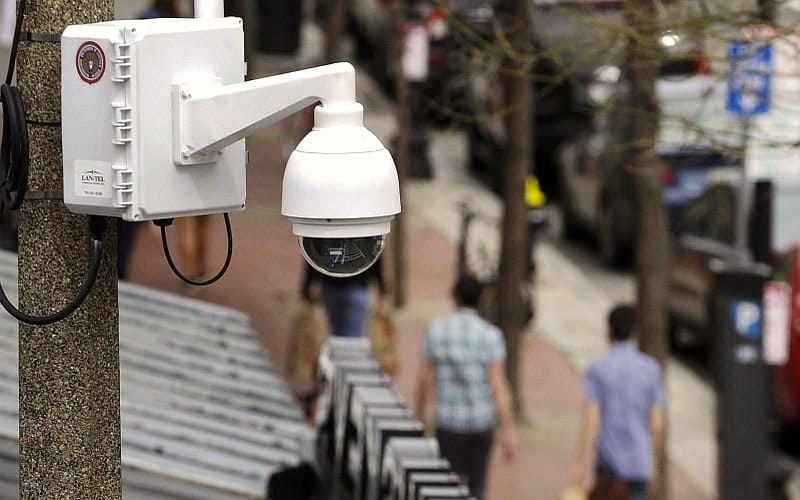
Towards realising such futuristic technology, however, humanity would have had to bear witness to a number of unsuccessful experiments.
While Martin does not go into great detail about this in his book, he does describe some of these failures that would’ve had to have taken place “to reach the stage where machines can understand what we want”.
Furthermore, with society being more homogenised in the future, he predicts issues of race and religion would matter less, while increased state control would affect the lives and thoughts of everyday citizens.
In fact, Malaysia would, in a sense, have lost its independence and instead be a member of a larger Asian state trying to control its people.
The authorities, he says, would be akin to religious leaders. In that reality, many are disinterested in such matters as emotions and relationships, preferring to leave it up to the state to decide their life choices.
But the lives of most everyday Malaysians would not be too different from those of today, as they would be more focused on survival.
As for living to a ripe old age? Forget about it – elderly individuals would be euthanised by the authorities, with the lack of resources cited as justification.
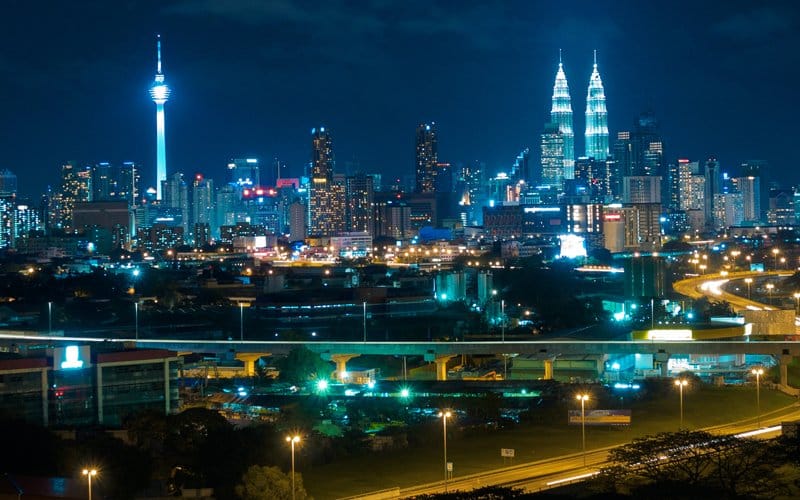
It is in this dystopian world that Martin’s two main characters live – one a government agent who wants to see everything in its proper place and under control; the other an elderly prisoner who remembers what the country used to be, and what the world was like before its downward spiral.
But does the author truly think this is the inevitable future of Malaysia? “Not at all! It’s just one possible extrapolation,” he says.
To avoid this future, he emphasises it is vital for Malaysians to think for themselves and fight against oppression; to challenge their beliefs regularly and be willing to change for a better tomorrow.
With these and other thoughts included in “Malaya 2057”, perhaps today is as good a time as any to add another book to your library.
‘Malaya 2057’ can be purchased at Silverfish Books in Bangsar, Kuala Lumpur, or by clicking here.