
Of late, Malayalam movies have evolved from predictable romantic plots to more complex themes of poverty, crime and corruption. And now there’s “Kumari”, a horror film that takes viewers into a world of superstition and human sacrifice.
Even more welcome is that this movie from Prithviraj Productions revolves around a female lead. “Kumari” takes the audience on a journey – often thrilling, mostly terrifying – into the dense jungles of Kerala… and into an ancestral home steeped in dark secrets.
In the title role is Aishwarya Lekshmi, most recently seen as the brave Poonguzhali in Mani Ratnam’s blockbuster “Ponniyin Selvan”. Her husband Dhruvan is played by Shine Tom Chacko, popularly known in Malayalam cinema for taking on the roles of characters you love to hate.
So, what’s it about? Kumari is a village girl who’s sent off to marry Dhruvan, who hails from another village on cursed land in Kanhirangarat. Everything goes smoothly at first – until Kumari starts to notice something, well, amiss with her in-laws.
Notably, they are blinded by their faith in a practice that has bound the family together throughout the years: one relative is killed as part of a human sacrifice to keep the others safe.
It gets pretty bloodthirsty, although it’s simultaneously compelling to see how tradition controls a family unit – from the way they behave to the way the rituals are executed – just to maintain their health and wealth.
With her life under threat, Kumari is forced to make crucial decisions. Aishwarya shines in portraying a range of emotion, from the bubbly girl you meet at the start of the film to the curious, paranoid, and then downright terrified newbie of the family.
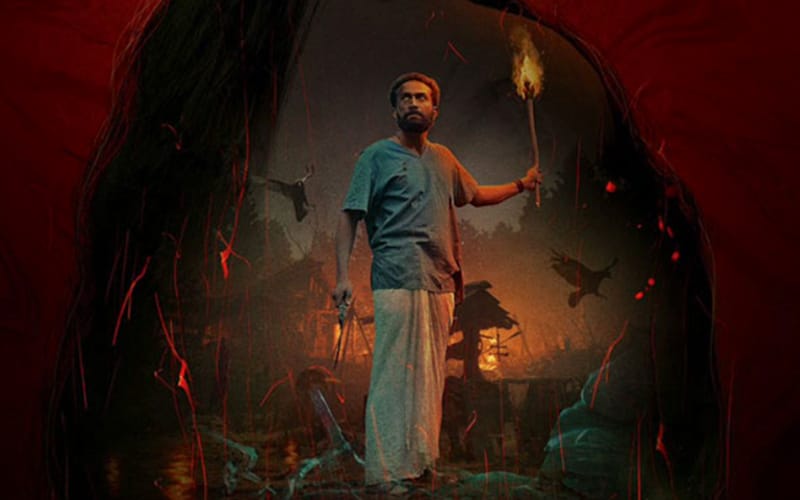
As Dhruvan, Chacko, too, is a standout, displaying a naivete and vulnerability not often seen in his other roles.
Augmenting the storytelling is the film’s striking visuals, from lush jungle scenes to the huge family home in northern Kerala, as well as artistic elements such as the classical Kathakali dance and shadow puppetry.
Of note is the use of colours and symbolism. At the start of the film, Kumari wears vibrant colours, synonymous with her optimistic character. This changes drastically in the second half, where the donning of dull hues signifies she needs to be a submissive spouse to Dhruvan and his power-hungry family.
Indeed, director Nirmal Sahadev does an impressive job of slowly revealing the reasons behind the family’s strange behaviour and bizarre occurrences in the home.
If there are any complaints, it’s that the back half of the movie is bogged down by unnecessary family drama and excessive suspenseful moments. Less, as they say, is more, and “Kumari” would have benefited from fewer dramatic instances to allow viewers time and breathing space to process the goings-on.
Nevertheless, this is a fascinating study of archaic belief, and the extent to which some people might go to preserve it. Love and power are forces that weave the story together, resulting in a memorable work of gothic-horror about two people battling for and against each other as husband and wife.
‘Kumari’ is streaming on Netflix.