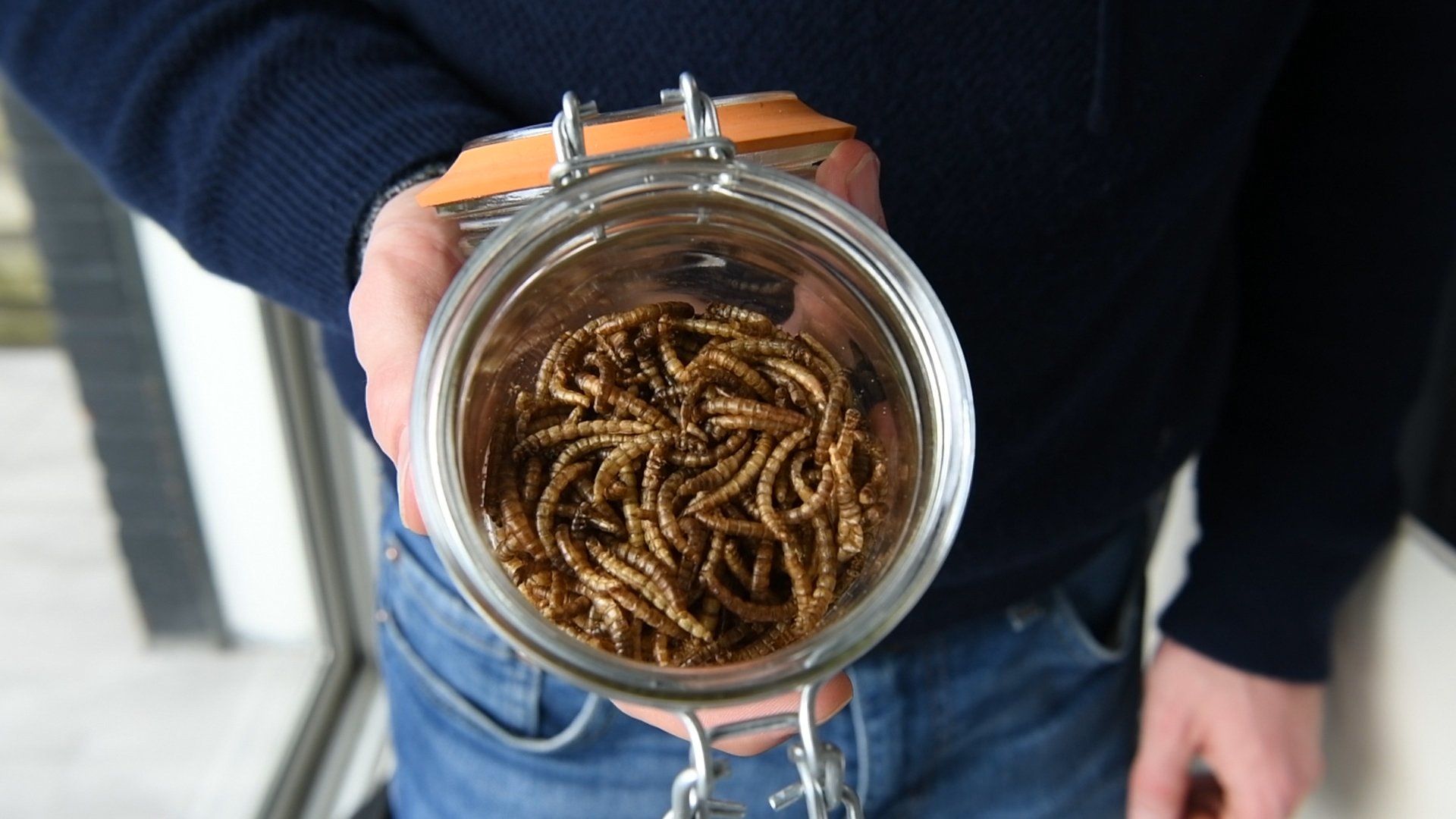
In France, an edible insect farm offers a new source of protein for our diet.
The weight of industrial farming
If it was a country, industrial farming would be the world’s second biggest generator of CO2.
In France, farming significantly contributes to air pollution, representing on its own 70% of the national ammonia and methane emissions, known to be two toxic gases for our atmosphere.
Food for thought
There has been an emerging reality check from consumers, with the rise of pro-vegetarianism or pro-vegan initiatives…but also with other ways of consuming meat!
Insects remain very rarely eaten in Western countries, whereas they are a great source of protein.
Moreover, insect farming requires very little space and resources, the whole process generating a lower amount of greenhouse gases.
Care for a little more cricket?
Virginie Mixte, founder of Minus Farm, installed her insect farm in a dedicated 10qam-wide room of her home.
This farm of the future can grow edible mealworms of different varieties and stages of development.
The Consumption Index of insects is high, because they contain high-quality protein, vitamins and amino acids.
For example, crickets require six times less food than bovine, four times less than sheep and two times less than pigs and chickens to produce the same quantity of proteins*.
This impressive differential gives us something to think about when it comes to our food habits, even though the message is not necessarily to replace one type of meat by another, but more to rethink globally our animal protein consumption.