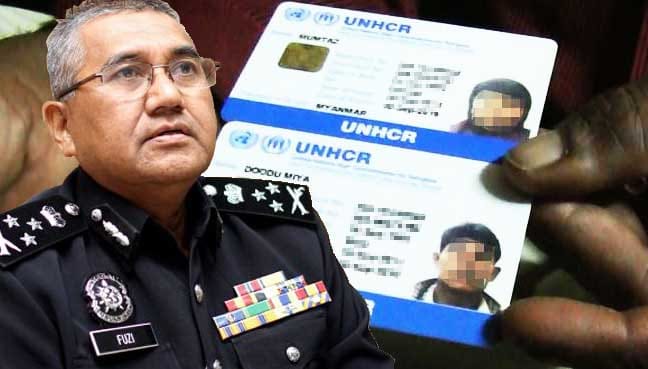
According to the paper’s exclusive, there were around 156,000 UNHCR cardholders in the country, although authorities believe there were more fake cardholders than genuine ones.
They also believe the problem is exacerbated by the difficulty in verifying the authenticity of the cards.
Federal police Special Branch director Mohamad Fuzi Harun said the poorly controlled issuance of the cards posed a great risk to the country.
He said it could result in the country being infiltrated by human traffickers, criminals and syndicates, and warned that if the problem went unchecked, it could lead to an increase in crime and social issues.
He also said police were fighting the syndicates running fake UNHCR cards and had lodged reports with the United Nations body so that the commission could plug weaknesses in the system which had led to the abuse.
Also interviewed in the report was Deputy Inspector-General of Police Noor Rashid Ibrahim who said syndicates were targeting migrants without valid documents and that the police were checking with UNHCR to find out if their personnel were involved with the syndicates.
Meanwhile, in another report on the matter, the New Straits Times revealed the ease of obtaining a fake UNHCR card, as all it took was RM120, a passport photo and two days for the card to be ready.
The fake cards even had security features such as a hologram.
A syndicate member told the paper that the name for the card would be taken from the Malaysian UNHCR database and that the same name would be used by other fake cardholders.