He noted that while traditional interpreters gave preference to the father in determining the religion of children, there was also an established Islamic principle against coercion.
“Unless one willfully and without coercion takes the shahada (profession of faith), one cannot be considered Muslim in the eyes of God,” he told FMT.
He said there was also the general principle that the welfare of children should be of the highest priority. “This includes their psychological and mental welfare, not just their material and physical safety or well being.”
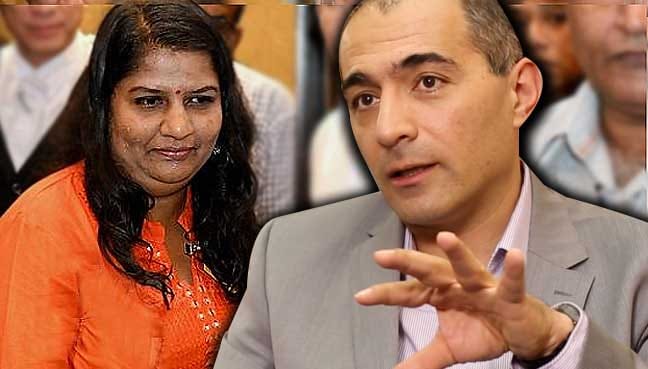
Hashemi, an expert on Islamic politics currently attached to the University of Denver, was asked to comment on the case involving M Indira Gandhi and the conversion of her three children by her ex-husband Muhammad Riduan Abdullah.
“The example that you cite of a father reverting to Islam is unique. I’m unaware of any Islamic norm or consensus on this matter among scholars, but there is a clear and unambiguous Islamic norm that there should be no compulsion in religion,” he said, citing a verse in the Quran.
“Islam recognises the moral autonomy of individuals. Each person is responsible for his own moral conduct and behaviour, not those of other individuals.
“In the context of the family, generally the parents determine the religion of the children. Traditional Islamic interpretations give preference to the father in determining the religion of the children.
“When the children reach the age of maturity, they are responsible for their own choices. The parents no longer have jurisdiction.”
The Federal Court last Monday set aside the conversion of Indira’s three children to Islam by her ex-husband. It ruled that any conversion of non-Muslim children must get the consent of both parents.
In the landmark ruling, the court also decreed that only the civil court could decide on such matters.
It also ruled that the word “parent” in Article 12(4) of the Federal Constitution should be read as “parents”.
The court’s decision put an end to the interfaith custody battle that followed Riduan’s conversion of their three children without Indira’s knowledge in 2009.
Indira Gandhi verdict has far-reaching implications, says ex-judge
Unicef: Unilateral conversion ruling in tune with UN convention