
Musa said if the death penalty was made discretionary, judges would likely opt to mete out jail time, “most probably because they feel it is not their place to sentence someone to death”.
“It would be more difficult for the courts to sentence criminals to death,” he said in a press conference here.
He suggested that the death penalty be reviewed instead of abolished, to determine which crimes deserve mandatory punishment and which deserve discretionary punishment.
“I agree that for any crimes that do not cause loss of life or life-threatening injuries, the sentence should be discretionary,” he said.
He gave the example of drug mules, whom he said should not be sentenced to death as they are not “the masterminds”.
He added that it is difficult for the police and prosecutors to prove murder as it requires a high burden of proof.
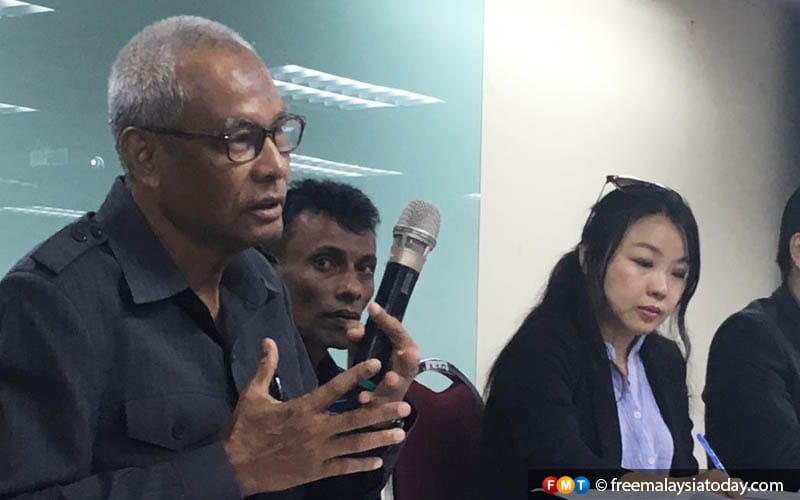
“In Malaysia, it’s not easy for them to get proof that a person committed a crime,” he said.
“When a crime is committed and a criminal confesses, we can’t use the confession. Maybe the person feared that they would be tortured, or the confession was obtained through force. The judge has to check how the confession was given.”
However, he noted that those found guilty have many avenues to appeal against the death sentence, including by getting a pardon from the pardons board.
“It’s not like they are sentenced to death and hanged the next day,” he added.
He opined that abolishing the death penalty would increase the crime rate as more people would be emboldened to commit offences.
He also claimed that the actual crime rate is higher than what is published.
“There will also be hired killers – people will hire people to kill other people because they won’t be hanged.
“In our country, there are cases of hired killers. So we have to be careful. If we are lenient with punishments, people will commit crimes easily and it will become a threat to our citizens and country.”
Musa also warned of threats from terrorists and extremists, but said the authorities must improve their “investigation techniques” to avoid wrongly convicting and sentencing innocent people.
“If we want to do away with the death penalty, we need to determine that we have enough police officers to protect the safety and harmony of our citizens,” he said.
“At the moment, budget allocation for the police is not that much. I have been receiving complaints from officers who come and tell me that now, there is not enough paper at police stations.
“If we don’t allocate enough budget for the police, how are they supposed to carry out their duties?”
The mandatory death penalty is meted out for 11 criminal offences, including murder, hostage-taking and terrorism.
The discretionary death penalty, on the other hand, can be handed out at the discretion of judges. Currently, 23 offences including drug trafficking and contamination of water carry the discretionary death penalty.
It was previously reported that Putrajaya might not fully abolish the death penalty as initially proposed. The federal government also said it is considering other options, including replacing the death penalty for 33 offences under eight acts with life imprisonment.
Lawyer Christina Teng from Protect Malaysia said life imprisonment for violent criminals might not be enough as sentences could be reduced on compassionate grounds.
Life imprisonment, which is usually 30 years long, can be “discounted” to a third of the sentence if the criminal maintains good behaviour while in prison, she added.
Currently, Malaysia does not have parole with life imprisonment, which could pose a risk to public safety if criminals are not monitored after their release, she said.
She also criticised the call to abolish the death penalty, saying it is in favour of “liberal views” as well as the United Nations’ (UN). She claimed it supports the rights and protection of the criminals more than that of the victims.
“We don’t follow the UN, they are too liberal,” she said. “We can’t compare ourselves to Western countries.
“We must increase our education and enforcement efforts to lower crime rates. Then only will we be able to talk about abolishing the death penalty.”