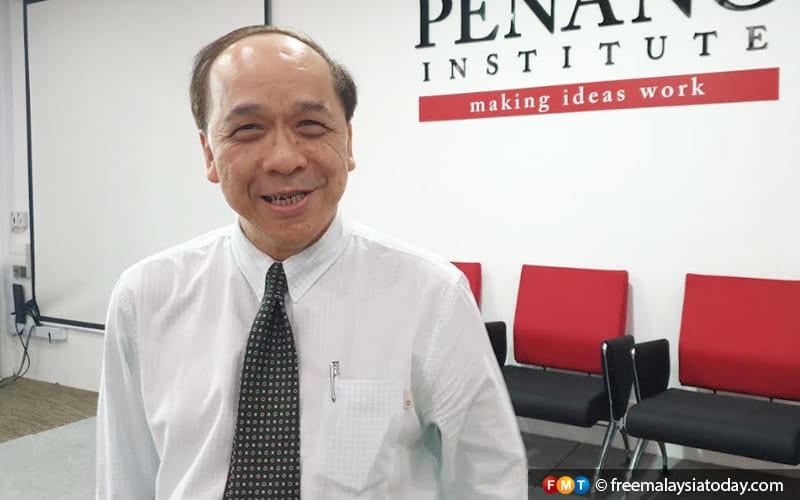
Khong Yuen Foong, the vice-dean of the Lee Kuan Yew School of Public Policy, said this would put Malaysia, in particular, in a tough spot, as it has taken a neutral stance towards both America and China.
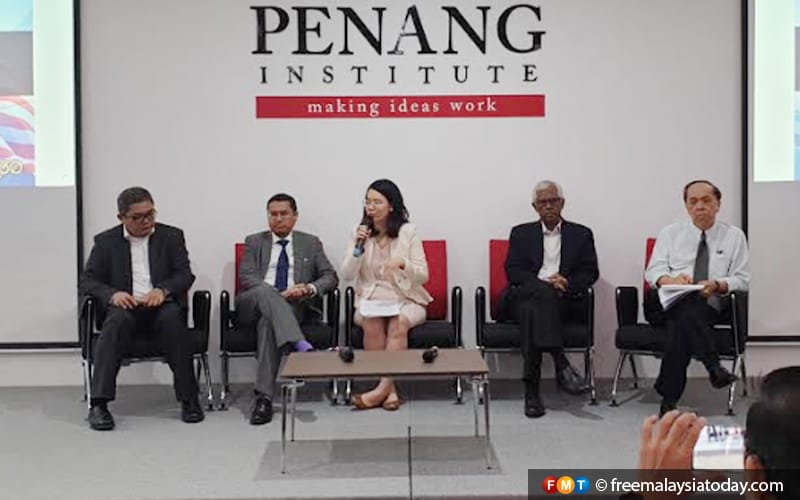
During a forum at Penang Institute here today, he said Malaysia is happy with the US presence in the country over the security front and investments but yet wants to keep close to China to bolster its economy.
“Malaysia is very good at what we call hedging, growing economically with China. But, at the same time, it welcomes the US presence in the region.
“Malaysia knows China will play a big role in its economy and prosperity, while having a US presence. So it wants both, one for the security, one for the economy, but what happens when they say pick one?
“It will eventually have to make up its mind,” the former Oxford University international relations professor said.
Khong said on the Asean front, a split among member nations was inevitable as a result of picking sides.
He said countries such as Laos and Cambodia would naturally pick China as it was closer geographically, and their economies are dominated by China.
“Those more maritime nations, such as Indonesia, Singapore and Malaysia, can try to play off these two powers, but they will find it increasingly difficult to do so.
“Over time, you will see a split Asean. That, to me, is not so healthy. Maintaining Asean’s solidarity will be difficult in the years to come.”
Khong said with a rich economy like Australia showing interest to take care of Chinese interests in the region, it is easy to say the rest of Asia, too, would eventually align itself to China.
“The Aussies come as no surprise. China has been their top trade partner for the past 15 years. Many will have more incentives to be friendly with China,” he said.
Khong said a full-fledged war between the US and China was “not probable” at this time, but the likelihood of going to war was there if both nations “decoupled economically”.
‘Equalising’
Khong also said, ideally, the US and China should “co-equalise”, a term coined by the late Singaporean PM Lee Kuan Yew in describing future Sino-American ties in 2012.
He said “equalising” was the best bet in the long run for both countries, but the US was not too keen on taking this path and was often adversarial of any move that would threaten America’s top spot.
“Noting China’s scale and might, the US should give a chance at co-equality and engage each other in world affairs, as the late Lee had advised.
“It will only bode well for both the economies of US and China, as one is a mature economy and another is up and coming,” he said.
Khong said for now, the US’ superpower status would remain unshaken and it would remain in the top spot for the next 30 years.
He said China would not be able to displace the US as the world’s superpower in the next decade or so, as widely predicted by pundits, saying it was more likely to happen by 2050.
Khong said this was because it was not easy to become a superpower by being an economic powerhouse alone.
“People are saying by 2030, China will overtake the US economically. I agree with this on a nominal basis, but not on a purchasing power parity basis.
“But China is far behind the US militarily; that is my sense.
“It is not that simple. If you look at the next five to six years, based on the Asia power index, it would remain the same — the US in the top position with China closing in.
“Because this kind of ‘overtaking’ is a 30-40-year phenomenon, it cannot be achieved in a few years. The US is an established power and China is still rising.”