
Fresh chapters involving legends Mokhtar Dahari, Soh Chin Ann and their fellow football warriors have unfolded.
A Mokhtar fan has analysed data about the striker and says Mokhtar could have been atop Fifa’s all-time goal scorers list for an astonishing 23 years, seven months and 21 days.
Former newsman Joe Nathan Lourdes believes the legendary No 10 was the world’s top goal scorer from Oct 27, 1980, to June 17, 2004.
Mokhtar, better known as Supermokh, is currently the third highest goal scorer in the world.
The feel-good stories continued last week when Chin Ann (whose name was spelled as Chin Aun for decades), was named by Fifa as the most capped player in ‘A’ internationals, with 195 caps in his career.
What’s more, Fifa’s elite Century Club now has seven Malaysian greats who have played 100 or more ‘A’ internationals.
They are Chin Ann, Abdul Shukor Salleh (163 caps), Mokhtar (138), R Arumugam (131), Zainal Abidin Hassan (116), M Chandran (115) and Santokh Singh (100).
Fifa’s statistics differ from that of the FA of Malaysia’s as friendly matches against foreign clubs and competitions held outside Fifa auspices are not taken into account.
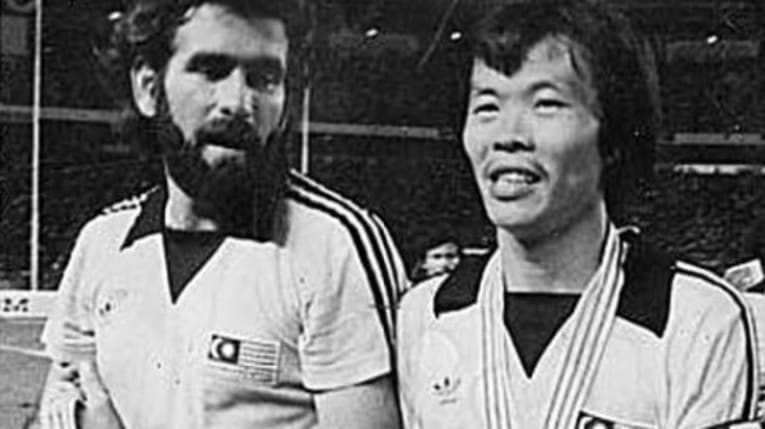
Chin Ann, now 71, was national team captain from 1975-1984. He earned his first cap in November 1969 against Thailand and the last against Yemen in October 1984.
The only active player in the goal scorers’ top 10 is Portuguese superstar Cristiano Ronaldo who has amassed 179 caps until the recent Euro2020.
Mokhtar scored 89 goals in 131 ‘A’ internationals between 1972 and 1985 and is behind Iranian Ali Daei and Ronaldo, both of whom are tied on 109 goals.
Lourdes reasoned that Mokhtar would have had to be on top between the time he overtook the previous leader, Hungarian legend Ferenc Puskas, and when Daei took over.
He said Mokhtar drew level with Puskas on Oct 20, 1980, with his goal in a 1-0 win over Thailand in the Merdeka Tournament.
“Seven days later, a 26-year-old Mokhtar overtook Puskas with a goal in a 1-1 draw with Kuwait at the same tournament,” said Lourdes, a former associate editor of Singapore’s New Paper.
Puskas, who scored 84 goals for his country, netted his last in a 2-0 win over Austria on Oct 14, 1956.
Daei scored his 89th goal against Laos in a 2004 World Cup qualifier on March 31, to tie with Mokhtar.
Daei overtook Mokhtar on June 17 that year when he scored a hattrick against Lebanon in a West Asian Football Federation Championship match.
So, as another insipid week enveloped Malaysia, the engrossing feats of the football icons lifted the national mood a little.
Can the present generation of footballers celebrate the achievements of their era in two or three decades from now?
A big ask, indeed. The current batch is stuck in reverse with nothing to show.
In separate interviews with FMT, Chin Ann, Santokh, Shukor and Zainal hoped the present footballers would follow in their footsteps.
They agreed that Malaysian football was struggling today largely due to the low quality international matches, limited games, lack of commitment and strong temperament to withstand any test.
Santokh said: “It appears today’s players are there for the perks and move from club to club for the money.
“You don’t have the togetherness like what we used to have.
“We stuck with one team because we wanted to be together to understand one another in the game and outside it.”

Shukor, who turns 73 in December, said: “The love for the game and country is all that is needed to ensure undivided commitment and success.”
Zainal Abidin, 58, who donned the national jersey for 17 years, said he became a better player by playing against top teams.
“Back then things were different. We started playing football as young as nine years old, so there was commitment from childhood,” he said.
The stories about Chin Ann and gang invite us to reimagine patriotism as the nation celebrates 64 years of Independence on Aug 31.
It would mean a lot more, however, if those in high places start thinking beyond the headlines and considered what it was that made these players special.
We should be promoting their togetherness and their ethos as an expression of the best aspects of Malaysia and Malaysianess.
We should take advantage of their remarkable stories that are reassuringly delightful, and entirely evocative.
While the Mokhtar Dahari National Football Academy in Gambang, Pahang, is named after the striker, the rest have nothing in their name.
Many stadiums and seating areas are named after footballing greats who graced their turf, setting new standards and delivering moments of ecstasy.
In Asia, there’s the Ali Daei Stadium in Iran. South Korea renamed the Gwangju World Cup Stadium to the Guus Hiddink Stadium after the Dutch coach guided them to fourth place in the 2002 World Cup.
Will past football legends forever remain the ones to inspire youngsters to fall in love with the game?