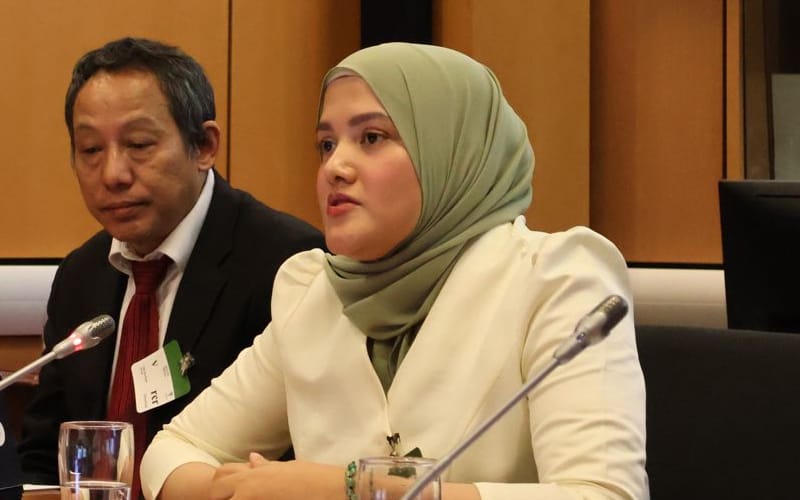
“I believe Malaysians still have heart. This can be seen from their recent displays of solidarity with the Palestinians,” said Rohingya Maiyafuinor Collaborative Network director Yasmin Ullah, 31.
However, she also said the hate speech being used against the Rohingya in the country resembles the rhetoric used by Myanmar’s military junta, which has called them “outcasts”.
Yasmin and three other Rohingya activists – organisation co-founder Nur Hayat Sultan, Noor Azizah, and Nur Hayati Ali – were speaking to the media at the Kuala Lumpur and Selangor Chinese Assembly Hall about the challenges faced by the Rohingya in Malaysia, and what can be done to help them.
Nur Hayat, who now lives in the US, said things were different when she was a refugee in Malaysia, as locals then would lend a helping hand to those in need.
These days, she said, her people face a heavier stigma in Malaysia.
“I was out with my cousin (last week) and was speaking Rohingya. My cousin told me to tone down (my use of the language) as a stigma is attached to it.
“I had to speak Malay because I didn’t want to make them feel unsafe,” said the 23-year-old.
The activists also emphasised the importance of giving the Rohingya access to education, recalling how their own lives were transformed by such access.
Nur Hayat, who was born in Kuantan, said she was denied access to education during her asylum in Malaysia, and that it was not until she left for the US that she began her education, enabling her to now work as a software engineer.
Noor Azizah, 29, pointed to the community’s illiteracy as a reason for its criminal incidents, citing also its inability to grasp the concepts of law and order.
Meanwhile, Nur Hayati said access to affordable healthcare was also important, especially given that the Rohingya lack the right to work in Malaysia.
“It’s not even just a refugee issue. Access to healthcare is a basic human right,” said Nur Hayati, 23, citing a case where a pregnant Rohingya woman lost her unborn child because she could not afford to pay a RM5,000 deposit at the hospital.
Yasmin agreed, calling access to basic amenities such as education, employment and healthcare “the bare minimum”.
“We’re not necessarily even asking for a seat at the table. We’re just asking for the bare minimum like access to education and opportunities for legal employment,” she said.