Judicial Commissioner Helmi Hamzah said the late K Suppiah only borrowed money from Lee Leong Teck, the first defendant, but was defrauded into signing a sale and purchase agreement (SPA) without understanding its implications.
“The impugned documents were part of a sham (transaction) to conceal the first defendant’s illegal money lending, which led Suppiah to lose his property,” he said in a recent written judgment.
Helmi said the three individuals had also abused the court process by commencing a civil suit and “forcing” Suppiah to enter a consent judgment in their favour.
S Mohanambal, the administrator of her late father’s estate, filed the suit against five defendants, alleging the entire SPA process was a sham intended to hide the first defendant’s money-lending activities.
She named Lee Seng Wai as the second defendant, Robert Muniandy as the third, legal firm Yae Seng Wai & Partners as the fourth, and the Selangor registrar of titles as the fifth.
Mohanambal said her father took a RM124,000 loan from Leong Teck in December 2017 and executed documents at the law firm, believing them to be solely related to the loan.
She said her father was unable to read the documents in English, and that no one from the legal firm had explained their nature and implications to him prior to the signing.
“Over a year later, my father was shocked to learn during a civil suit hearing that the residential property had been transferred to the first defendant without his consent or knowledge,” she said.
Mohanambal said a consent judgment was recorded in the civil suit at that point, allowing Suppiah and his nominee to purchase the property from Leong Teck for RM190,000 within four months.
She challenged the consent judgment, claiming it was recorded beyond the magistrates’ court’s monetary jurisdiction under Section 90 of the Subordinate Courts Act 1948 (SCA).
In his defence, Leong Teck claimed that Suppiah had agreed to sell the house to him for RM124,000 and had signed all related documents in December 2017 at the law office.
He asserted that Suppiah had agreed to rent the house from him for one year beginning Jan 1, 2018, at RM800 per month, but fell into arrears for 15 months in breach of the tenancy terms.
Leong Teck then commenced a civil suit to obtain vacant possession of the property and recover outstanding rent, claiming Suppiah had agreed to record the consent judgment in August 2019.
Helmi said there were numerous discrepancies in the defendants’ accounts of the SPA process during the trial, making it difficult for the court to accept it as bona fide.
In declaring the consent judgment between Suppiah and Leong Teck as null and void, Helmi noted that the magistrates’ court’s monetary jurisdiction is limited to RM100,000 as provided in Section 90 of the SCA.
“Here, the consent judgment was recorded at RM190,000, far beyond the court’s jurisdiction,” he said.
The court declared that the SPA and the tenancy agreement between Suppiah and Leong Teck had no effect, adding that the transfer of the property title from Suppiah to Leong Teck was also null and void.
Helmi also ruled that Suppiah was the rightful owner of the property.
He ordered Leong Teck, Seng Wai and the law firm to jointly and severally pay Suppiah’s estate RM163,400 in general damages, RM100,000 in exemplary damages and RM65,850 in aggravated damages.
Helmi also ordered them to each pay the plaintiff RM50,000 in costs.
No costs were ordered against Muniandy or the registrar.
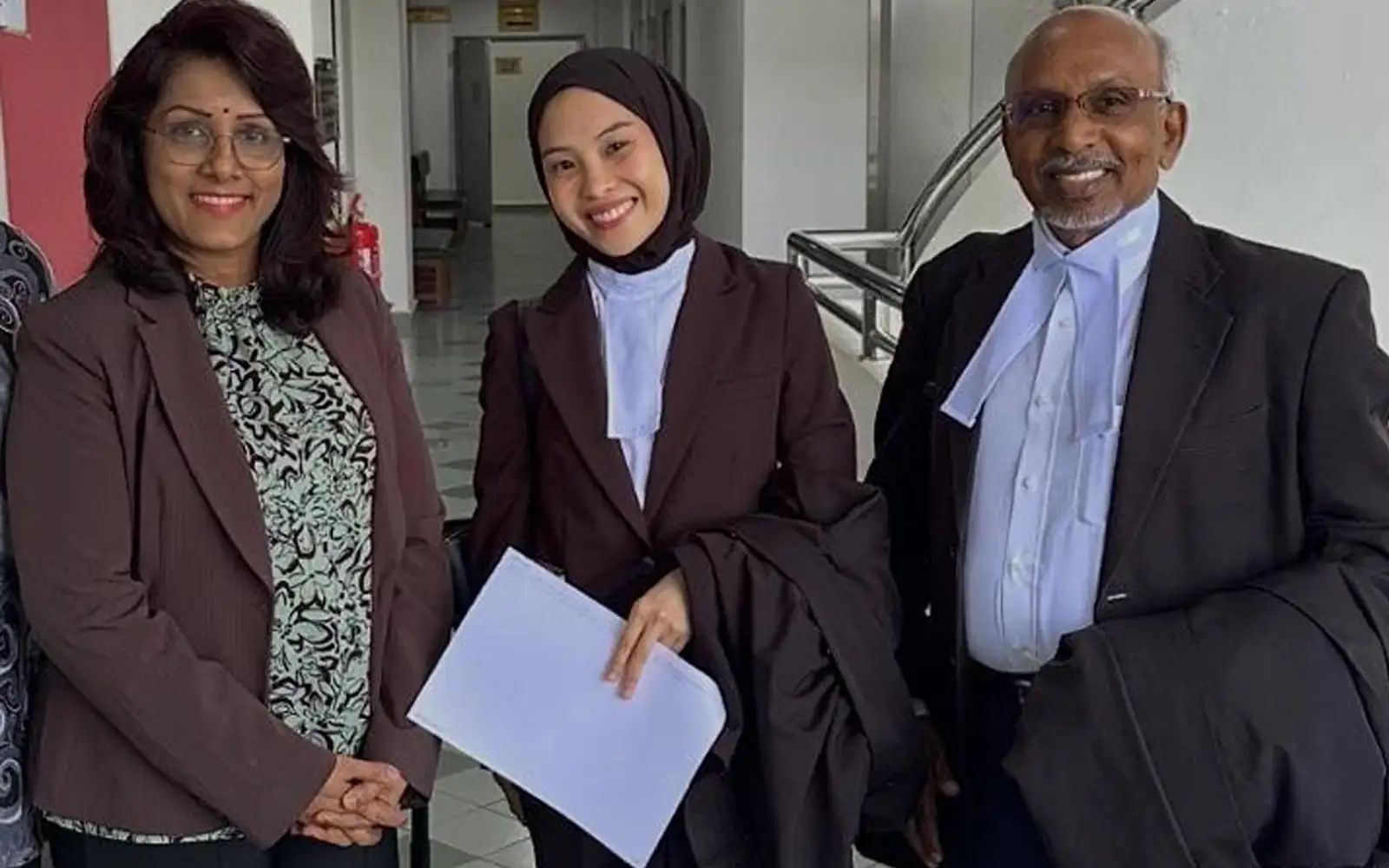
Lawyers Manoharan Malayalam and Nur Syamimi Adriana Shaharim appeared for the plaintiff, while Carol Tiong and Wan Arsham Faris Wan Razani represented the first four defendants.
Etty Eliany Tesno, the state’s assistant legal adviser, represented the registrar of titles.