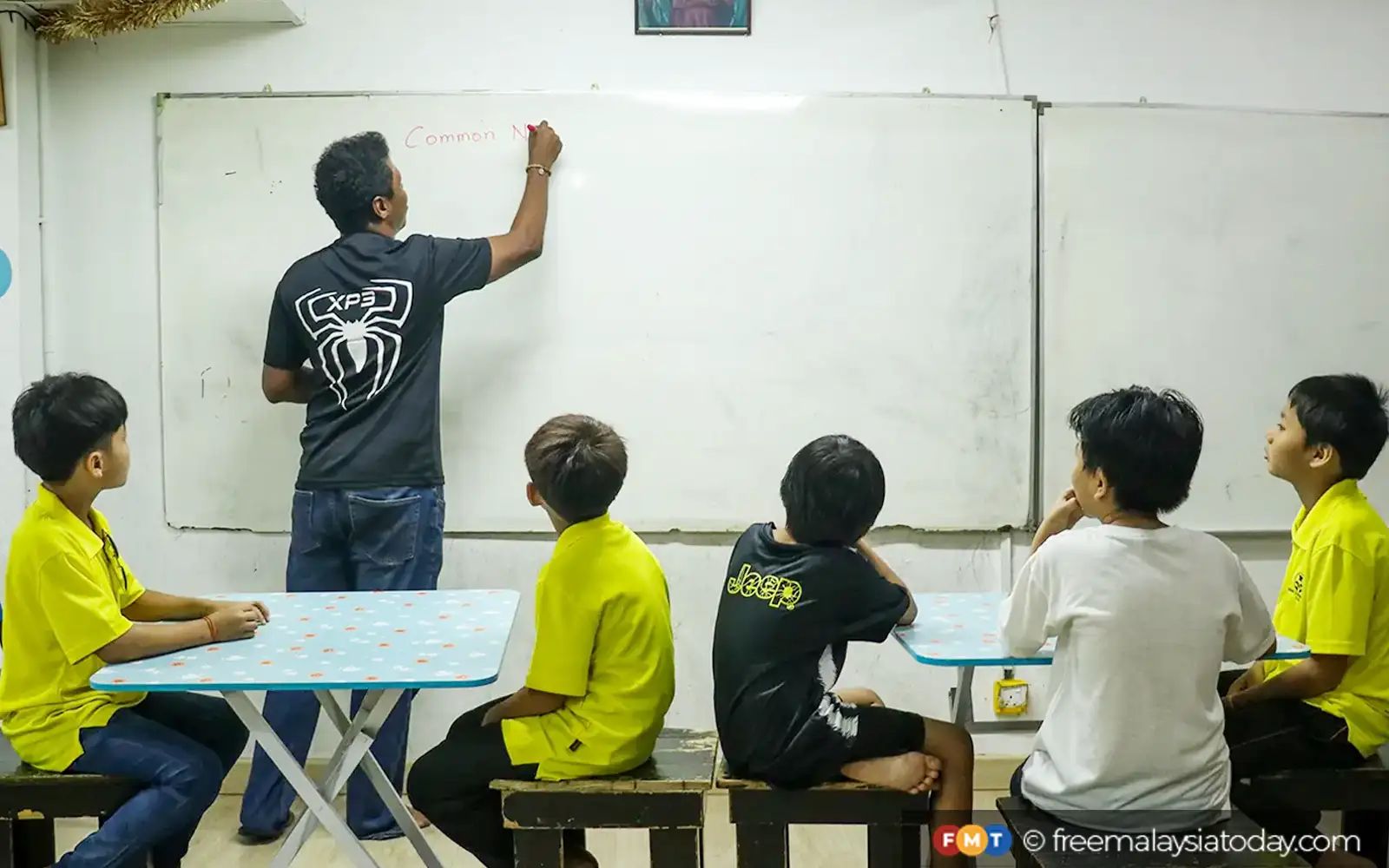
Dr Lim Yew Lyn of Selfless Together, which runs two alternative learning centres on Penang Island for refugee children, told FMT that she has identified many hardworking and talented refugee children.

“These children can contribute to our country. The only thing the government needs to do is get to know the refugee children. They need to see it for themselves,” she said. “I really think the children are a great asset to our country, if given the chance. If we don’t educate them, it could go the other way.”
Lim said the government could allow these children to sit for public examinations on humanitarian grounds.
She was commenting on a recent suggestion by Suhakam’s chief child commissioner, Farah Nini Dusuki, that the government should establish a dedicated body to monitor and recognise alternative schools, allowing refugee students to sit for public examinations such as SPM.
Farah Nini revealed that more than 58,000 refugee and asylum-seeking children in Malaysia are believed to be missing out on formal education.
Additionally, two-thirds of the 34% of registered refugee children at alternative learning centres still have no access to any form of formal education.
Lim said that because child refugees and asylum seekers cannot sit for Malaysian exams, they can only take the IGCSE (the UK’s international general certificate of secondary education) but this examination was too costly for learning centres.
She said a recognised Malaysian body would make it easier for learning centres to register for public examinations.
“More children would also be willing to learn, and we could educate more refugees. Having such a body would ease the burden on many centres, not just my own,” Lim said.

Separately, Mumtaaz Begum of Helping Hands Refugee Learning Centre said that a dedicated regulatory and recognition body would assist schools like hers in establishing formal accreditation and recognition frameworks.
“It would enable refugee students to access national examinations and standardised assessments, while also providing structured teacher training and professional development pathways,” she said when contacted, adding that such a body could also facilitate access to resources, funding, and institutional support for learning centres.
The principal of the Seberang Jaya–based learning centre also said that such a body is necessary and would be a progressive step towards inclusive education and the long-term social integration of refugee children in the country.
Mumtaaz commented that approximately half of the 120 pupils at her school are in severe financial hardship and unable to pay school fees. Many of them, some as young as 13, must work outside school hours to support their families, while female students are at risk of being married off at around the age of 13.
“The 58,000 figure is not just a statistic; it represents thousands of interrupted childhoods that require immediate and coordinated action.” she said.