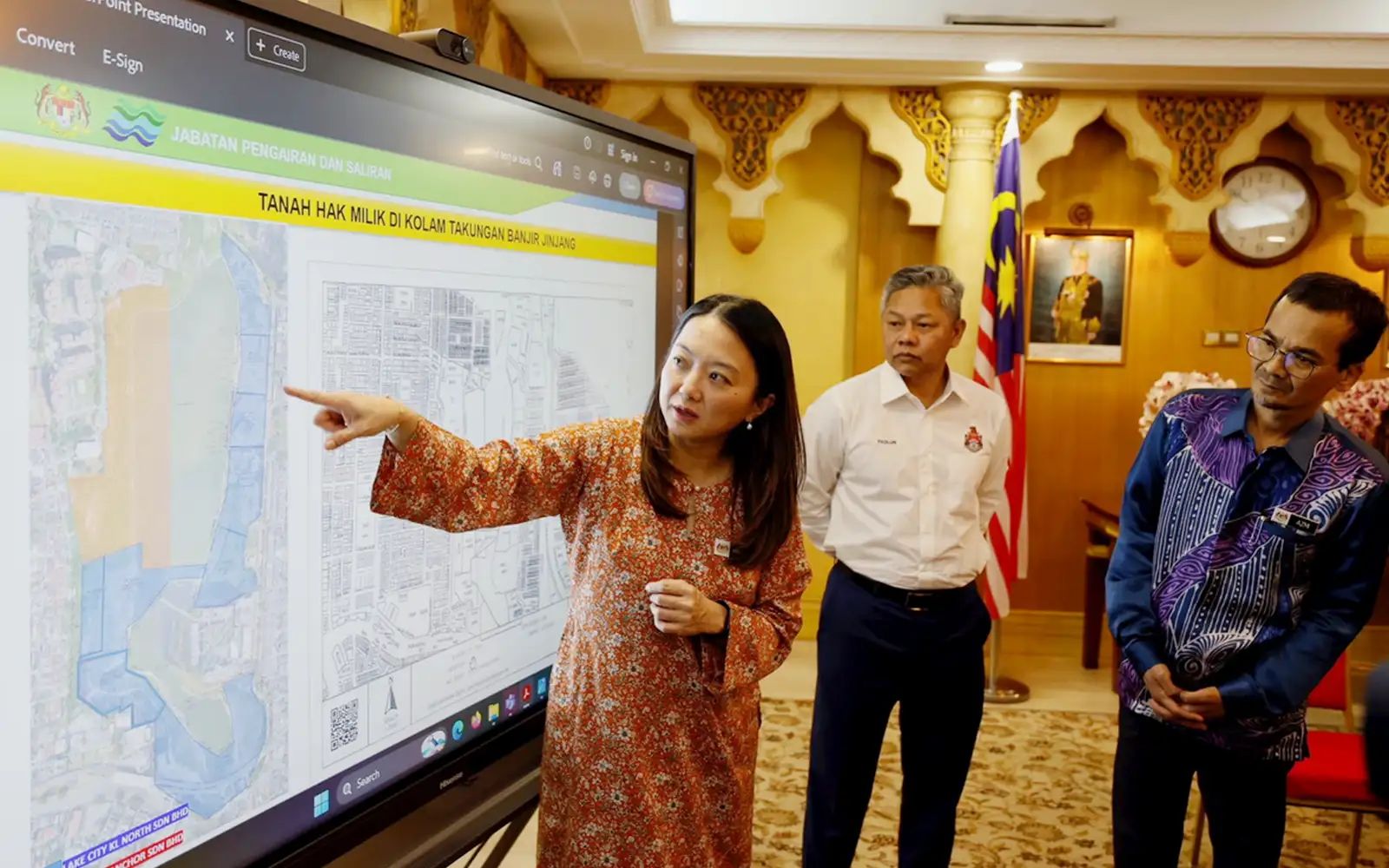
In a statement, Yeoh said this was caused by the alienation of 17 land lots within the Jinjang and Batu retention pond zones to developers since 2015.
“An estimated 70% of the land area within the water body zones has been transferred to developers for development purposes, resulting in a reduction in the ponds’ capacity compared with their original size of 33.5 hectares.
“Based on a technical assessment by the Kuala Lumpur irrigation and drainage department, this situation has affected the original function of the flood retention ponds and made maintenance works and machinery access difficult,” she said.
The minister said the government could not continue allowing developments that compromise the function of flood retention ponds, adding that the interests of residents must be prioritised.
She said the federal territories department had formed a task force led by director-general Azmi Zain to boost coordination and flood mitigation efforts in the capital city.
“In this regard, Kuala Lumpur City Hall (DBKL) will not approve planning permissions for any development application on flood retention pond land until conditions stipulated by the irrigation and drainage department are fully complied with, to ensure that the ponds’ original function and maintenance access are preserved,” said Yeoh.
This follows several cases of flash floods in parts of Kuala Lumpur following thunderstorms in the past month, totally closing off some roads, trapping vehicles and worsening peak-hour traffic congestion.
In a separate statement, DBKL said it would place special focus on 14 flood hotspots in the city through several immediate measures and long-term plans.
The hotspots include Jalan Rahmat/Jalan Sultan Azlan Shah, the Sultan Iskandar Highway, the Dato Onn roundabout, Jalan Tun Sambanthan, Jalan Chan Sow Lin, Jalan Sultan, Jalan Cheras, Jalan Pudu, Jalan Genting Klang, and Jalan Pintasan Segambut.
DBKL said this was less than half of the 30 flood hotspots previously identified in Kuala Lumpur, demonstrating the effectiveness of its flood migration projects.
“Various measures have been taken and are also ongoing, including maintenance of flood retention ponds, river dredging, as well as upgrades to drainage and irrigation systems at flood hotspots.
“Desilting work is also conducted at Sungai Toba every two months to ensure controlled and smooth water flow in the river,” it said.
DBKL also said it had formed a task force to monitor the situation at hotspots during thunderstorms, and a separate task force to address potholes that might have been caused by heavy downpours.