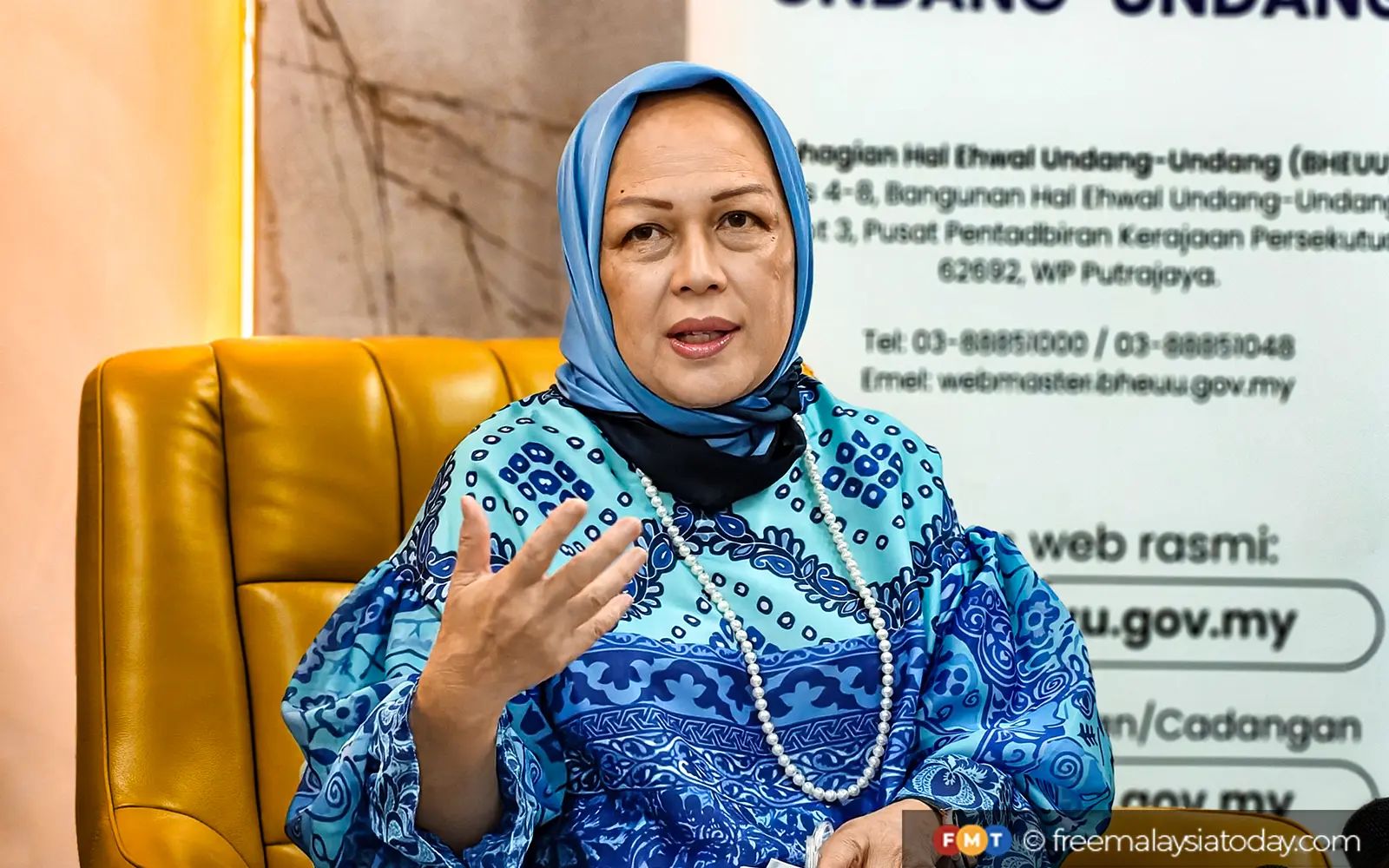
Hasnah Mohammad Hashim said social media companies must be proactive, while parents and guardians must remain vigilant.
She said children were increasingly exposed to online sexual exploitation, scams and gambling, while there was a high risk of them becoming social media addicts and falling victim to pictures doctored through artificial intelligence.
“Our main concern is sexual predators using pictures of children (online) to exploit them,” said Hasnah, a retired judge, in a media interview. “Parents may think social media is safe, but we don’t really know the person lurking behind the screen.”
She said children these days grew up in a digital environment and many of them were more tech-savvy compared with their parents.
Parents, especially those who did not make an effort to understand online risks, would find it more difficult to keep tabs on their children, Hasnah said.
She also advised parents to exercise caution when selecting content that their children watch. They should also guard against oversharing pictures of their children on social media.
“Personally, I worry that pictures of children will be misused for sexual or other purposes . There is always a danger in oversharing pictures. People like taking pictures and sharing them on social media. We need to look at how we can better protect children and parents,” she said.
Two new codes under the Online Safety Act 2025 (ONSA) will soon require digital platforms to take stricter action against harmful content and strengthen online protection for children.
The Malaysian Communications and Multimedia Commission said the Child Protection Code (CPC) and the Risk Mitigation Code (RMC), which take effect on June 1, set clear expectations for service providers to take greater responsibility in addressing harmful content on their platforms, particularly in protecting children and vulnerable users.
Failure to comply with the requirements under RMC may result in enforcement action, including fines or financial penalties of up to RM10 million.
Under the CPC, platform providers must adopt safety-by-design measures, including restricting account registration and ownership for users under 16, introducing age-appropriate protections, and limiting certain functions that could expose children to risks, thereby reducing exposure to exploitative and harmful content.
The RMC requires service providers to implement proactive and comprehensive measures to mitigate the risk of harmful content.
Hasnah said drawing up guidelines was just one aspect. The other challenge was ensuring the information reaches its target audience, especially the B40 households who may not be so well versed in digital matters.
She said the Online Safety Committee was looking into a different approach to get the message across, by making it more understandable with the help of videos, podcasts, and real-world simulations to help parents better understand online threats.
Social media platforms must also play a more active role in educating users and not just do the bare minimum, Hasnah said, adding that the committee was also looking into the best practices adopted by several countries to protect children in cyberspace.