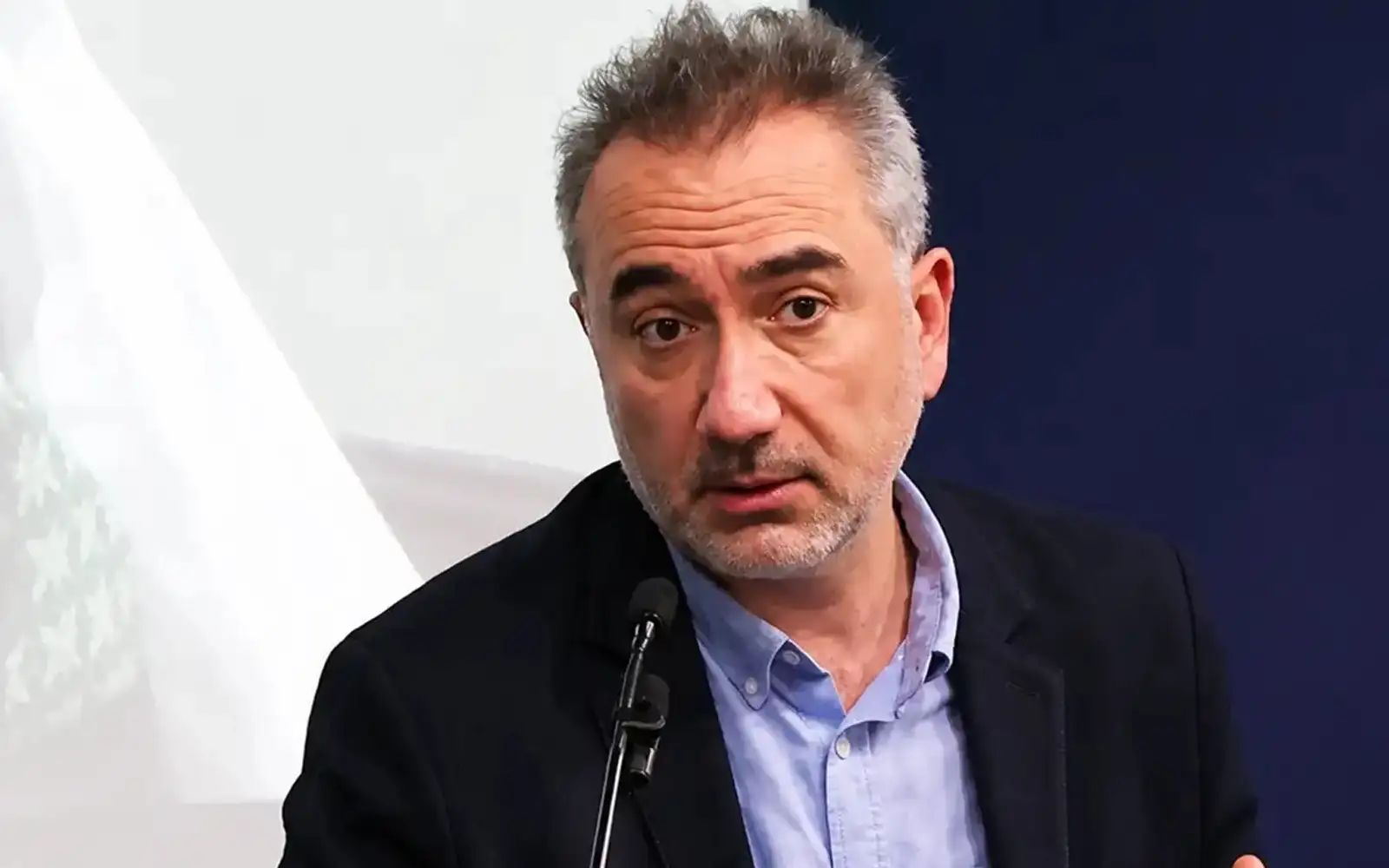
Mustafa Akyol said many women in secular Turkey choose to wear the hijab voluntarily and without compulsion from the government, unlike in Iran and Afghanistan, where authorities enforce the practice.
He said religious freedom represents the “right model”, stressing that Muslim women should wear the hijab out of personal conviction and religious fervour – not because they are forced.
Akyol shared his remarks at a recent conference in Washington, DC, titled “Conference on Civil State and Civilizational Integration of Afghanistan,” organised by members of the Afghan community.
In his speech, Akyol pointed out that surveys show more Muslims in Turkey observe fasting compared to Iran, even though Iran is an Islamic state where religious police conduct spot checks to enforce compliance.
“Iran’s authoritative nature (has) made a lot of people feel distant towards religion, even becoming outright irreligious, as seen in the Iranian diaspora,” he said, highlighting the irony of the situation.
“Turkey, on the other hand, is a civil state. People are religious because they choose to be. It wasn’t dictated from above.”
In March, Akyol cited a 2016 poll by Turkish research firm Konda, which found that about 65% of Turks fast during Ramadan despite some recent decline, while a 2020 Gamaan online survey reported that only 40% of Iranians do so.
Gamaan is an independent foundation based in the Netherlands that studies Iranian attitudes towards different social and political topics.
Akyol, currently a senior fellow at the Cato Institute in the US, said that although Turkey struggles with deep political polarisation and an authoritarian style of governance, the country still stands as a “good model” from a religious perspective.
“The state does not act in the name of religion, which is better for religion,” he said.
He also took issue with governments that rule in the name of Islam, saying that such administrations end up “making Islam serve them”.
“So, when we have an Islamic state, it turns out to be a state of some Islamic group, and you will get one segment who will feel discriminated or sometimes oppressed,” he said.
He said an inclusive democracy offered a better political model for the Muslim world, citing Indonesia and Bosnia and Herzegovina as good examples.
These two nations boast a Muslim majority but allow their people to practise their religion freely, he said, adding that Muslims stand to thrive by being part of a pluralistic society.
“(It allows us to) focus on education, development and investments instead of fighting over fatwas – and we become a more productive society,” he said.