
When the world goes crazy, it’s useful to be distracted by something beyond this world, such as outer space or the moon or the various parts in between.
The recently-concluded mission to the moon by Nasa’s Artemis 2 crew is one such distraction. If you’re a space nerd like me, this voyage was very cool.
The shenanigans of Elon Musk or Jeff Bezos or Richard Branson in trying to colonise space or the moon or Mars don’t really excite me, it is the exploits of nations going into space to pursue national ambitions that do.
Nations certainly have their own selfish agenda – militarising space, territorial claims of planets and asteroids etc – but they also have many other peaceful goals that make human existence more interesting.
There’s now a renewed push to land humans back on the moon and even go further, driven by pretty much the same nationalistic and extractive mindset that spurred the adventures and conquests to colonise foreign lands in the past few centuries.
The latest Artemis flight is a test-run of the moon landing planned for the Artemis 4 mission in 2028. China, whose space programme has made progress by leaps and bounds, also plans a landing within the next few years.
The composition of the Artemis 2 crew (white, black, female and foreign) came as a bit of surprise. It appears DEI (diversity, equity and inclusion) isn’t dead in the US yet! But this crew was selected years ago. It’s a safe bet that the US mission that lands on the moon will have an all-white, all-male and all-American crew!
Domestic US politics aside, the Artemis programme has a huge international flavour in it, with big contributions from Canada, Europe and Japan. Manned space missions are hugely expensive, it has become the norm to share costs and risks. But that also means sharing the glory.
Future US programmes such as possible missions to Mars and the asteroids may have a more US-only and private capital character.
Unfortunately, the current focus on exciting and glamourous space programmes hides the fact that Nasa, along with many other US scientific institutions, have cut down funds on other critical, if politically less palatable, scientific research such as on climate change.
We can only hope the EU and especially China will pick up the slack.
Regardless of where you stand on this matter, you’d agree that some of the most memorable results from Artemis 2 are the photographs captured by the crew.
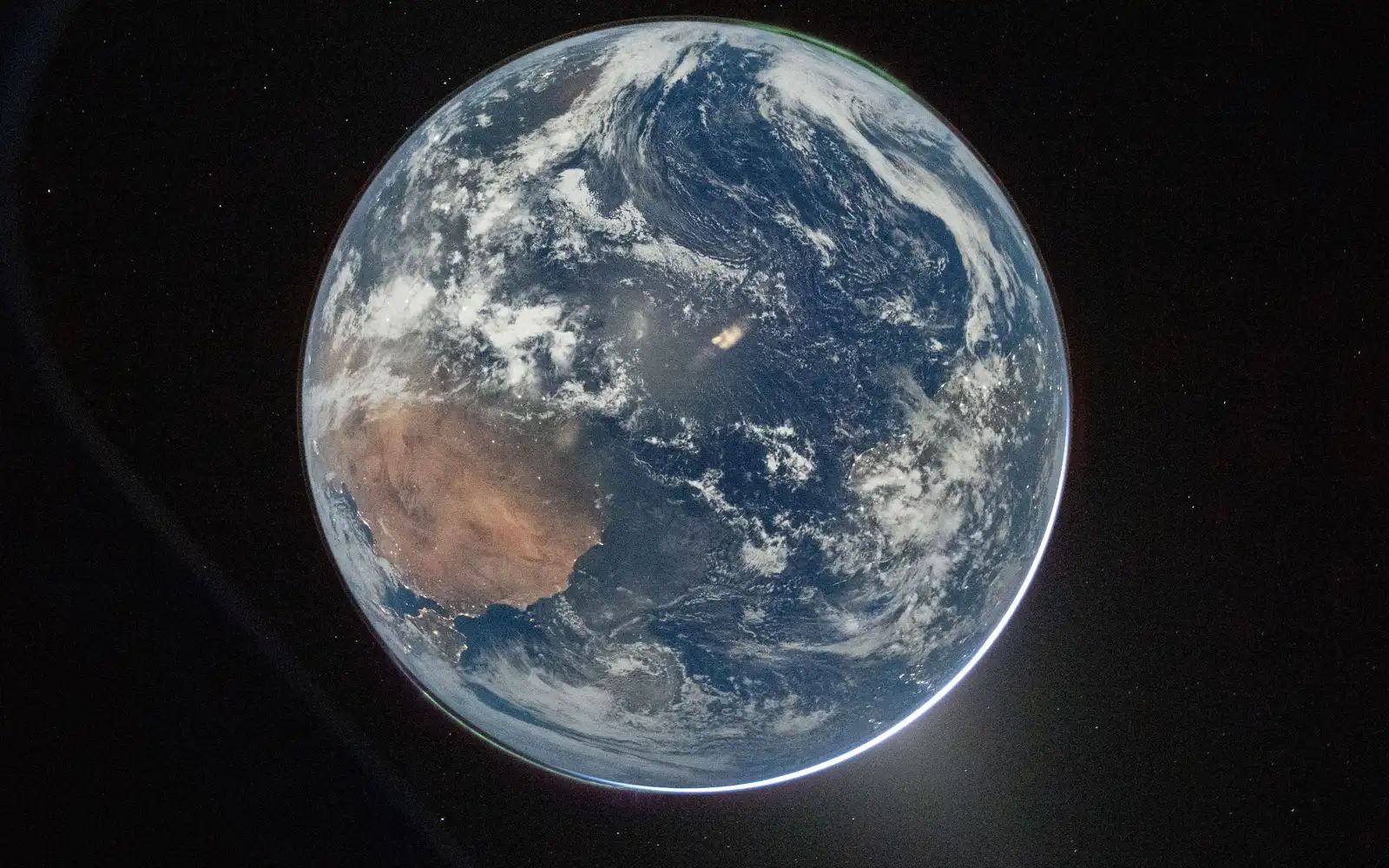
There’s one of the full globe of Earth: if you look carefully, you’ll notice the orange of the Sahara in northern Africa, oriented in a way which isn’t familiar, very unlike how we see it on a typical map on Earth.
The maps of the Earth that are familiar to us are the result of centuries of western map-making and human convention where the Arctic (and Europe) is always on top and the Antarctic is at the bottom.
In space there’s no up or down, left or right. The view captured by Artemis shows the globe still lit, even though it is nighttime, with the image brightened by extended camera exposure. You can even see the auroras at the poles and the super-thin atmosphere that supports all life on Earth.
We can only marvel, if not actually worry, about the fragility of our existence within that thin band on the face of the earth.
Another photo is what’s called the “Earthset” photo where the Earth appears as a white-and-blue crescent over the edge of the lunar surface. This reminds us of the famous “Earthrise” photo taken in 1968 from behind the moon, possibly one of the most famous photographs ever taken, credited with starting the modern environmental movement.
Given the dire state of our environment today, it would be a blessing if the new “earth rise” photo resuscitates and reinvigorates that movement again.
The world today is a far cry from the world of the 60s, when there was a lot more faith in society’s institutions, whether political or educational or scientific ones.
Today, belief in science has fallen, with a substantial minority of people especially in the US not even accepting that humans landed on the moon or even that Earth is a globe – even as more people seem to believe in aliens and spacecraft visiting the planet.
That’s where China today is different. Its still a young country politically even if it’s an old civilisation, but one still excited and optimistic that knowledge and science and technology can still be harnessed for humanity’s progress and not just to enrich a small handful of billionaires.
Today it is the US that appears as the old and tired civilisation, more interested in accumulating wealth and power for the few at the expense of the many both within as well as outside of its borders.
Anything that doesn’t immediately advance this goal is discarded or even demonised.
Much of the slack caused by the US retreat from scientific leadership is being picked up by China, which has made tremendous progress in science, nation-building and its own space programmes; while certainly driven by many military and one-upmanship goals, they are also driven by the desire to peer further into the world and the universe we live in.
Let us enjoy seeing more beautiful pictures of the moon and Earth and the universe, and let us wish safe journeys to whichever nation is making the efforts to explore space.
The views expressed are those of the writer and do not necessarily reflect those of FMT.