From Boo Jia Cher
Every rainy season, the same thing happens.
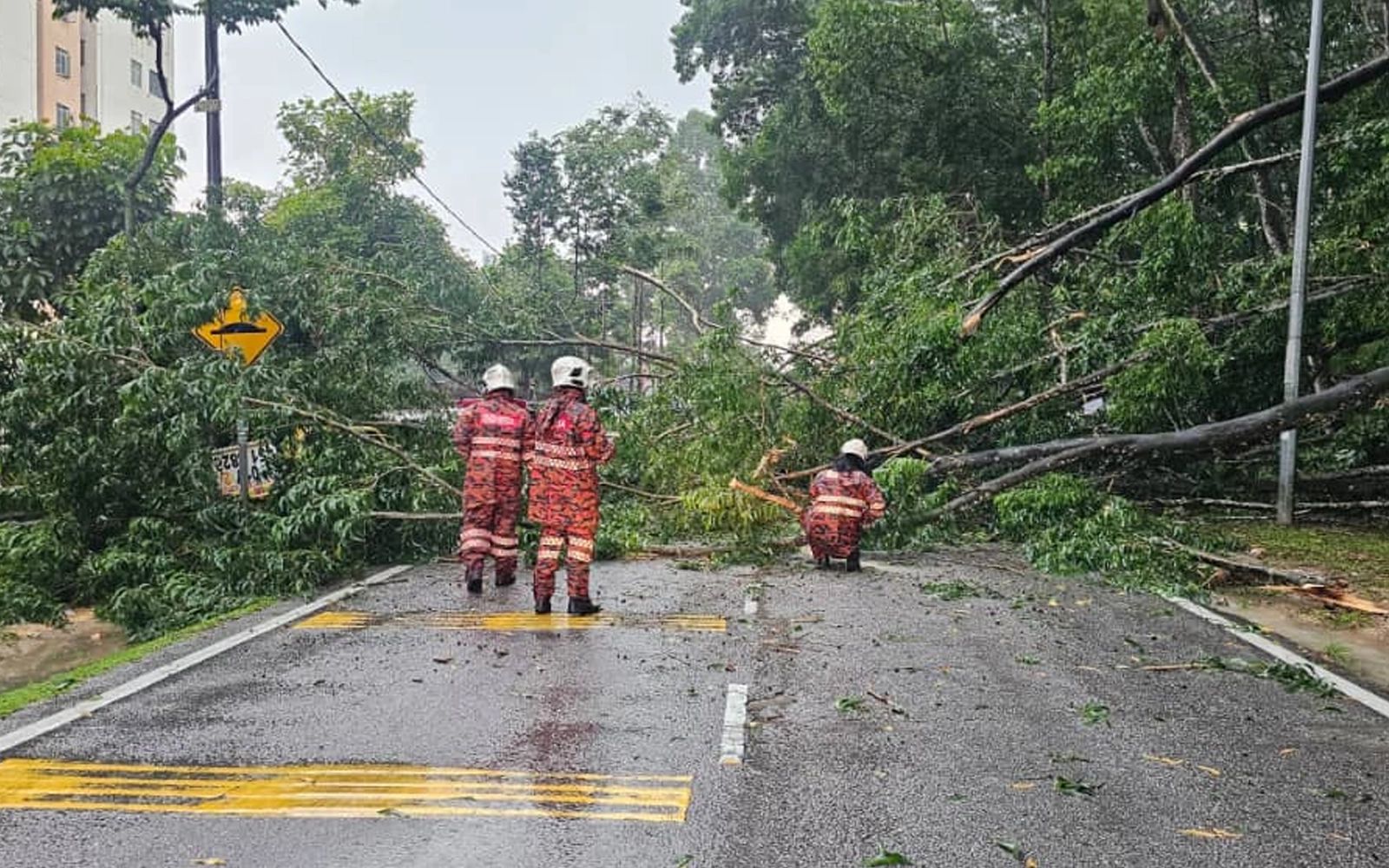
A tree falls onto a road. A branch crashes onto a parked car. Panic spreads online. Local councils begin aggressively pruning or cutting roadside trees until entire streets are left with bare trunks.
This is presented as public safety.
But falling trees are not simply natural disasters. They are symptoms of a deeper problem: Malaysia’s addiction to cars and car-centric planning.
How car-centric planning is destroying urban trees
For decades, our cities have been designed around highways, flyovers, parking lots and road widening. Trees are treated as obstacles to traffic flow instead of essential urban infrastructure.
In the Klang Valley, it is often easier to cut down a tree than realign a road around existing trees.
This mindset is destroying the very things that make cities liveable.
Mature trees that took decades to grow are regularly chopped down in road widening projects. Even when trees remain, they are squeezed into tiny concrete spaces surrounded by asphalt.
Their roots become trapped beneath compacted soil, concrete, and carparks. Cars parked illegally beneath trees for shade make the problem worse by compressing the soil even further.
Weak roots make trees unstable during storms, which then becomes the justification for even more tree cutting — a vicious cycle.
‘Chop first, think later’ cannot be urban policy
We understand that local councils come under pressure after several tragic cases involving falling trees. Public safety matters. Councils also face legal liability, budget limitations and a shortage of certified arborists.
But “chop first, think later” cannot be urban policy, because irresponsible tree cutting creates even more problems over the long term.
Cutting down every tree to protect a car is like burning down your house to get rid of a cockroach. It is a massive overreaction that ultimately makes the entire neighbourhood worse.
Instead of cutting down trees or cutting all branches, we should be demanding that they maintain trees properly so both people and property stay safe.
Healthy, well-maintained trees are far safer than trees weakened by poor urban planning, damaged roots, and years of neglect.
Trees as essential urban infrastructure
A mature tree can significantly lower surrounding temperatures through shade and evapotranspiration. Remove enough trees, and entire neighbourhoods become heat traps of concrete and asphalt.
Streets without shade become unbearably hot by noon. Some homes become like ovens, especially for low-income households that cannot afford air conditioning.
People avoid walking entirely, pushing even more people into cars, worsening congestion and parking problems.
Trees also matter for mental health. Research consistently shows that greenery improves emotional well-being, reduces stress and creates healthier urban environments.
Protection from floods
Trees are critical for flood prevention. They absorb rainwater, stabilise soil and slow runoff during storms. When urban greenery disappears, rainwater rushes directly into drains already overwhelmed by excessive paving and poor maintenance, increasing the risk of flash floods.
The recent mud floods in TTDI are a reminder of this reality. Clearing heavily forested land for development contributes to soil erosion and runoff into nearby neighbourhoods.
Ironically, some trees are even removed because falling leaves are blamed for clogged drains. Instead of improving drainage systems or maintenance, the trees become the scapegoat.
More roads mean more heat, cars and floods
Current urban policies still treat wider roads and more parking as solutions to congestion and development. In reality, car-centric planning is making our cities hotter, less walkable and more vulnerable to climate disasters.
The more roads we build, the hotter cities become. The hotter cities become, the more people rely on air conditioning and cars. The more cars we have, the more pressure there is to widen roads and remove trees.
It is an endless cycle of environmental decline.
Many cities are investing in walkability, public transport, urban forests and shaded streets because they understand that liveability is economic infrastructure too.
Even Bogotá in Colombia, a city much poorer than Kuala Lumpur, has invested heavily in urban greenery to help residents cope with rising heat, with some projects reportedly lowering temperatures by 1–2°C in certain areas.
In nearby Singapore, people walk outdoors all day, not because the weather is cooler, but because extensive tree cover and sheltered walkways make the heat manageable.
There is a choice
Local councils can continue treating trees as a liability to be removed whenever they become inconvenient.
Or recognise that in an era of global warming, worsening floods and declining public health, trees are as important to urban infrastructure as roads and drains.
Protecting urban trees cannot just mean emergency pruning or chopping during monsoon season.
It requires rethinking how we design our cities altogether. Trees and nature must coexist with roads, buildings, and public infrastructure, not to be removed whenever they cause inconvenience.
Modern cities need more than just roads and buildings to work. Without trees for shade and green spaces to enjoy, a city becomes uncomfortable and hard to live in.
Ultimately, if local councils design neighbourhoods only for cars instead of people, they will fail the very citizens they’re supposed to serve.
Boo Jia Cher is an FMT reader.
The views expressed are those of the writer and do not necessarily reflect those of FMT.