From Johnny Teoh
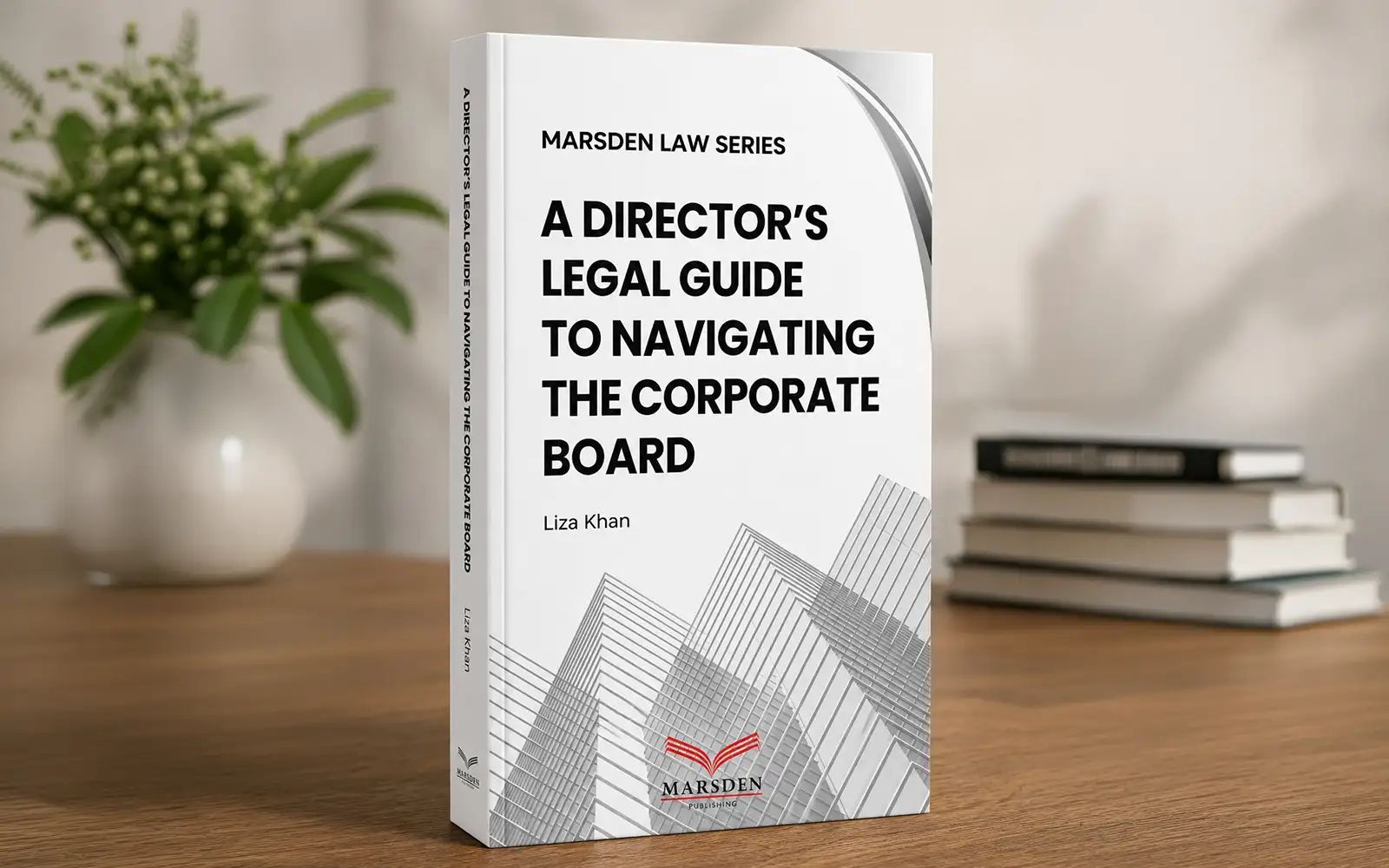
Let me start with a confession. When this book, “A Director’s Legal Guide to Navigating the Corporate Board” by Liza Khan landed on my desk, my first instinct was to file it under “useful reference”.
At best, it is the kind of title you keep within reach but never actually read cover to cover.
Corporate governance. The Companies Act 2016. Director duties. These are not words that typically promise a compelling read.
I was wrong.
It is the book that Malaysian corporate life has needed for years and, until now, simply did not have. There is no comparable title in this market.
Not one that combines statutory rigour with practical boardroom intelligence, grounds itself in Malaysian case law and local regulatory architecture and still manages to read like something a busy professional might actually finish.
Khan has been a practitioner in corporate law and dispute resolution for 26 years. In that time, she has advised listed corporations, regulatory bodies, and high-profile individuals on some of the most consequential matters in Malaysian commercial life.
The prose is clean and direct. Sentences are short. Khan treats clarity as a form of competence. The result is a book that is professional without being academic, and accessible without being dumbed down.
What the book covers
Khan opens by building the reader’s fluency in the foundational language of corporate governance and the Companies Act 2016, establishing early that this is not a book for passive reading.
Through several chapters, she discusses issues such as director duties, skills, diligence, good faith, loyalty, regulatory oversight, internal governance policies.
For instance, what does the duty of care actually mean when you are sitting in an audit committee meeting and the CFO is presenting numbers you do not fully understand?
Elsewhere, she confronts insolvency and receivership without sugarcoating, and runs through the key laws governing Malaysian companies, providing a consolidated regulatory map that directors rarely have access to in one place.
Where the book earns its keep
Chapter eight is where the book earns its claim to contemporary relevance.
She takes on ESG, climate risk, greenwashing liability, diversity and inclusion, artificial intelligence, cybersecurity, and geopolitical risk in a single chapter. This is territory where other authors have stumbled.
Khan approaches these topics the same way she approaches a derivative action, as categories of legal and reputational risk with identifiable triggers and manageable responses.
Her treatment of greenwashing is particularly sharp, at a time when the Securities Commission and Bursa Malaysia are tightening expectations around sustainability disclosure and the consequences of overstating environmental credentials are becoming increasingly serious.
Her section on artificial intelligence and cybersecurity is equally grounded. As chair of the National AI Office Malaysia, she is writing as someone who has been in the room where Malaysian AI policy is being shaped.
The chapter that stands apart
The standout section of the book is Chapter 10, “The Untrodden Path”.
It is a first-person account of what it is to navigate Malaysian boardrooms as a woman, written without performance and without corporate platitudes.
Khan does not produce a polished diversity narrative. She writes from lived experience, naming the frustrations that many women in governance roles carry silently.
Being talked over. Being managed rather than trusted. The subtle and not-so-subtle ways the room can make clear that you were not quite the expected shape of a director.
Her analytical framing here is particularly useful. She draws a distinction between the sticky floor, the internal barriers and self-limiting behaviours that keep women anchored in middle management, and the glass ceiling, the external structural barriers that prevent advancement.
These are different problems requiring different strategies and conflating them produces bad advice. Khan does not conflate them.
She also draws what is, in practical terms, the most important distinction in professional mentorship. The difference between a mentor, who talks with you, and a sponsor, who talks about you when you are not in the room.
For women who aspire to join board positions in Malaysia, this chapter alone may justify the price of the book.
The chapter also includes personal accounts from new and seasoned directors who have navigated these dynamics firsthand.
That collective voice gives the chapter an authenticity that no single perspective could provide, and grounds its conclusions in recognisable Malaysian boardroom reality rather than imported theory.
Who should read this
The obvious answer is directors, aspiring, new, and veterans.
But the honest answer is considerably broader. Lawyers advising boards. Company secretaries who regularly find themselves in possession of more information than the directors they serve.
Senior executives who interact with boards and want to understand how decisions are made and unmade at that level. Regulators who want to understand how governance guidance actually reaches practitioners.
Investors assessing whether the boards of their portfolio companies are equipped to govern effectively. Anyone who has wondered what goes wrong in Malaysian boardrooms and why will find material here.
A few honest caveats
At 382 pages, the book is comprehensive without being exhausting. Readers from non-legal backgrounds will find that her consistent effort to translate statutory language into plain, actionable terms makes even the denser provisions approachable.
The book’s maritime metaphor, the boardroom as a ship and directors as navigators, runs throughout and gives the material a coherent narrative thread that most legal guides sorely lack. It is a device that works precisely because the analogy is honest: directing a company, like navigating open water, demands preparation, judgment, and the courage to act when conditions change.
The bottom line
This is not a textbook. It is a leadership manual, written by someone who has sat in those rooms, felt the particular silence of not knowing, and decided to write the guide she wished had existed.
It is grounded in Malaysian law, current in its treatment of contemporary risk, and honest in ways that corporate governance literature rarely permits itself to be.
There is no comparable book in Malaysia. Directors have been navigating this terrain without a reliable, locally grounded map. They no longer need to.
The book can be purchased at: https://marsdenlawbook.com/product/a-directors-legal-guide-to-navigating-the-corporate-board/
Johnny Teoh is an FMT reader.
The views expressed are those of the writer and do not necessarily reflect those of FMT.