From Tian Chua
Former PKR deputy president Rafizi Ramli recently staged another dramatic political manoeuvre, further intensifying Malaysia’s already noisy political climate. Together with Nik Nazmi Nik Ahmad, he not only resigned as an MP, but also launched a new political party.
Despite the political theatre dominating headlines, the gravest threat facing Prime Minister Anwar Ibrahim’s government does not come from Rafizi’s new party, nor from Umno-BN’s decision to contest future state elections independently.
The more serious danger lies far beyond Malaysia’s domestic political arena.
Looking beyond our shores
Malaysians cannot afford to remain oblivious to the increasingly dangerous global environment surrounding us.
As witnessed recently, US president Donald Trump’s latest visit to China ended without meaningful breakthroughs, with China refusing to assist the US in resolving conflicts in the Persian Gulf.
No one knows how long the conflict involving Iran will continue. Yet one thing is certain: its impact will extend far beyond fuel prices.
The International Monetary Fund has warned that severe disruptions could reduce global growth to as low as 2% in 2026 and 2027, while inflation may exceed 6%.
Meanwhile, the International Labour Organization projects up to 43 million full-time job losses worldwide by 2027 if oil prices remain significantly above pre-war levels. Real wages are also expected to decline, worsening living standards across many countries.
Beyond energy costs, prolonged geopolitical instability threatens food security, industrial supply chains, employment, and poverty rates.
Even if hostilities were suspended tomorrow, the economic aftershocks could persist for years.
Malaysia’s fortunate position – and its cost
Malaysia remains relatively fortunate due to its long-standing independent diplomatic posture. Successive leaders have maintained neutrality in an increasingly polarised international environment while preserving good relations with Gulf countries and major global powers alike.
This diplomatic balancing act has helped Malaysia avoid some of the severe energy disruptions and inflationary shocks affecting other economies.
Compared with many countries, Malaysians still enjoy relatively affordable fuel prices and a degree of economic stability.
However, this comfort comes at a growing fiscal cost.
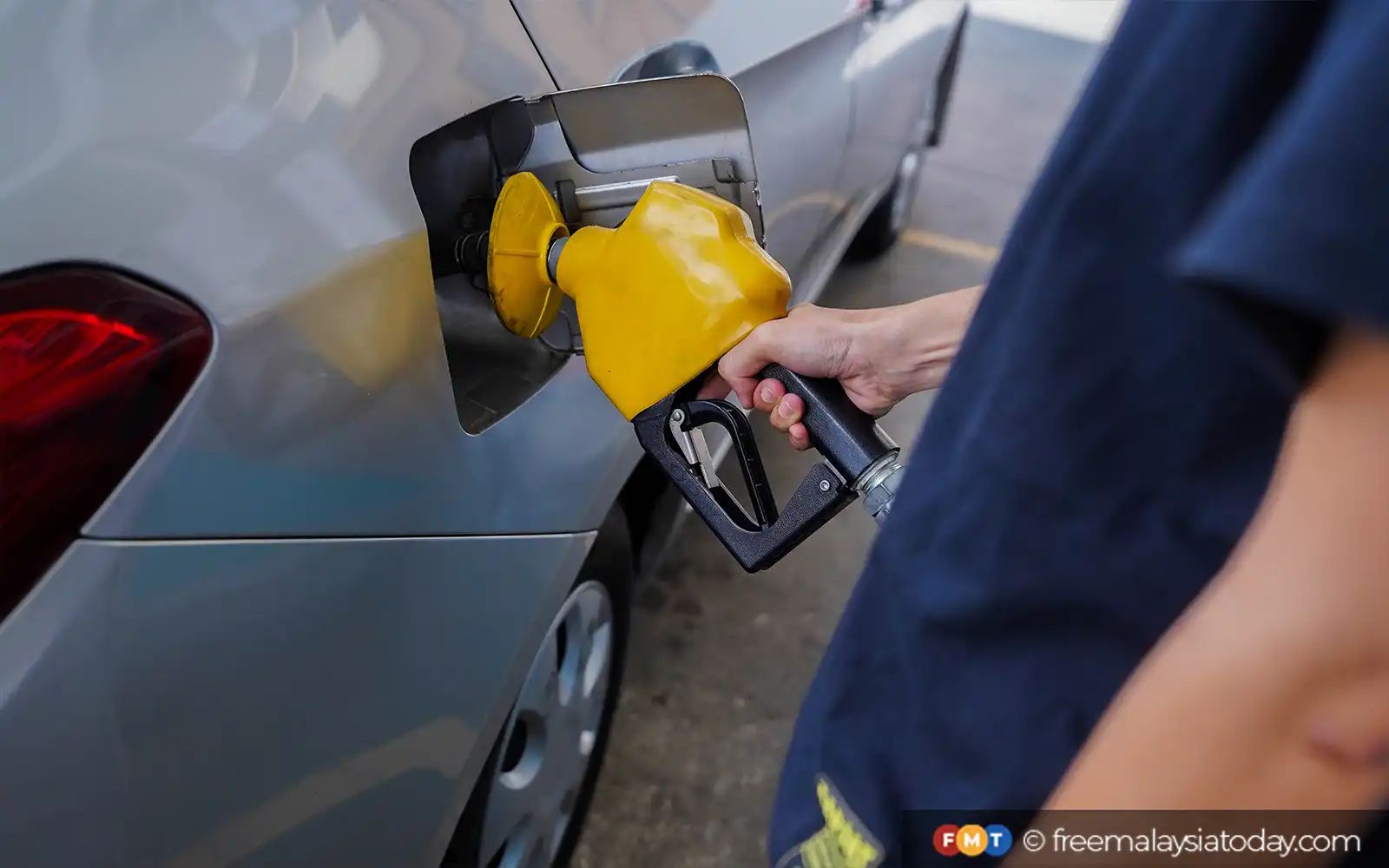
The government’s monthly fuel subsidy commitments now stand at RM7 billion, compared to just RM700 million before the war. Should global oil prices remain elevated, annual fuel subsidy costs could increase dramatically.
Can Malaysia continue financing large-scale fuel subsidies indefinitely amid prolonged geopolitical instability?
Maintaining artificially low fuel prices requires enormous government spending. Over time, this reduces the government’s fiscal flexibility and forces trade-offs.
The limits of fuel subsidies
Fuel subsidies over the decades have undoubtedly provided short-term relief, particularly for lower- and middle-income households.
However, they remain an inefficient and expensive anti-inflation mechanism. Massive subsidy spending limits investments in more productive sectors such as public transport, industrial upgrading, healthcare, and education.
Blanket subsidies are also poorly targeted. Wealthier households that consume more fuel often benefit disproportionately, while low-income families may require broader forms of assistance.
Prolonged fuel subsidies encourage overconsumption and weaken incentives for energy conservation or public transport usage. Malaysia’s severe urban congestion, dominated by single-driver vehicles, reflects this structural dependence on private transport.
Most importantly, subsidies merely suppress symptoms rather than address deeper structural problems such as supply chain vulnerabilities, food insecurity, currency pressures, and stagnant productivity growth.
The political deadlock
The greatest obstacle, however, is political.
Any attempt to reform or reduce fuel subsidies risks public anger, inflationary pressure, and electoral backlash.
For decades, nearly every major political party has campaigned on promises of cheaper fuel and lower living costs without confronting the deeper structural realities.
Malaysia’s political culture has become trapped in a cycle where economically unsustainable policies are treated as untouchable sacred cows.
Contradictions with sustainability goals
Broad fuel subsidies also contradict Malaysia’s long-term sustainability ambitions.
Environmentally, they encourage higher fossil fuel consumption and carbon emissions, undermining commitments under the Paris Agreement.
Fiscally, they divert public funds away from renewable energy, green infrastructure, and modern public transport systems.
Politically, they create long-term dependency, making future reforms increasingly difficult.
While lower-income households deserve protection from inflation, fuel subsidies alone are inadequate.
Poor families require broader social protection measures, including affordable housing, healthcare access, wage growth, food security, and reliable public transport networks.
A difficult but necessary path forward
Subsidy reform cannot succeed through unilateral political action alone. It requires bipartisan consensus and national maturity.
Rather than exploiting the issue for short-term political gains, both the government and opposition should participate in a broader economic framework focussed on national resilience.
The government should consider forming an inclusive economic action council comprising representatives from both sides of the political divide alongside economists and industry experts.
Any future ruling coalition will eventually face the same fiscal dilemma.
If the global crisis worsens further, Malaysia may ultimately have little choice but to temporarily suspend or significantly restructure fuel subsidies until global conditions stabilise.
Such measures would undoubtedly be unpopular, but postponing difficult decisions may produce even greater economic pain later.
However, subsidy reform cannot occur in isolation.
The government should simultaneously expand public transport access, encourage energy conservation, and reduce dependence on private vehicles.
More comprehensive traffic management measures may eventually become necessary, including restrictions on single-driver vehicles in urban centres.
Support should also be prioritised for sectors directly affected by fuel costs, including logistics, public transport operators, delivery services, and small businesses.
Subsidies targeted directly at essential services would be more efficient than blanket fuel assistance.
Savings from subsidy rationalisation could instead be redirected towards electric vehicle incentives, charging infrastructure, and broader social welfare programmes.
Preparing for a harsher future
Many Malaysians still fail to grasp the scale of the global economic risks emerging from ongoing geopolitical conflicts.
For much of its modern history, Malaysia has been spared the severe economic dislocations experienced elsewhere.
As a result, domestic political discourse often remains narrowly focussed on ethnic rivalries, party manoeuvring, and populist rhetoric while larger geopolitical realities receive insufficient attention.
The world is entering a far more unstable period.
If fuel subsidies are eventually restructured, Anwar’s opponents will almost certainly attempt to weaponise public dissatisfaction.
Yet simply changing prime ministers will not shield Malaysia from global economic turmoil.
In an increasingly fragmented world shaped by geopolitical conflict, energy insecurity, and economic volatility, Malaysia’s survival will depend less on political theatrics and more on national maturity, institutional competence, and collective resilience.
Tian Chua is a former two-term Batu MP and a former PKR vice-president.
The views expressed are those of the writer and do not necessarily reflect those of FMT.