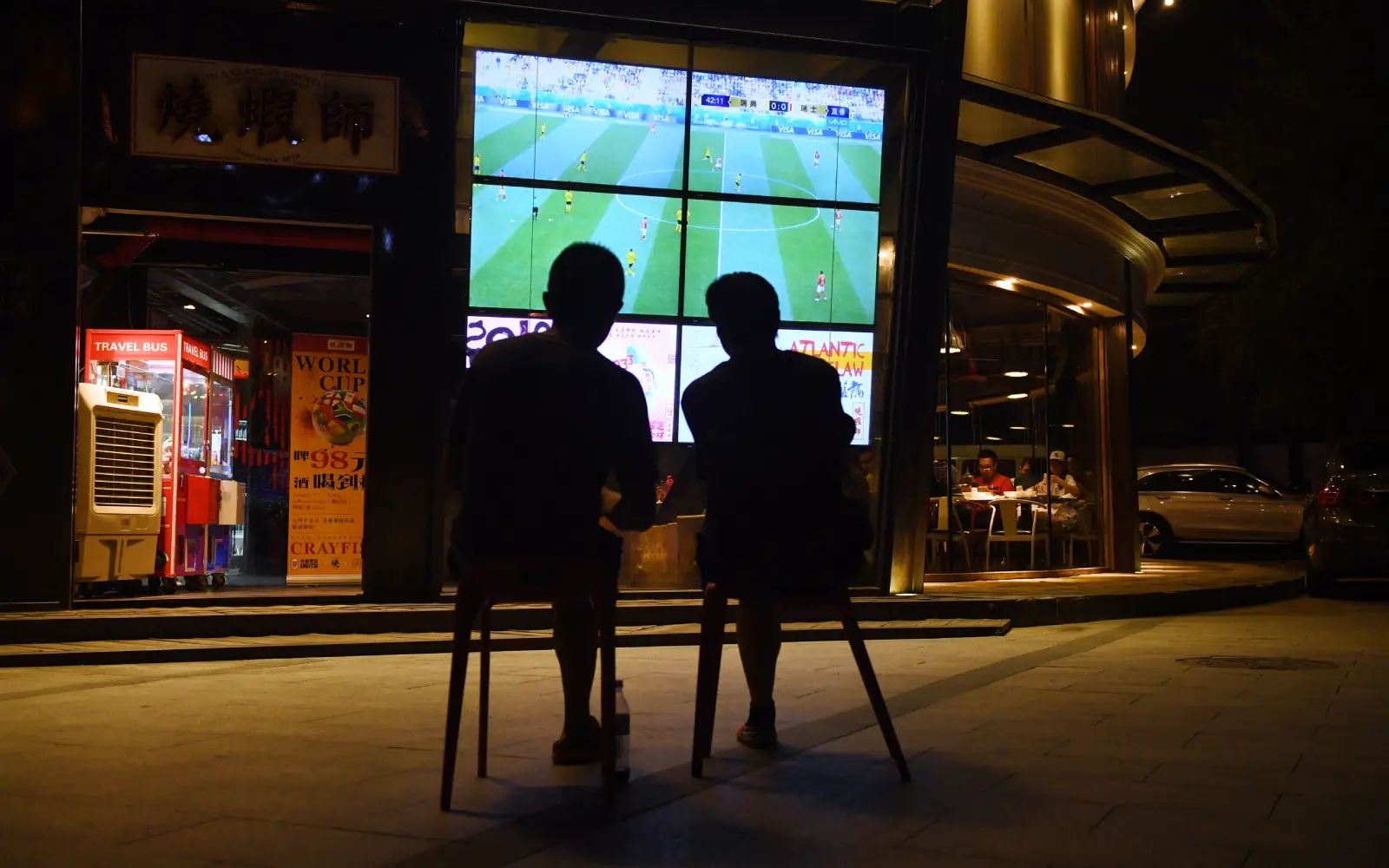
Unsociable match times in the region are one of the reasons why hundreds of millions of fans have been left sweating about whether they can watch from their sofas.
Football’s showpiece is being co-hosted by the US, Canada and Mexico and begins on June 11 when the Mexicans face South Africa.
For fans in Beijing and Shanghai the opening match will start at 3.00am, as will the final.
In New Delhi it is 12.30am, although some games will be better timed in Asia.
Sandeep Goyal, chairman at advertising agency Rediffusion, told AFP that he was “privy to some discussions” between football’s governing body Fifa and Indian broadcasters.
“The first problem is of match timings,” said Goyal.
“The bigger, better matches are at 12.30am or 3.30am. A few at 6.30am. Except for die-hard soccer fans, match viewership is likely to be low in India.
“Therefore, monetisation opportunities for the channels come down massively.”
Goyal said that JioStar, India’s largest media conglomerate, had offered US$20 million for the rights. Sony did not make an offer, he said.
Fifa originally wanted US$100 million for the 2026 and 2030 World Cup rights, Indian media have said.
“The final deal is likely to close at much less than what Fifa is looking for,” Goyal added.
PM gets involved
Like India, China has also not announced a deal for a tournament that has a most-ever 48 teams and 104 matches.
Neither country – which combined have a population of nearly three billion – is playing at the World Cup but interest is intense, particularly in China.
The country accounted for 49.8% of all hours of viewing on digital and social platforms globally during the Qatar 2022 World Cup, according to Fifa.
State media weighed in this week, with the Global Times citing a 2015 regulatory notice saying that national broadcasting behemoth CCTV has the exclusive right to negotiate and buy World Cup broadcasting rights in China.
“Historically, CCTV has secured World Cup rights well in advance,” the Global Times said.
“For previous editions, agreements were typically concluded early enough to allow for extensive promotion and advertising campaigns.”
Thailand has never reached the World Cup, but football is wildly popular, and so far it has not confirmed a deal.
Thailand’s National Broadcasting and Telecommunications Commission (NBTC) removed the World Cup from a “must-have” list last June, meaning the tournament no longer has to be shown on free-to-air television.
Thailand’s prime minister was moved to assure fans on Tuesday that they would not miss out.
“Previous governments ensured free access to the World Cup, and my administration should not be an exception,” Anutin Charnvirakul told reporters.
Thailand struggled to secure live rights for the previous tournament in 2022, before the Sports Authority of Thailand finalised a last-minute reported US$33 million deal with Fifa, funded by the NBTC and private partners, including telecom giant True Corp.
‘Deals will be reached’
James Walton, sports business leader at Deloitte Asia Pacific, said that headlines screaming of millions of fans missing out in Asia were wide of the mark.
“This happens every cycle in some countries,” he told AFP via email.
“The country broadcasters want the best deal, as they have to balance this cost against potential revenues from advertising (for commercial broadcasters) or social benefit (for public/government-owned broadcasters).
“Meanwhile, the rights holders know that this is a one-off opportunity to sell a time-sensitive rights package.
“The reality is that it’s almost unthinkable for most countries to not show the World Cup,” he said.
“So one way or another, a deal will be reached.”
“Realistically, fans in all these countries will definitely get to watch as their governments will realise the potential for unrest,” Walton added.
“And Fifa will want to ensure their flagship event gets maximum coverage to fulfil sponsor commitments, raise the profile of the sport and avoid encouraging piracy.”
Asked by AFP if it was worried about the rights issue with the World Cup coming up fast, Fifa said that it had sealed agreements with broadcasters in more than 175 countries.
“Discussions in a few remaining markets regarding the sale of media rights for the Fifa World Cup 2026 are ongoing and must remain confidential at this stage,” it said.