
In conjunction with Merdeka, here’s a fascinating retrospective featuring vintage postcards that provide an idea of how Malaya used to look like a century ago, starting with the above image of an idyllic family. It’s a shame the photo is not in better focus.
The following postcard of the Botanic Garden in Kuala Lumpur is postmarked 1915, which means it was taken more than 100 years ago. The garden still exists, of course, and the view is similar today – only the wooden bridge has been replaced by a termite-proof concrete one.
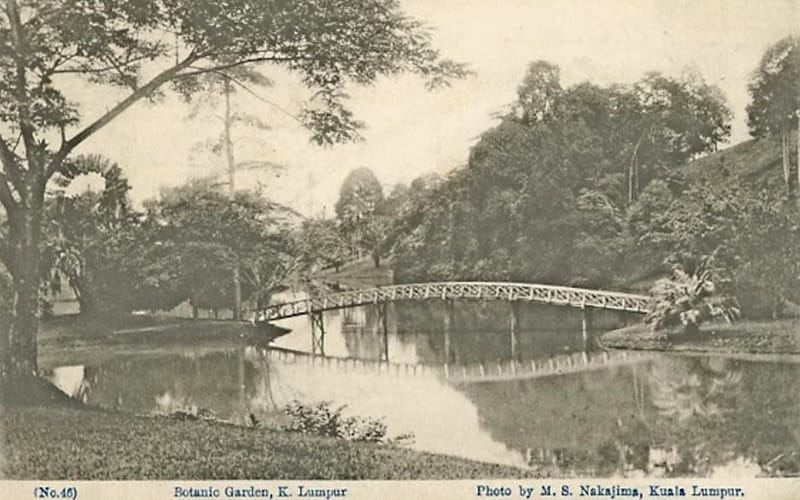
The photographer was presumably Japanese and his studio produced many picture postcards in the early 20th century. Indeed, most of the large towns in Malaya had Japanese-run photo studios, and their work provided a useful cover for espionage activities in the lead-up to the Japanese invasion of World War II.
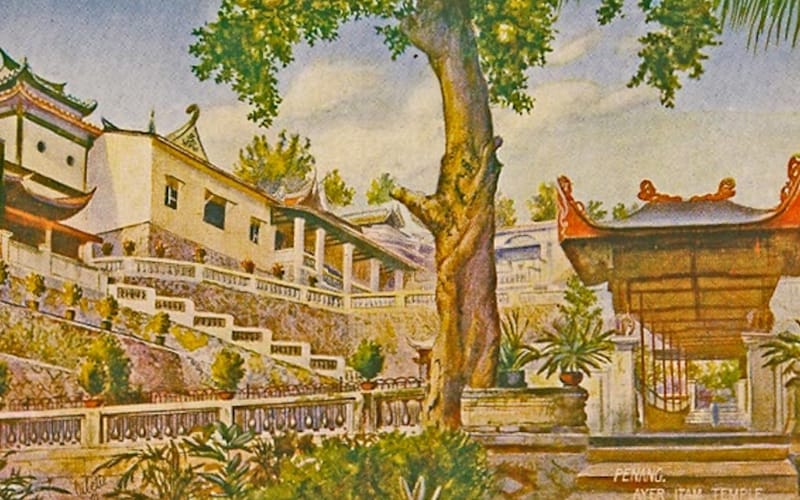
The caption on the reverse of this postcard reads: “Penang, the town and island which with Singapore forms the most important portion of the Straits Settlements. The island is about 15 1/2 miles long by 10 1/2 wide at the broadest point, and has an area of over 100 square miles.
“The town of Penang, built on a promontory at the point nearest the mainland, possesses a European club, a race course and good golf links.”
The Kek Lok Si Buddhist temple at Air Itam, of course, remains one of Penang’s top tourist attractions.
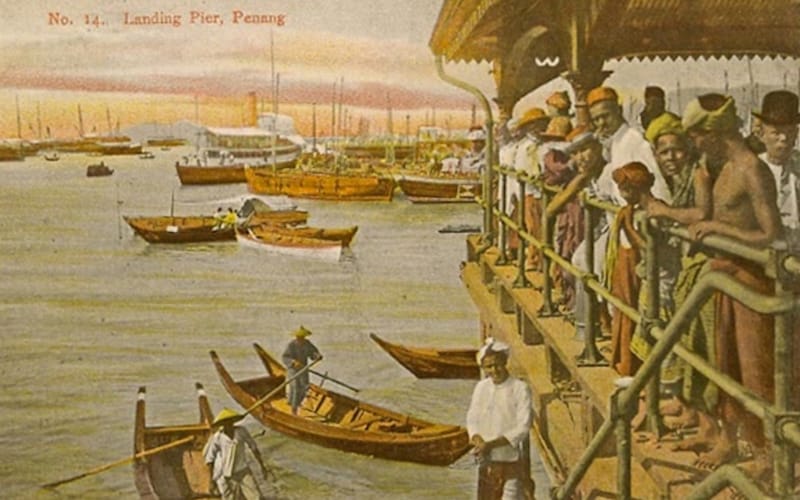
This reverse of this vintage postcard says it was printed in Germany and the photographer was August E Kaulfuss, originally from Germany, who arrived in Penang in 1883 and ran a photographic studio in Farquhar Street, George Town, until his death in 1908.
This colour postcard depicts newly arrived Indian migrants at Victoria Pier, where sampan await to ferry passengers.
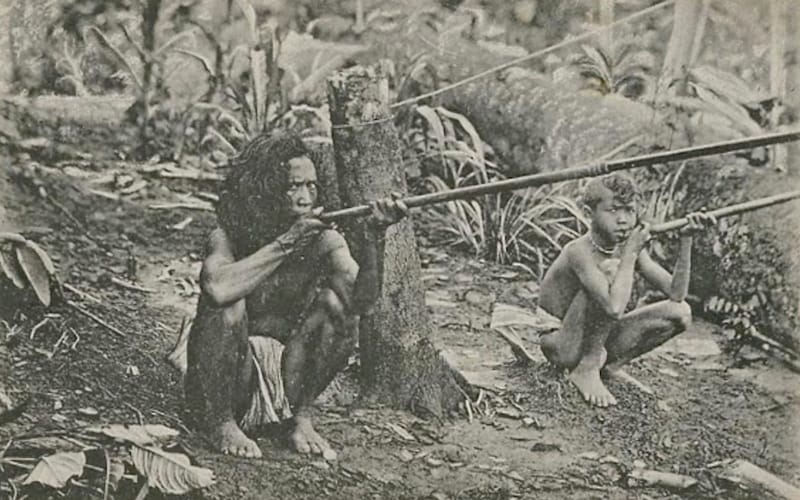
This postcard, which was printed in Italy, bears the caption “Wild Sakei – Perak – Malay Peninsul. 1.a Serie Cerruti” (sic), and shows an Orang Asli man and boy with blowpipes.
Official use of the word “sakai” to describe members of Malaysia’s indigenous communities was thankfully dropped in the 1960s as it is a derogatory term.
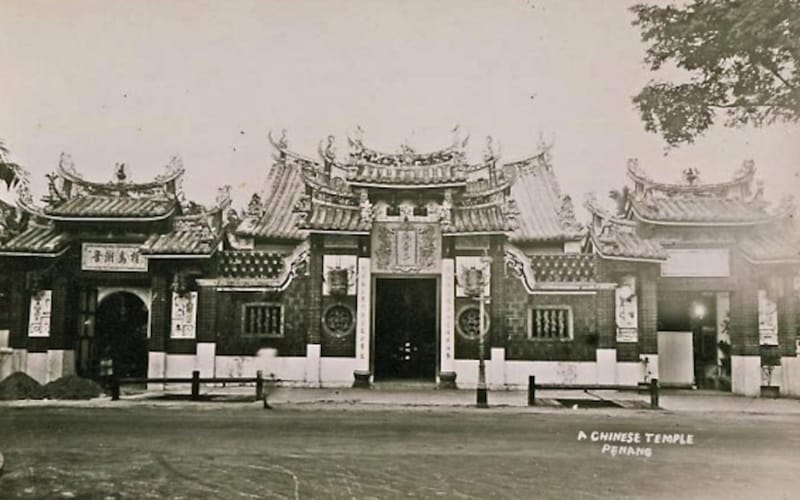
This is possibly the Kuan Yin (Goddess of Mercy) temple on Jalan Masjid Kapitan Keling. It is believed to be the oldest temple in Penang, with construction having commenced in 1728.
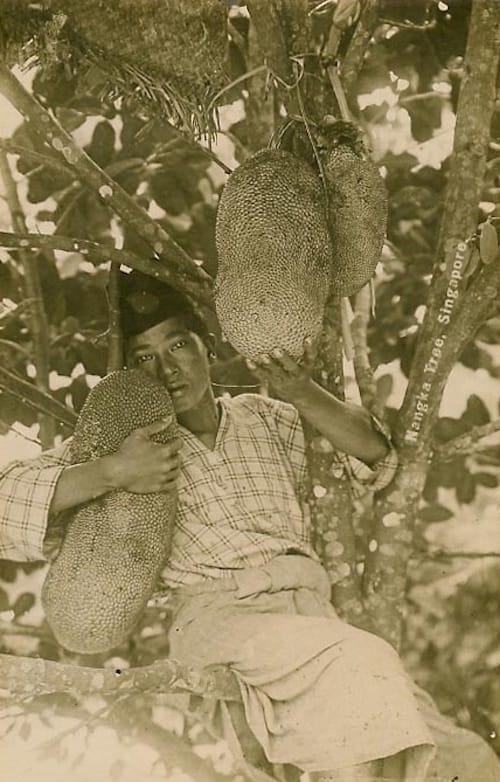
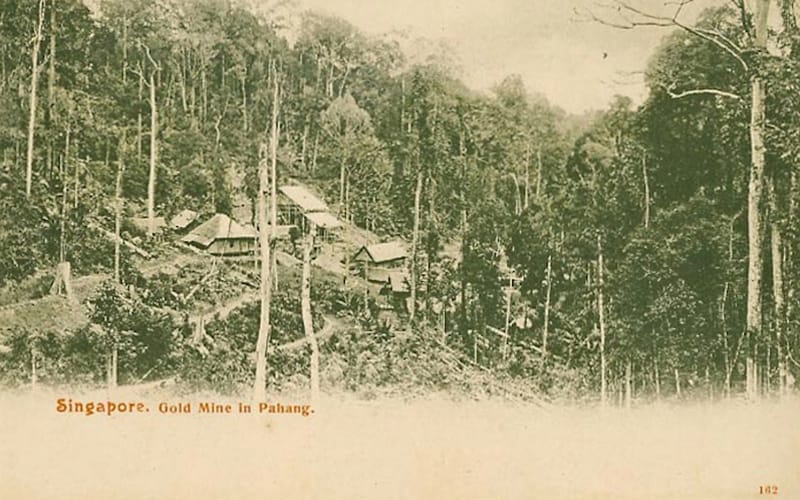
This vintage postcard shows a boy in a jackfruit tree. Although the caption says “Singapore”, the photo might not have been taken on Singapore island – it was the capital of the Straits Settlements at the time, and many postcards of what is now Malaysia were given the caption Singapore. (Et tu, National Geographic?)
More postcards to ponder upon:
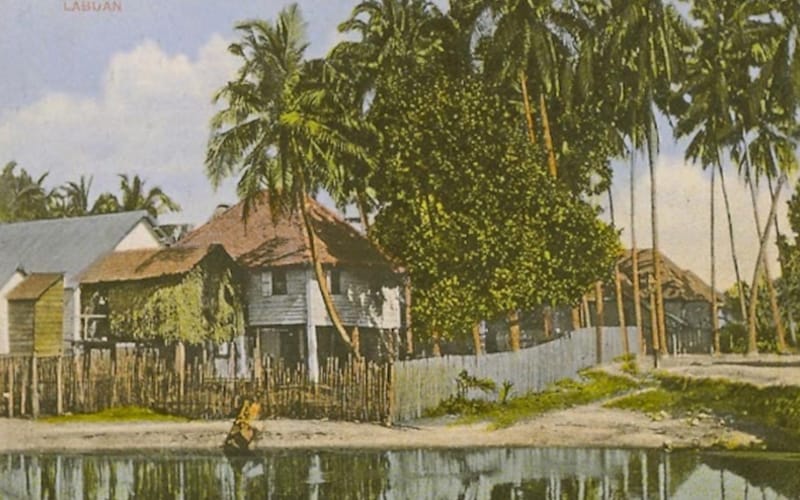
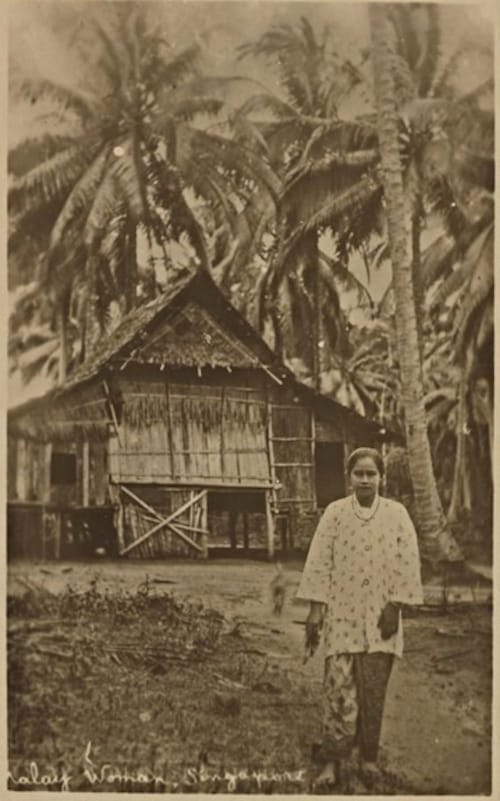
This article first appeared in Malaysia Traveller.