In 1986, while Ukraine was part of the Soviet Union, a reactor at Chernobyl exploded, sending clouds of radiation across much of Europe and forcing tens of thousands of people to evacuate.
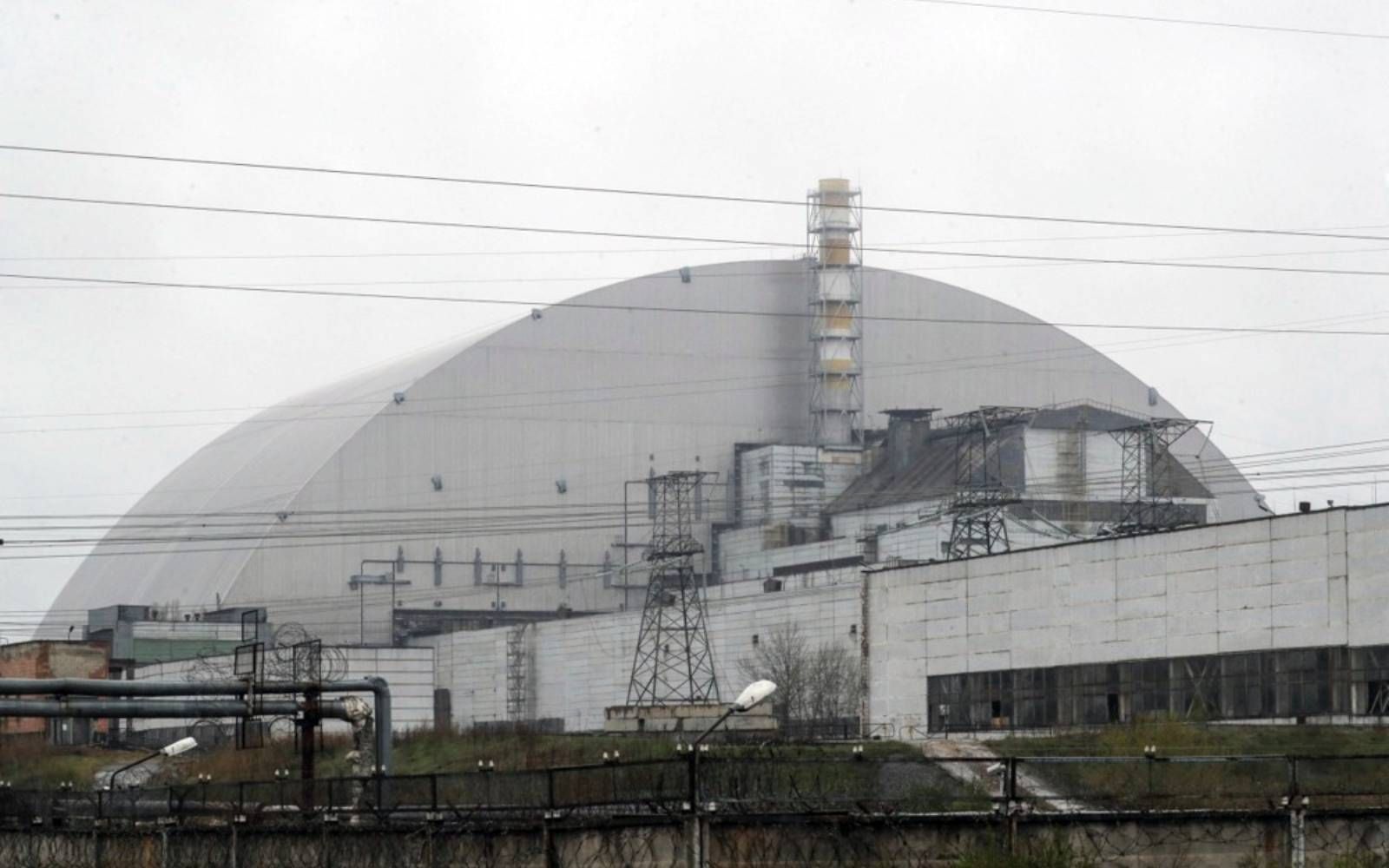
The remnants of the plant are covered by an inner steel-and-concrete radiation shell – known as the sarcophagus and built hastily after the disaster – and a modern, high-tech outer shell, called the New Safe Confinement (NSC) structure.
Kyiv has accused Russia of repeatedly targeting the site since Moscow launched its full-scale invasion in 2022, including of a strike last year that pierced the outer shell.
In a report released Tuesday, days before the 40th anniversary of the Chernobyl disaster, Greenpeace warned that despite some repair works, the confinement function of the NSC “could not be fully restored”.
“This increases the risk of radioactivity release in the environment especially in the case of a collapse” of the internal shelter, Greenpeace said.
“That would be catastrophic because… there’s four tonnes of dust, highly radioactive dust, fuel pellets, enormous amounts of radioactivity inside the sarcophagus,” Shaun Burnie, a senior nuclear specialist for Greenpeace Ukraine, told AFP earlier this month.
“And because the New Safe Confinement cannot be repaired at the moment, it cannot function as it was designed, there’s a possibility of radioactive releases,” Burnie added.
Greenpeace said deconstruction of unstable elements of the internal shell was necessary to prevent their uncontrolled collapse.
But any works at the site were impeded by the war raging on as “there’s missiles from the Russians still being fired across Chernobyl,” Burnie said.
“Here we are 40 years on and Russia is still conducting effectively a nuclear war against the people of Ukraine and Europe.”
Plant director Sergiy Tarakanov said the situation around the site was “very dangerous”.
“If a rocket will drop, not directly into the safe confinement, but just in 200 metres, it will create an external impact like an earthquake,” increasing the risk of the inner shell collapsing.
“And what actually 1986 accident showed to us… that the radioactive particles, they do not recognise borders,” Tarakanov added.
Last month, France said that the Chernobyl protective dome would require almost €500 million of repairs after the Russian strike in 2025.