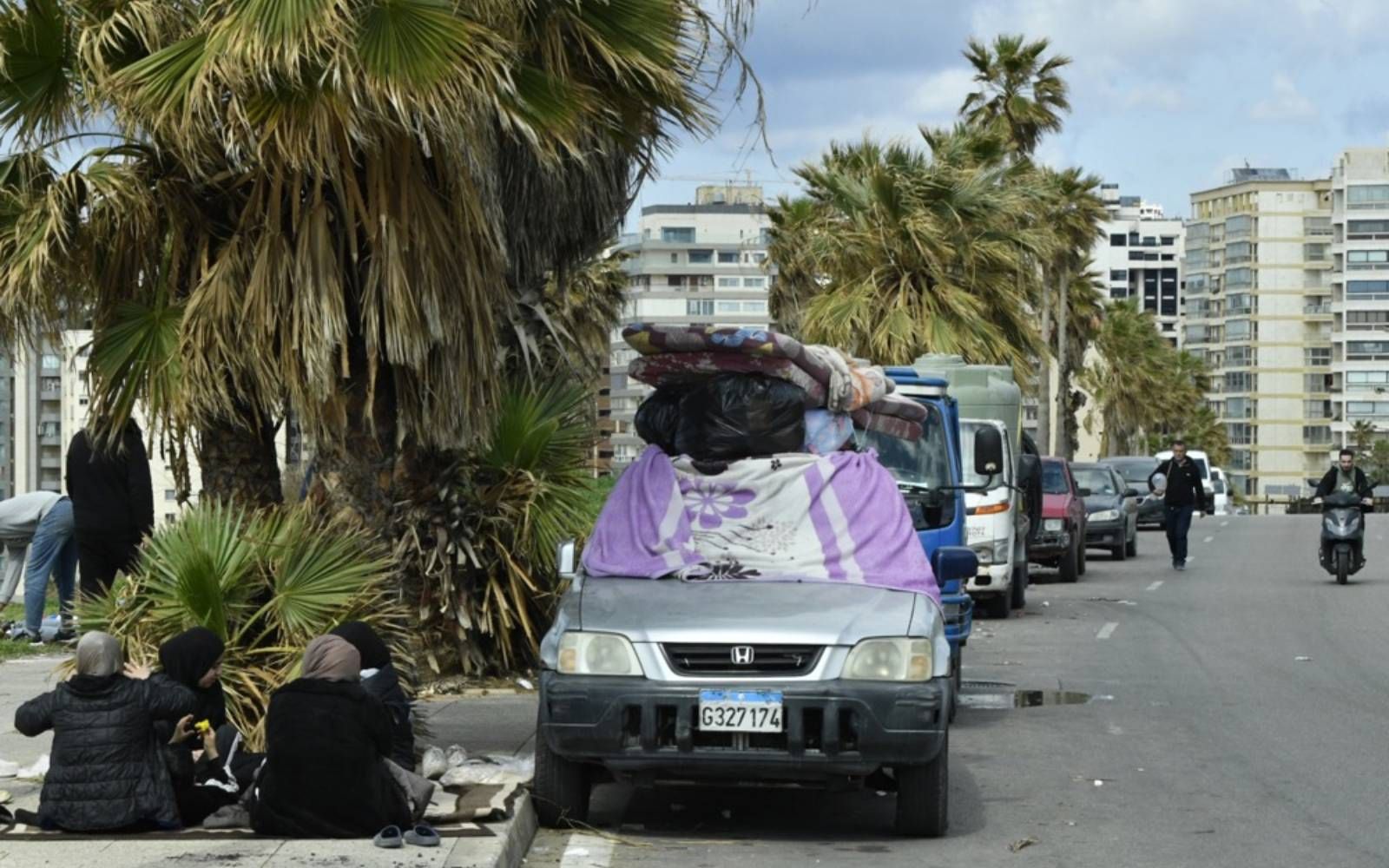
The number doesn’t take into account those fleeing their homes due to the current situation in the Middle East as the Danish Refugee Council’s (DRC) projections were based on data available at the end of 2025, it said in its annual displacement forecast.
The figure of 4.2 million comes on top of the 117.3 million people already displaced worldwide, DRC said.
The war in the Middle East “is driving new displacements and making the humanitarian situation worse,” the agency’s secretary general Charlotte Slente said in a statement.
“There is a road map that can pull the region back from the brink: the current ceasefire must become permanent, and it must be extended to Lebanon, where one in five people have been displaced by the conflict,” she said.
“Families in Lebanon and Iran must be allowed home to rebuild their lives in peace.”
The report noted that recent displacements are increasingly spread out across more countries, rather than a few major crises as in the past.
In 2025, Myanmar and Sudan alone accounted for more than half of the projected total, while in the updated forecast, they account for a quarter of the total.
International aid cuts have also had a direct impact on displacements.
In the five countries with the highest estimated displacements in 2025 – Ukraine, Myanmar, South Sudan, Nigeria and Mali – funding for peace efforts declined by 23% on average in 2024.
Inversely, in the five countries where displacements decreased the most – Somalia, Sudan, Afghanistan, Syria and the Democratic Republic of Congo – funding for peace efforts rose on average by 15%.
“The international community is facing a catastrophic failure to protect the world’s most vulnerable,” Slente said, noting a 14% surge in violence against civilians in 2025.
“For families fleeing war with nothing but the clothes on their backs, there is little hope: the international safety net that once existed has gaping holes” as humanitarian assistance shrinks, she said.