“I don’t expect much from this release,” said one 50-year-old Yangon resident, speaking on condition of anonymity for security reasons.
“There is no reason to be thankful because he was arrested unjustly in the first place,” she added.
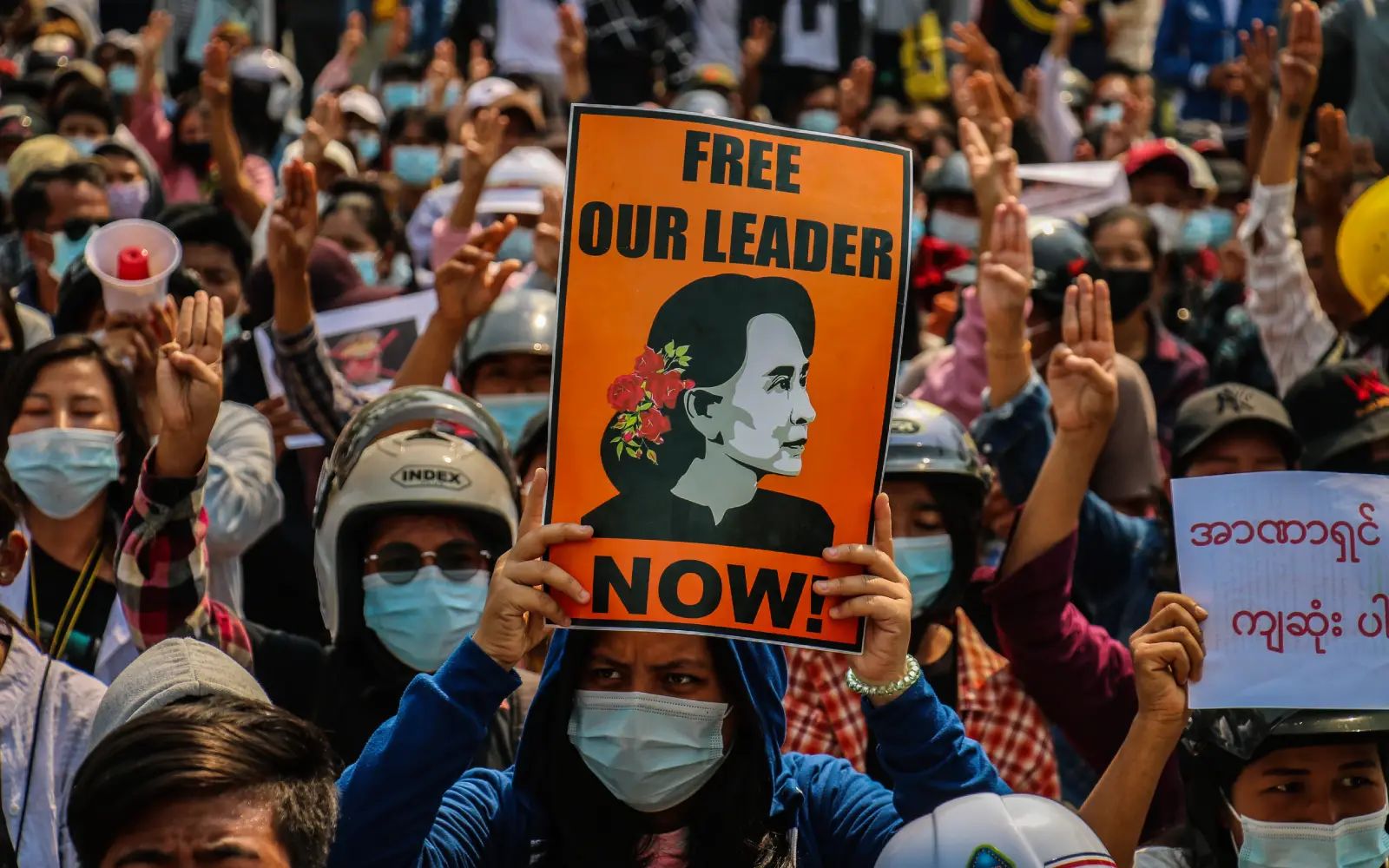
Myanmar’s military swept aside the elected government of Aung San Suu Kyi in a 2021 coup, detaining the Nobel Peace Prize laureate and senior aides, including her ceremonial president Win Myint.
His pardon on Friday was the biggest concession yet by the country’s post-coup leadership headed by Min Aung Hlaing, who ruled for five years as military chief before last week being sworn in as civilian president.
The release has raised the question of whether 80-year-old Suu Kyi may soon be freed or shifted to house arrest.
“This is definitely a possibility,” said International Institute for Strategic Studies (IISS) research fellow Morgan Michaels, while cautioning “such measures should not be misconstrued as a genuine turn toward peace or reconciliation”.
Suu Kyi’s family mansion in Yangon witnessed no security buildup on Friday or Saturday morning, AFP journalists saw, hinting she remains sequestered in the sprawling military-dominated capital Naypyidaw.
“There is no sign of moving aunty back to her home yet,” a source from her dissolved National League for Democracy (NLD) party told AFP anonymously for security reasons on Saturday, using the affectionate term followers refer to her by.
‘Bargaining chips’
Min Aung Hlaing’s pardon of Win Myint was one of his first acts as civilian president and on its face would seem to soften his stance.
But analysts argue it is actually a sign of the unassailed strength of his post-coup leadership.
“Using political prisoners as bargaining chips for Min Aung Hlaing’s political manoeuvring should not be seen as reform or opening, but a measure of confidence in the new regime’s stability,” said independent Myanmar analyst David Mathieson.
When Min Aung Hlaing launched his coup, he made allegations Suu Kyi’s landslide majority of MPs had won their seats through massive voter fraud in 2020 polls.
The putsch triggered a civil war, and after five years of ruling by diktat, Min Aung Hlaing oversaw a re-run of the vote – barred from rebel-held territory, excluding Suu Kyi’s party and punishing criticism of the poll with prison time.
In January it delivered a walkover win for the military’s allies in civilian politics, who backed Min Aung Hlaing to serve as president in a transition democracy watchdogs have derided as a rebranding of military rule.
For analyst Mathieson, Win Myint’s release is just another part of that “authoritarian theatre”.
“This isn’t a genuine amnesty, it’s character laundering,” he said.
IISS fellow Michaels said forgiveness orders are a key survivalist strategy for the leadership as it makes a bid to recover from its post-coup pariah status in some quarters.
“Min Aung Hlaing’s decision to release President Win Myint is part of a conflict management strategy designed to reduce domestic and international pressure,” he said.
The military leadership “has a long history of offering limited concession or compromise when the costs of its draconian rule and violent repression become prohibitive to institutional objectives”, he added.
‘Watched closely’
Win Myint was a close confidante to Suu Kyi, barred from holding the presidency under a constitution drafted during a stint of military rule prior to her ascendancy – a rare decade-long interlude when control was ceded to civilians.
Friday’s mass amnesty saw all prisoners with sentences under 40 years have one-sixth of their remaining terms reduced.
A source close to Suu Kyi’s legal case requesting anonymity for security reasons told AFP the blanket measure cut a chunk off her 27-year term for convictions rights groups say were fabricated to sideline her.
Meanwhile Win Myint was freed and “in good health” at his daughter’s house in the capital Naypyidaw, according to an NLD spokesman but has yet to make any public remarks.
Michaels said releases such as his “may offer opportunities for savvy opponents”.
“If some opposition groups agree to ‘play the game’ and shift the contest into the political arena, even partially, they will have a good chance at winning more concessions,” he said.
“At present, however, most opposition groups and the activist community insist that the ongoing transition offers no such opportunity.”
One Myanmar citizen in Yangon was cynical that the released but isolated president Win Myint could become a rallying figure.
“He will still be watched closely,” said the 27-year-old, speaking anonymously for security reasons.
“So I don’t expect any real political change he could do in this situation.”