Asian stocks soared and oil prices fell after US President Donald Trump said once again that an agreement could be near after positive talks, and Iran said it would pass on its latest position to mediator Pakistan.
Any agreement to prolong the ceasefire between the US and Iran could also lower tensions in Lebanon, where an already fragile truce with Israel was under renewed strain after a strike on southern Beirut killed a Hezbollah commander.
The war, launched by the US and Israel in late February, has seen Iran respond with attacks across the Middle East and impose a chokehold on the Strait of Hormuz, the gateway to the Gulf oil and gas industries and a strategic trade route.
Trump had this week briefly launched a naval operation to escort commercial vessels and force open the strait, only to stand it down within hours, citing progress on negotiations with Iran, which have been mediated by Pakistan and supported by Washington’s Gulf Arab allies.
‘Under review’
“We’ve had very good talks over the last 24 hours, and it’s very possible that we’ll make a deal,” Trump told reporters on Wednesday, adding his now habitual threat to return to bombing if Tehran refuses to back down to US demands.
Iran’s foreign ministry spokesman, Esmaeil Baqaei, said the US proposal remained “under review” and Tehran would communicate its position to mediator Pakistan “after finalising its views”.
According to a report from US network NBC News, Trump’s U-turn came after Saudi Arabia – whose Crown Prince Mohammed bin Salman reportedly talked directly to Trump – refused to allow US forces to use its airspace and bases for the operation to force passage through Hormuz.
US news outlet Axios, citing two officials, reported that both Tehran and Washington were close to agreement on a one-page memorandum of understanding to end the war and set a framework for negotiations on Iran’s nuclear programme.
Oil prices fall
Oil prices fell again, tumbling by 2% Thursday – having fallen around 10% over the previous two days – and Tokyo’s Nikkei index led another strong rally across Asian stocks, fuelled by revived optimism that the talks will bear fruit.
Energy prices are still much higher than before the conflict, but international standard Brent and US benchmark West Texas Intermediate are both now below the symbolic US$100 level.
Markets have been particularly concerned about the Strait of Hormuz, which in peacetime carries a fifth of the world’s oil and LNG trade as well as a good chunk of its fertiliser.
Fears surged on Monday when the South Korean cargo ship HMM Namu caught fire while attempting to transit the channel despite Iran’s blockade.
Trump later claimed Iran had “taken some shots” at the vessel and urged South Korea to join US-led efforts to restore shipping through the strait, while Tehran’s embassy in Seoul said it “firmly rejects and categorically denies” the allegations.
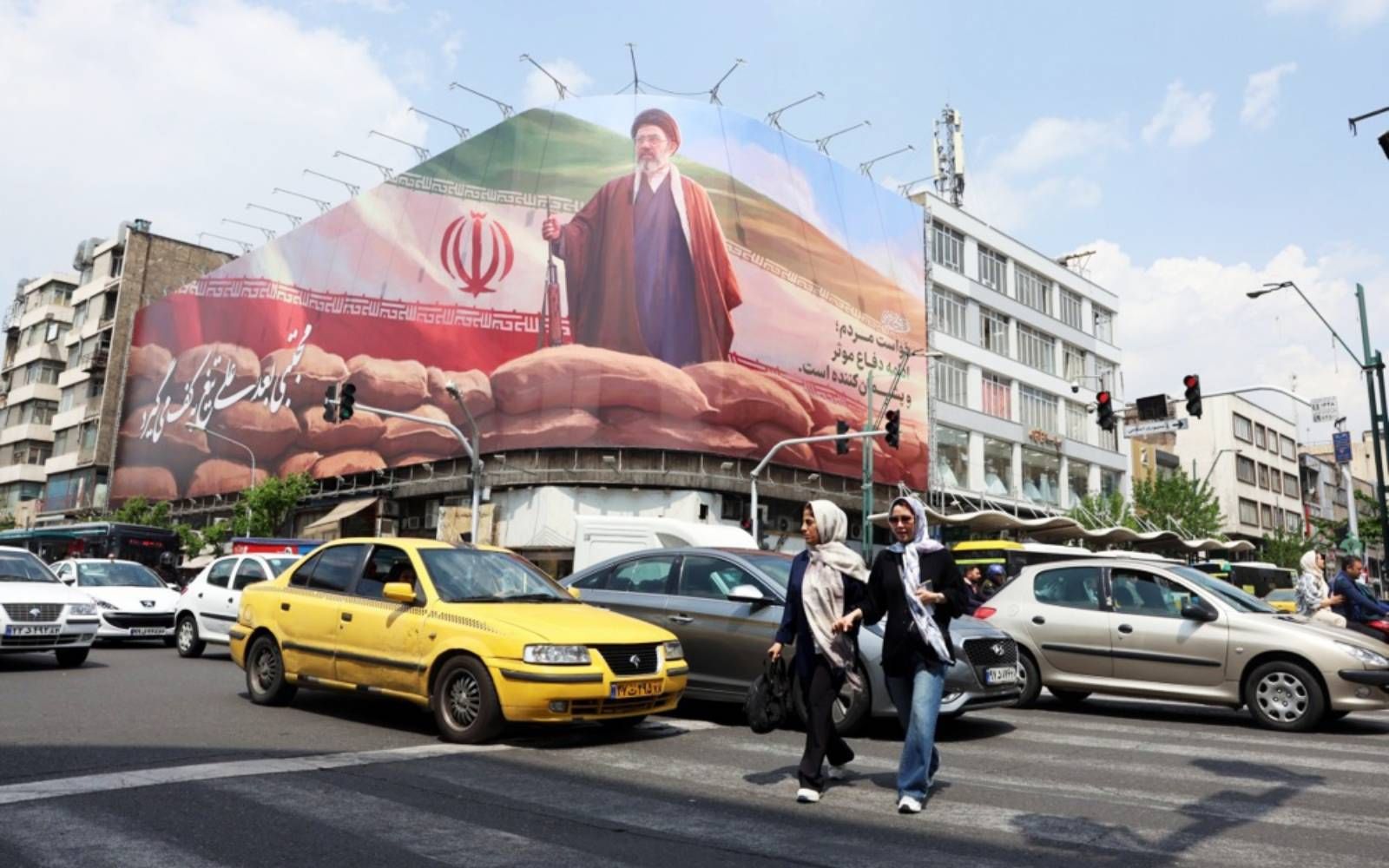
In Tehran, meanwhile, one resident told Paris-based AFP journalists that the prospect of any deal with the current Iranian government was “terrifying”.
“We’ve gone through so much hardship and suffering, and no achievements for the people?” said the translator Azadeh, 43. “I honestly just hope they finish this regime.”
On the Lebanese front, Israel struck Beirut’s southern suburbs Wednesday in the first such attack in nearly a month, killing a senior Hezbollah commander from its elite Radwan force, a source close to the Iran-backed group told AFP.
At least 11 others were killed in strikes across the country’s south and east, Lebanon’s health ministry said. The Israeli military said in a statement Thursday that an “explosive drone impact” had wounded four of its soldiers – one severely – in southern Lebanon the previous day.