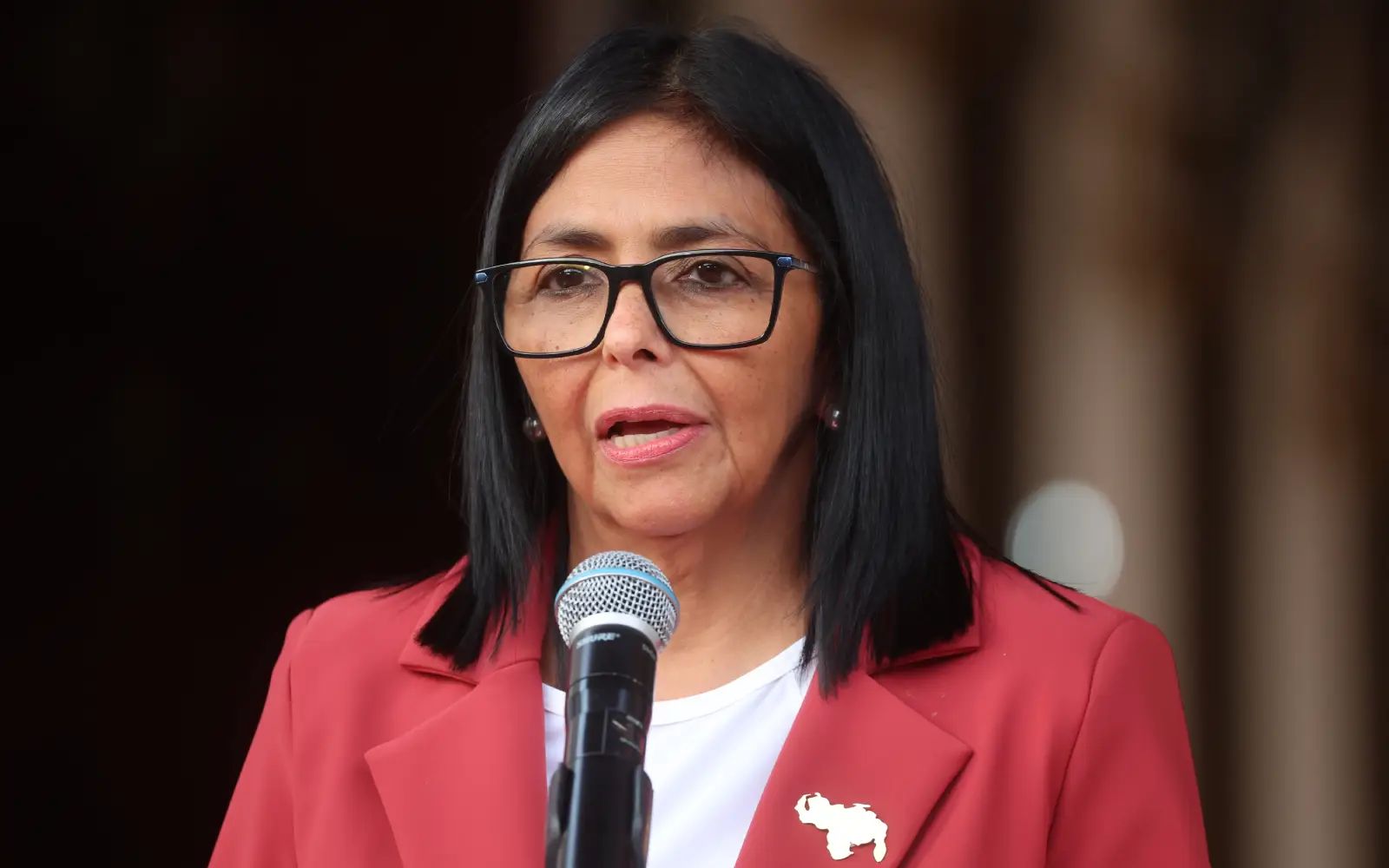
“It has fallen to me to travel in the coming hours to defend our homeland,” Rodriguez said in a televised speech, referring to the territory claimed by both Venezuela and neighbouring Guyana, which currently administers it.
It would be her first trip outside the Caribbean since assuming power following the capture of strongman Nicolas Maduro by US forces in January.
The UN court has in recent days been hearing from representatives of Venezuela and Guyana over the centuries-old dispute that has at times threatened to spill over into military action. The hearings, which began on May 4, will conclude on Monday.
The two countries have been wrangling over the region since the 1800s, with the conflict intensifying after ExxonMobil discovered massive offshore oil deposits a decade ago, giving Guyana the largest crude oil reserves per capita in the world.
The Essequibo region comprises more than two-thirds of Guyana.
Neighbouring Venezuela, however, claims the territory, which runs roughly along the western side of an eponymous river over an area of 160,000sq km.
ICJ judges have been asked to rule on the validity of the border established between the two countries in 1899 under British colonial rule.
Venezuela argues that the border should be drawn in accordance with a later document from 1966, signed before Guyana gained its independence.
It says that the Essequibo River, located much farther east than the current border, is the natural frontier, as it was in 1777 under Spanish colonial rule.
Long under US sanctions, Rodriguez saw them lifted in April as part of a rapprochement with Washington, which saw Caracas grant US companies access to Venezuela’s oil riches.
People appearing before the ICJ, the principal judicial organ of the UN, benefit from special legal protections.