He made the remarks during a meeting in Muscat with IMO secretary-general Arsenio Dominguez, according to a statement from the Omani foreign ministry.
The two discussed “the current challenges facing maritime navigation in the region and through the Strait of Hormuz,” the ministry said.
They also discussed “efforts to address these challenges amicably and peacefully, in cooperation with all relevant parties.”
Albusaidi emphasised “the necessity of adhering to international law and the law of the sea as well as respecting the sovereignty of states over their territorial waters.”
Dominguez expressed his appreciation for the ongoing cooperation with Oman and his satisfaction with the consultations he held, hoping to continue efforts aimed at the safe implementation of the IMO’s humanitarian initiative regarding the passage of tankers currently stranded in the Gulf in cooperation with relevant parties, according to the ministry.
In this context, Albusaidi said “he held fruitful discussions with Dominguez focusing on the maritime challenge in the Strait of Hormuz and the importance of adhering to international law and respecting the sovereignty of territorial waters.”
He noted the urgent need to implement a humanitarian initiative to safely release ships in the Gulf in cooperation with the littoral states of the Strait.
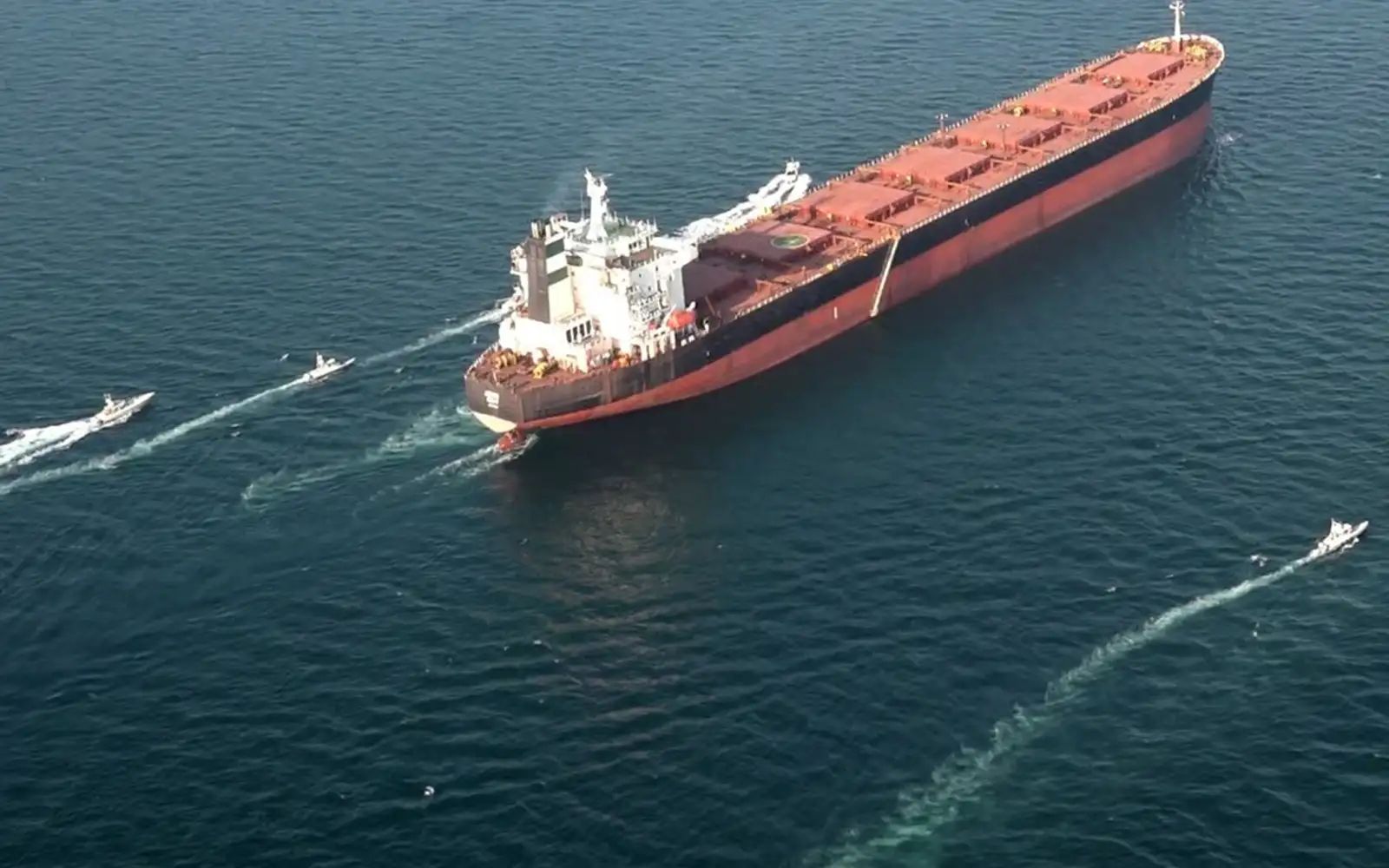
The IMO’s humanitarian initiative was launched at the beginning of May in response to the escalating crisis in the Gulf region and the Strait of Hormuz with the aim of securing safe maritime routes to evacuate more than 20,000 seafarers and release approximately 1,500 commercial vessels trapped due to military tensions in the region.
Forty-two container ships operated by the world’s top 10 carriers remain trapped in the Gulf two months after the Strait of Hormuz was effectively closed to commercial container traffic, according to ship-tracking platform MarineTraffic, citing data from intelligence and analytics platform Kpler.
MarineTraffic said in an analysis Monday that 53 vessels from the largest global container carriers were in the Gulf when the disruption began, with 79% still unable to exit through the strategic waterway.
The Strait of Hormuz is one of the world’s most important maritime chokepoints, linking the Persian Gulf with the Gulf of Oman and the Arabian Sea.
Its prolonged disruption has increased pressure on regional ports, shipping schedules and global supply chains already strained by security risks linked to the Iran war.